Predator
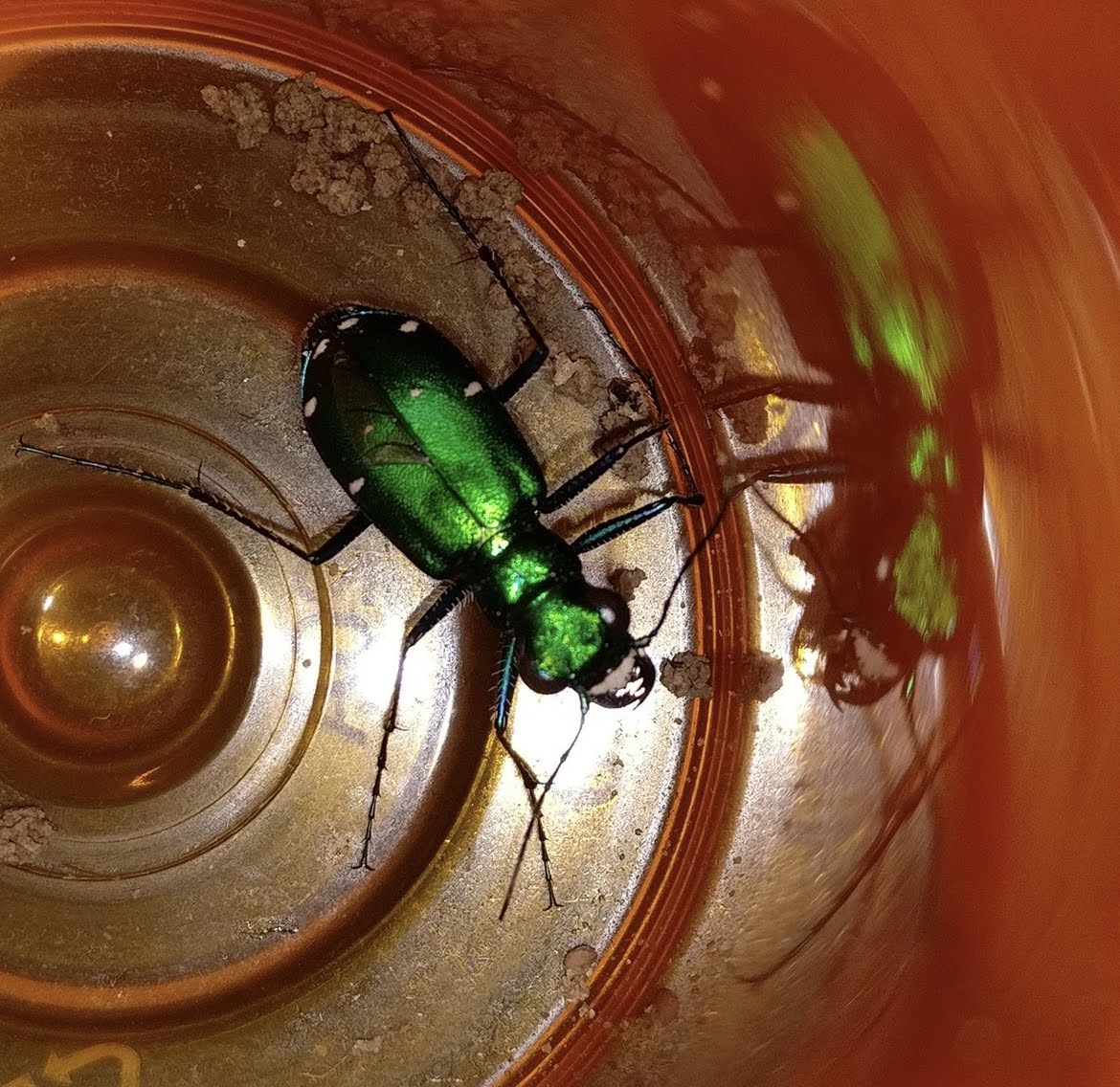
- Tiger beetles are some of the most charismatic insects on Earth: metallic, sharp-eyed, absurdly fast, and every bit as predatory as their name suggests. Come learn how they hunt, why their larvae live like tiny trapdoor monsters in the soil, and what their decline says about the fragile open habitats many other species need too.
Guides
Pogonosoma ridingsi
Pogonosoma ridingsi is a species of robber fly (family Asilidae) described by Cresson in 1920. Members of this genus are characterized by distinctively modified facial structures. As with other asilids, this species is presumed to be an active aerial predator.
Polistes carnifex
executioner wasp, executioner paper wasp, kava mainomby, kava alazán, kava sa'yju, a'ma xtíya cháda
Polistes carnifex is a large Neotropical paper wasp and the largest member of its genus in the region, with body lengths reaching up to 33 mm. It is commonly known as the executioner wasp, a name derived from the Latin epithet carnifex meaning "executioner." The species establishes small eusocial colonies founded by solitary queens, building open-faced paper nests suspended from branches or under building eaves. Despite its imposing size and formidable common name, it is relatively non-aggressive toward humans.
Polistes carolina
Fine-backed Red Paper Wasp, Red Paper Wasp, Paper Wasp
Polistes carolina is a social paper wasp native to the eastern United States, distinguished by its reddish-brown coloration and finer propodeal ridges compared to its congener P. rubiginosus. The species constructs large, exposed, umbrella-shaped paper nests and exhibits independent founding behavior with multiple foundresses establishing dominance hierarchies through behavioral conventions rather than size alone. It is an important predator of caterpillars and other insects, contributing to natural pest control in its range.
Polistes dominula
European Paper Wasp
Polistes dominula is a highly successful invasive social wasp native to Eurasia that has established populations across North America, South America, New Zealand, South Africa, and other regions. First detected in North America near Boston in 1978, it has become one of the most abundant wasps on the continent. The species builds small, exposed paper nests in protected locations and preys primarily on live insects, particularly caterpillars. Unlike yellowjackets, it does not scavenge for meat or sugar. Its rapid spread has been attributed to ecological flexibility, superior competitive ability, and tolerance of human-altered environments.
invasive-speciessocial-wasppaper-wasppredatorpollinatorurban-ecologyeusocialnest-constructionbiological-controlthermal-biologyspatial-learningvibrational-communicationaposematismhonest-signaloverwinteringdiapausePolistesVespidaeHymenopteraNorth-AmericaEuropeNew-ZealandSouth-AfricaSouth-Americamonarch-butterflycaterpillar-predationnest-architecturegynefoundressdominance-hierarchyclimate-change-impactenergeticsmetabolic-ratemicroclimatesuburban-habitatanthropogenicornamental-pestvineyard-pestfruit-damagestinging-insectvenompoison-glandwarning-colorationZahavian-signalStrepsipteraparasitoidXenosbehavioral-plasticityforaginglearningmemorythermoregulationectothermyendothermysolar-radiationnest-temperaturebrood-developmentcolony-survivalmultiple-foundingsingle-foundingseason-lengthlatitudetemperateMediterraneanhibernacleoverwintering-costsclimate-warmingrange-expansioncompetitionnative-species-displacementbiodiversity-impactconservationmanagementcontrolintegrated-pest-managementIPMidentificationantennae-colorfacial-markingscastereproductionmalefemalesexual-dimorphismantennaeabdomenwingmandiblesalivapapercombcellpediceltrophallaxislarvapupaadultworkerqueensubordinatedominantaggressiondefensethreat-displaystingtoxicitybrightnesscolorationpredator-avoidancepreycaterpillarLepidopterabutterflymothgardenagriculturevineyardorchardurbansuburbanruralforesthabitat-preferencetemperaturemetabolismquiescencetorporsurvivalfitnesscolonynestpopulationabundancedistributionrangeexpansioninvasionestablishmentintroductionbiotic-interactiontrophic-cascadeherbivory-suppressionplant-fitnessmilkweedDanaus-plexippusmonarchNelsonTasmanecosystem-impactconservation-managementbiological-invasionecologybehaviorphysiologymorphologytaxonomysystematicsnomenclaturegender-agreementLatinChrist1791Vespa-dominulabasionymcatalogue-of-lifeGBIFiNaturalistobservationcitizen-sciencephotographyillustrationfield-guideorangeblackyellowredcolor-patternsizewing-lengthbodycompactlegsshortfacesquaretriangulardarkcurledstraightelbowedbluntpointedtipZahaviancostly-signalhuntforagenectarhoneydewaphidscale-insectflowergrapeumbelliferfennellovageinsectmeatballfeedemergechewcaphexagonalwood-fiberbarkexposedopenumbrellastalkantrepellentsubstancecoatprotectlocationeaveattictreebranchvineshrubcavitybird-boxbee-hiveshedgrave-lanternoverwintershelterprotectedthermalclimatecoldwinterspringsummerautumnfallseasonmonthdayactivitydefendthreatdisplayraisetiptoesocialdominancehierarchyreproductiveegglayfoundcooperatecompeteselfishpassive-aggressiveindividualrecognitionfacial-markingcognitionmushroom-bodybrainintelligentartistarchitectnavigationplasticityspatialrelocatingfoodresourcedishbaittrainingexperiencevibrationcommunicationsignalsubstrate-borneabdominalwaggingoscillationsecretionmodulationperceivereactmovementattentionfeedinginspectionbody-temperatureambientsolarradiationmetaboliccostenergeticexpenditureefficiencywarmingchangeimpactincreaseinvasivespreadsuccesscompetitiveabilityflexibilityadaptationreactionresponseconditionyearvariationproductivityfoundingsinglemultipleratebenefitcooperationpredationparasitismvesparumstylopidstylopizationparasitehostinfestationmiteAcariwaspflyeffectcommunitydeclineDanausplexippusmortalityinstarearlylatelargersmallervulnerableresistantdiscoverychancecontactdirectrecruitmentnestmatesitecascadingtrophiccascadeherbivorysuppressionplantgrowthproductionAsclepiasnetexclusionexperimentoutcomesuggestionstrongdetrimentalecosystemstrategymethoddevelopmentprotectionbiodiversityregionfirst2016recentestablishedexoticcongenerchinensislongercomparisonhigherlowergreatestareabuiltstructurenativeunsuccessfultranslocateunablethrivewarmerorigincontributorfactorresearchthesisinsightbehaviourknowledgedirectionaideffectivejournalpublicationDOI10.26686wgtn14538585v1UniversityWellingtonVictoriaMScstudentdissertationstudyinvestigationanalysisdatafieldresidentreportlocalindirectinteractionlevelfunctionserviceprovisionnaturalpestbiocontrolornamentaldecorativecropdamagefruitcherrywesternColoradoatleastripeningchoicepreferenceheightgroundstratamicrositeenvironmentclosedhabitatdensevegetationsurroundingbushPatagoniaArgentinaChileNWdetected2003sympatriccoexistenceoverlapminimalfacilitationbehavioralprocessinterspecificsemi-urbanpoorlystudiedspeciesHypodyneruslabiatusnewlightfindingcontributionunderstandingcollectinganthropizedhighlightimportanceconsiderationEthology10.1111eth13505abstractonlylimiteddetailfulltextrequiredcomprehensivesynthesisvibrationalwidespreadregulatecrucialconspicuousoscillatorywagstrictlyassociatedpresencesuggestedinvolvementadult-larvahypothesisshort-termtrophallacticexchangemodulatesalivarydecreaseamountpreparereceivestimulatereleaseelectro-magneticshakerassesstimerecordmeasureimmediatelyafterplaybackresultshowproducepossiblyorderattractduringneithernorsupportallegedrolelong-lastingExperimentalBiology10.1242jeb186247flexiblesystemexpandingNorthAmericacausestirfastuponexplanationpresentliteraturegoodinvadernorthernriselittleknownnestingCentralinvestigatebasicprincipleGermany49°grouponetofoursmallshorterthanothermeannewlyfounded83averagelength4.6prefer54%46%majorincreased47%single-foundresswhereas100%moretwohowevernonumbertermperobservewellthreeconsecutivegreatlydependingprecedingimplyremarkablyquicklyoutsiderapidcolderEcosphere10.1890es15-002541thermoregulatorypolistinedifferentcollectdemandbroodmainlyectothermictasklivingdifferingrevealenvironmentalinfluencewarmSoutherninfraredthermographyentireusually~20–40°CnearlylinearlythoraxwarmestpartachieveoptimalpreferablyusemodelenableevaluationendothermiceffortexhibitweakalmostconstantperformanceaboutcontrastmostlyminoravoidhighwayreduceInsects10.3390insects10070187traitstronglyComparativeB10.1007s00360-016-1041-xprovidedgallicusinsects14110849adverseweatherofferlowshelteredliveenergystoreItalyAustriadescribecalculateaccordingstandarddiffersignificantlybetween3.2±5.718.55.29variancecorrespondcloselymeteorologicalcumulativemass-specificoverperiodlowestcomparedbothacclimationcalculationup3duedramatic40%additionalexponentiallytemperature-dependentfluctuationdisproportionatelyJensen'sinequalitywoodenbirdboxemptybeehiveundergrapevinegravelanterncemeterybeginwhenexceed~18–20confidencenoteinformationinferredfromactivenotdiscussedthissourceassociationaddressedrelationshipinsects14110886thermophilicoriginatingbutnowwidelyquitesynanthropichumansettlementplacewithfavorabletypicalsidewasps'wide~20–37aboveairadvantageasacceleratespeeddidapproximately38.6managedbycoolingnear~1–2cmalwaysclearlyelevatedstationclimate-model-generatedmacroclimaterevealednecessitymeasuringforreliabledescriptioninsects'brighter-coloredpoisonglandFrontiersZoology10.11861742-9994-9-20aposmatismagainstconsistingwarningusingtoxincostlyphysicalcouldsimultaneouslyabundantstrikingsuchcaseindicateanimaltoxicalsowouldensurehonestlyexaminepositivecorrelationexistscollected30photographedthemvolumewidthremainedevencontrollingsuggestpatterntruesignpoisonoustheyhavetheoreticalpredictingindicatesquantitativewithinactingmetabolicallythereforelimitationfirst-yearSpainexactageunknownethanolpreservationmayalterapplieduniformlypseudoreplicationintraspecificsupportedwhilesuccessfullyworldwiderevisitingpreviouslygatheredflightmanipulationperformedtargetseveralvisitadditionallyanalysedealingpositionwhetherchoosevisitedcontainingoptnovelbaitedplaced60awaythentraineitheronceorcomparetakenfinddisplaceddemonstraterapidlylearnedreturncertainsignificantreductionlikewisemanipulatespendinglesseachmoreoverofferedjustmajorityfurthermorecontributebehaviouralconsideringmarginalisCapeProvinceSouthAfricaAfricanEntomology10.40010030220104CaucasianEntomologicalBulletin10.238851814-3326-2015-11-1-85-89degreeHungaryNaturaSomogyiensis10.24394natsom201119229manyEuropeancountryobserved1993documentationphotograph5ofexaminedstylopizedtheseexemplarparasitized18strepsipteranspecimensometaxonscientificnamerankpreferredcommonWonderfulWorldWaspsBugSquadArticleChrisAliceKratzerauthorLinkedInPhototerriblejam-packedpainangerloveusoutbluemindingownbusinesseatpicnicfrightenchildbuildhomecomplicatealready-stressfullifeEveryoneknowsbebetterwithoutSoprefacebookpublishedcompany2020OwlflyLLCwhatwritebelievepointessentialcomplicatedbeautifulIndeedplayimportantprovidebeneficialLookmapesticidelaborpassionatededicatedwrittenconversationaltonelongadmirersupporterwhogrewJerseycontinuerememberinteractingyesgettingstungassortedincludingcometerritorybecomeentomologistoptedengineerreceivedbachelorscience2019mechanicalengineeringRochesterInstituteTechnologyworkedYorkuntilTodayexecutivedirectormanagingdivisionPublishingopportunitydevelopmarketsustainablepotentialmitigationfascinatefoldintowantwhyhowdoiftellbuildingunderstandcycleorganismbeforetryingentangleecologicalmeaninginquilinecalledcuckooexploityoungcallfactcatchdismembertinywaistpreventeatingsoldfluidprimarymostgrasshoppercricketkatydidbeetleearthwormlanternflycockroachspidercicadaaren'tengineering-trainedprofessionalknowledgeablybeganher2018January25pathincludedholingCornellCollectionnetworkingexpertteachingherselfsoftwarealigngeneticbarcodespentclosethousandhourporingplatformidentifyingmappingstudyingcolorincredible400-pagebilledguideallarcticGreenlandAlaskatropicalPanamaGrenadacover20822generafeature900imagemacrophotographerpostingbringbackIowaStateProfessorAmyToth'sseminarDepartmentNematologytoldcrowdattackextremelycomplexfascinatingcreaturecoinedhashtagwasplovewroteillustratedItvarietyyellowjacketEurasianred-bandedAmericanblackjacketvolcanoGuatemalianEasternwidowpolka-dotprairieCaliforniaformdownyGermanknewthere'jacketsfamiliarelaborateknowdominulomeansmistressimpliesIntroduced1970ssincecontinentWomanLynnKimseyBohartMuseumdistinguishedtellingdifferencescavengertakeparticularlyseriousmentionUCStatewideIntegratedProgramwealthPestNotedistincttypefartroublesomeespeciallyground-cavity-nestingtendvigorouslydisturbedDefensiveincreasesprogressesscarcerprimarilystartaroundgarbagecandogcatwhereripeoverripeaccessiblelargecolorfultidbitsprinklethroughoutintriguinginstancePennsylvaniadespiteSomeonemislabeledoriginalAndrated2/5painfulSchmidtIndexBottomlineeye-openerpage-turnermind-boggleroffersapproachbelongslibraryscientistcitizencuriouspersonwantsincrediblydiverseamazingnextgatheringanti-socialfolkaskanyonesharingroseDavisCalifthirstysippingwaterfountainAgraulisvanillaeVacavilletuckedinsideWednesdayCincinnatiOhioamongchangedrecentlyovertakencounterpartStillUnitedadjacentbelongsamefamilyhornpottermasonborealcoolerdecidedlyhandfulreachingrarelyexceeding200unprotectedsuspendtwigstemsemi-protectedhangsturdyoftencoatedrepelchiefconstructionapparentdestinedlikelydeterminedstageacteventuallyassertleaveperformssecuringdevelopingoffspringharvestingfibersurfacedeadfencepostscrapeballdeftlypliesstripaddedexistingworthhavingheavilyWebwormgrabhairybutcherkillspotstrippingoffanyirritatinghairspineeasilyconsumeddirectlyshareturndistributeoccupyreachmaturityspinsilkendometopmoltshortlythereafterfreedomsolefertilizeWatchAugustSeptembereasythoughgenderselbowtapergoldenrodSolidagothroughwortEupatoriumevidentextremevariabilitypairdeepmarkingvaryconsiderablyDNAaddingmudsituationinsteadclarifyingshownbelowgoinglumpEnjoywatchingunlessantagonizegivestandingtip-toeraisingmakeperfectlypeacefulneighborPosted2:40AMEmailThisBlogThis!ShareXShareFacebookSharePinterestLabelsnature6commentShandaSeptember820105:26lovedgetneverfacedcan'twaitkidquestionleftendhibernateproducedReplyDeleteRepliesReplyOutprairieSeptember8:02keepingcabbagewormseenRepliesReplyAnonymousSeptember132:06PMbecominghereUpperPeninsulaMichiganpendulumseemsswungagoeverywherevanishinglyrarehaven'tagainhouserightRepliesReplyL.RShimerSeptember4:35headgalworkeverybodyelsekindaegalitarianRepliesReplyLarryMay9:34directedBevWigneyBTWlivedNEMissouridetailedpresentedThankscogentscientificallyaccuratesummaryinsect'slife-cycleRepliesBugEricMay3:47kindcomplimentsDeleteRepliesReplyReplyAddcommentLoadBlogcurrentlyreplyreaderhimselfWorkingresolveNewerOlderSubscribeAtomDemonizedhosting4p.m.SaturdayJan20Room1124AcademicSurge455CrockerLanecampusAttendeeschatcheck50,000vespideight-millionfreefriendlyParkingestimate2000describedinhabit500undescribedheadline-grabbinggiantVespamandariniaformerlyAsiannewsmediadubbedmurderhornetconfuseidentifysheetexamplehiddenrodentburrowwallhuge100,00willscavengemeatsugarsodahamburgerroadopen-facedcommonlylocatedannualdiecabbagewormwhitesuperbmuchdeliveredpresentationwebsiteinterestedmechanismevolutionhoneyCurrentprojectinvolvenovosequencinggenometranscriptomegenomicepigeneticregulatingnutritionvirushealthholddoctorateIllinoisUrbana–ChampaignGeneRobinsonpostdoctoralChristinaGrozingerunwelcomeyardpatioPreferringlikebeneathSometimesleglessgrublikeoutstretchedhand15relativelyunaggressiveproblemdoorwaylistearlierlepidopterancarryyeastwinemakingfermentationflavorwinefuscatusrecognizedevotedmotherdotefuryopinionhuman-likegreatcooperatoroverallundercurrentselfishnessmanifestperfectthemselvesmushroomlearning/memory10photogenicpeerpetalvisitorcampSierraNevadamountainwitnessedstingingcrowdedtableahsippedwonderedsayselsewherewhichfertilizedmustwarmsenoughlotproteinbabyneedsurvivedbecausedrierusualdealcompetinggomaintenancemodemaintainfuellargelyuselessstartedmidtrapsprayingremoved--thisdonenighthollowavailablenearbyhopewetbarbecueshyexceptdoorwindowhigh-trafficTypicallymatedmidsummerphaserequireceasesweetthingnormallymildcoastalSanFranciscosurviveinformativeYouTubevideoDistinguishingseethosedistinctiveputanotherOaklandRaiders'logoGiantssoakingsunabandonedPollinatorsArtistsdelightoverhangneighborhoodthoughtWowhangingliptrashvanishedTwitterassociateOrganismalPolistes dorsalis
Hunter's Little Paper Wasp
Polistes dorsalis is a small social paper wasp native to North America, distinguished by V-shaped yellow markings on the head and, in males, a prominent median tubercle on sternum 7. The species constructs small, open-faced paper nests in sheltered locations close to the ground, such as rock piles, hollow logs, and building eaves. Colonies are founded by one or several females in spring, with a dominance hierarchy establishing a single reproductive queen. The species is known for moderately painful stings and has attracted pharmacological interest due to antimicrobial peptides in its venom.
Polistes metricus
Metric Paper Wasp, Metricus Paper Wasp
Polistes metricus is a primitively eusocial paper wasp native to North America, ranging from southern Ontario and Maine south to Florida and west to eastern Texas, Nebraska, and Kansas. It is distinguished by its predominantly dark ferruginous (rusty-red) coloration with black markings, yellow tarsi, and black tibiae. The species exhibits unique behavioral traits including distinctive foraging flight patterns—taking off horizontally for short trips and vertically to high altitude for long distances—and is known for nest sharing with other Polistes species and multi-season nest reuse. Colonies are typically founded solitarily by a single queen, though cooperative co-founding is increasingly observed.
Polistes rubiginosus
Coarse-backed Red Paper Wasp
Polistes rubiginosus is a social paper wasp endemic to the eastern United States, formerly known as Polistes perplexus until taxonomic revision in 2012. It is one of two large red-colored Polistes species in the eastern US, distinguished from the similar P. carolina by coarser transverse ridging on the propodeum and, in females, silvery pubescent hairs covering the malar area and gena. The species builds uncovered paper nests in sheltered locations and exhibits typical paper wasp ecology as a predator of caterpillars.
Polycentropodidae
Tube Maker Caddisflies, Trumpet-net Caddisflies
Polycentropodidae is a family of caddisflies (Trichoptera) commonly known as tube makers or trumpet-net caddisflies. The family contains at least 33 genera and over 720 described species globally. Larvae construct distinctive silken retreats—short flattened tubes in rock hollows or slender tubular structures among aquatic vegetation—often surrounded by silken threads that function as prey detection devices. The family exhibits a disjunct distribution pattern in some regions, with species found in both tropical and temperate zones.
Polycentropus
tube maker caddisflies
Polycentropus is a large genus of caddisflies (Trichoptera) in the family Polycentropodidae, containing more than 190 described species. The genus is commonly referred to as 'tube maker caddisflies' due to the silken retreat structures constructed by larvae. Species occur across multiple continents including Europe, Asia, and South America. Larvae are predatory and inhabit running waters, where they build silken retreats with capture nets to trap prey.
Polyphemidae
Polyphemidae is a family of predatory water fleas (Branchiopoda) containing the single genus Polyphemus with two recognized species: P. pediculus and P. exiguus. Members are characterized by large, raptorial antennae used for capturing prey and a reduced carapace that leaves the body exposed. P. pediculus has a broad Holarctic distribution in freshwater and brackish habitats, while P. exiguus is restricted to the Caspian Sea. Cryptic species have been identified within P. pediculus due to allopatric speciation.
Priocera chiricahuae
checkered beetle
Priocera chiricahuae is a species of checkered beetle in the family Cleridae, first described by Knull in 1939. The specific epithet refers to the Chiricahua Mountains of southeastern Arizona, suggesting this region as part of its native range. As a member of Cleridae, it likely functions as a predator of other insects, though specific biological details remain poorly documented. The species is recorded from North America with confirmed observations in the southwestern United States.
Priocnessus coloradensis
Priocnessus coloradensis is a species of spider wasp in the family Pompilidae, first described by Nathan Banks in 1910. The genus Priocnessus comprises spider wasps that are specialist predators of spiders. This species is known from limited observations, with only three records documented on iNaturalist as of the knowledge cutoff.
Proctacanthella robusta
Proctacanthella robusta is a species of robber fly in the family Asilidae, described by Bromley in 1951. The genus Proctacanthella comprises predatory flies characterized by their robust build and predatory habits. As a member of the Asilidae family, this species is presumed to be an active aerial predator of other insects.
Proctacanthus
Marauders
Proctacanthus is a genus of large robber flies (family Asilidae) comprising approximately 18 described species distributed primarily in North America. These predatory insects are characterized by their robust build, prominent facial beard, and aggressive hunting behavior. The genus name translates from Greek as 'spiny butt' or 'spiny rear', referring to a distinctive morphological feature. Species within this genus are notable for their ferocious predation on other insects, with some species showing strong dietary preferences for particular prey types such as grasshoppers.
Proctacanthus occidentalis
Proctacanthus occidentalis is a species of robber fly in the family Asilidae, described by Hine in 1911. The genus Proctacanthus comprises large, predatory flies characterized by a prominent mystax (beard) on the face. Species in this genus are known to lay eggs in soil crevices, with larvae feeding on soil-dwelling insects and organic matter. P. occidentalis is one of several species in the genus distributed across North America, though specific details distinguishing it from congeners remain limited in available literature.
Proctacanthus philadelphicus
northeastern marauder
Proctacanthus philadelphicus, commonly known as the northeastern marauder, is a species of robber fly in the family Asilidae. As with other members of the genus Proctacanthus, this species is a large, predatory fly. Robber flies in this genus are characterized by their prominent facial beards and aggressive hunting behavior. The specific epithet 'philadelphicus' suggests an association with the Philadelphia region, indicating part of its geographic range.
Proctacanthus rufus
eastern red-tailed marauder
Proctacanthus rufus, commonly known as the eastern red-tailed marauder, is a predatory robber fly in the family Asilidae. The species was described by Samuel Wendell Williston in 1885. Like other Asilidae, it is an aerial predator that captures prey in flight. The common name references its reddish abdominal coloration and its distribution in eastern North America.
Promachus aldrichii
Promachus aldrichii is a species of robber fly in the family Asilidae. It belongs to the genus Promachus, commonly known as the 'giant robber flies,' which are large, conspicuous predatory flies. Like other members of its genus, it is a formidable aerial predator capable of capturing a wide range of flying insects. The species was described by Hine in 1911.
Promachus bastardii
false bee-killer
Promachus bastardii, commonly known as the false bee-killer, is a species of robber fly in the family Asilidae. Like other members of the genus Promachus, it is a large, conspicuous predator that hunts flying insects. The species is part of the 'tiger-striped' group of Promachus species characterized by yellow and black abdominal patterning. It is widely distributed in eastern North America and frequently observed in open habitats such as glades and prairies.
Promachus hinei
Maroon-legged Lion Fly
Promachus hinei is a large robber fly species in the family Asilidae, commonly known as the Maroon-legged Lion Fly. It is one of three 'tiger-striped' Promachus species in the eastern United States, distinguished by yellow and black abdominal striping. The species is the most common Promachus in Missouri and is known for its bold predatory behavior, capturing a wide range of flying insects including bees and even hummingbirds.
Promachus sackeni
Promachus sackeni is a species of robber fly in the family Asilidae. The genus Promachus comprises large, conspicuous predatory flies commonly known as 'giant robber flies.' Like other members of this genus, P. sackeni is a formidable aerial predator capable of capturing substantial flying prey. The species was described by Hine in 1911.
Protosialis americana
American alderfly
Protosialis americana is a species of alderfly in the family Sialidae, order Megaloptera. It is one of the few North American species in the genus Protosialis, which was historically classified within the broader genus Sialis. Alderflies are aquatic insects with predatory larvae that inhabit flowing water environments.
Psectra
Psectra is a genus of brown lacewings (family Hemerobiidae) comprising more than 20 described species. These small predatory insects are part of the order Neuroptera, characterized by their net-veined wings. The genus has been documented through 695 iNaturalist observations, indicating moderate field recognition. Species-level identification within Psectra generally requires examination of genitalic characters.
Pselliopus
orange assassin bugs
Pselliopus is a genus of assassin bugs in the family Reduviidae, subfamily Harpactorinae. The genus contains 27 described species restricted to the New World. Several species, particularly Pselliopus barberi, are noted for their bright orange and black coloration and relatively large size. Members of this genus are predatory insects that have been observed feeding on various arthropod prey including aphids, leafhoppers, and bees. Some species are considered potential biological control agents for pest management.
Pselliopus
orange assassin bug
Pselliopus sp-near-barberi is an assassin bug in the family Reduviidae, closely related to or conspecific with Pselliopus barberi. It is a predatory true bug characterized by orange and black coloration, serving as aposematic warning coloration. This species is an active predator of small insects including leafhoppers and aphids, and has been documented as a natural enemy of crapemyrtle aphids in urban landscapes.
Pselliopus barberi
Orange Assassin Bug
Pselliopus barberi is a predatory assassin bug in the family Reduviidae, commonly known as the orange assassin bug. It is distinguished by its striking orange and black coloration, which serves as aposematic warning coloration. The species is found in North America and is active from spring through autumn. It is a generalist predator that hunts on flowers and vegetation, using stealth to capture small insects such as leafhoppers.
Pselliopus cinctus
Ringed Assassin Bug
Pselliopus cinctus is a species of assassin bug in the family Reduviidae, commonly known as the Ringed Assassin Bug. It is found in North America and is a predatory true bug that hunts other insects. The species has been documented in ambush predation behavior, including stalking bees and other prey on flowers.
Pselliopus inermis
Orange assassin bug
Pselliopus inermis is an assassin bug species in the family Reduviidae, native to the Americas. Like other members of its genus, it is a predatory true bug that hunts on flowers and vegetation. The species was described by Champion in 1899 and occurs in Middle America and North America.
Pselliopus latifasciatus
Pselliopus latifasciatus is a species of assassin bug in the family Reduviidae, first described by Barber in 1924. It is found in North America. As a member of the genus Pselliopus, it shares the characteristic orange and black coloration and predatory habits typical of this group of harpactorine assassin bugs. The specific epithet 'latifasciatus' refers to broad bands or stripes, likely describing a distinctive pattern element on this species.
Pselliopus marmorosus
Pselliopus marmorosus is a species of assassin bug in the family Reduviidae, first described from Middle America in 2007. Like other members of the genus Pselliopus, it is a predatory true bug characterized by elongated body form and raptorial forelegs adapted for capturing prey. The species name "marmorosus" likely refers to a marbled or mottled coloration pattern. As a harpactorine assassin bug, it employs external digestion, injecting proteolytic enzymes into prey and consuming liquefied tissues.
Pselliopus punctipes
ringed assassin bug
Pselliopus punctipes is a predatory assassin bug in the family Reduviidae, commonly known as the ringed assassin bug. It is characterized by its long legs, elongated beak, and distinctive ringed coloration pattern on its body. The species is an ambush predator that hunts small insects by stalking and stabbing them with its venom-injecting proboscis. It belongs to a genus of assassin bugs known for their stealthy hunting behavior and importance in natural pest control.
Pselliopus zebra
Zebra assassin bug
Pselliopus zebra is a species of assassin bug in the family Reduviidae, characterized by its distinctive black and white striped coloration reminiscent of a zebra pattern. This predatory true bug inhabits regions of Central America and North America, where it hunts small arthropod prey. Like other members of the genus Pselliopus, it possesses raptorial forelegs adapted for capturing prey and a piercing-sucking proboscis used to subdue and consume victims.
Pseudiastata
Pseudiastata is a genus of vinegar flies in the family Drosophilidae, containing approximately 11 described species. The genus was established by Coquillett in 1908 and belongs to the subfamily Steganinae. At least one species has been documented as a predator of mealybugs in agricultural settings.
Pseudiron
crabwalker mayflies
Pseudiron is a monotypic genus of mayflies containing a single described species, Pseudiron centralis. The genus is notable for its specialized psammophilous (sand-dwelling) ecology and predatory lifestyle, which is uncommon among mayflies. Larvae are active epibenthic predators that inhabit sandy substrates in river systems.
Pseudiron centralis
White Sand-river Mayfly
Pseudiron centralis is a predaceous mayfly species endemic to sandy freshwater river habitats in North America. It exhibits a univoltine summer life cycle with an extended egg stage lasting 9–10 months. Larvae are active epibenthic predators specialized for feeding on psammophilous chironomid larvae, with distinct microhabitat shifts during development: early instars occupy marginal sands, while later instars inhabit shifting sand dunes in main channel areas. The species shows low population density but also low mortality, with random dispersion patterns in mature larvae.
Pseudoscorpiones
pseudoscorpions, false scorpions, book scorpions
Pseudoscorpions are tiny arachnids, most under 5 mm in length, superficially resembling scorpions but lacking a stinger and elongated tail. They are among the oldest terrestrial colonizers, with fossils dating to the Middle Devonian (ca. 390 million years ago). Despite their ancient lineage, they exhibit remarkable morphological stasis, with even Devonian fossils appearing modern. Most species inhabit concealed microhabitats such as beneath bark, in leaf litter, soil, caves, or mammal nests, making them seldom encountered despite being fairly common. They are predatory, seizing small invertebrate prey with venomous pincer-like pedipalps.
Psilonyx annulatus
Ringed Pixie
Psilonyx annulatus is a small species of robber fly (family Asilidae) commonly known as the Ringed Pixie. The species was first described by Thomas Say in 1823 and is widely distributed across North America. Robber flies in this genus are diminutive predators that hunt small flying insects.
Psorthaspis brimleyi
spider wasp
Psorthaspis brimleyi is a species of spider wasp in the family Pompilidae. It is one of several species in the genus Psorthaspis, which are specialized predators of spiders. The species was originally described as Pedinaspis brimleyi by Malloch in 1928. Spider wasps in this family are solitary hunters that paralyze spiders to provision nests for their larvae.
Psorthaspis formosa
Psorthaspis formosa is a species of spider wasp in the family Pompilidae, first described by Smith in 1862. The genus Psorthaspis comprises spider-hunting wasps that provision their nests with paralyzed spiders as food for their larvae. Like other pompilids, this species is solitary and exhibits specialized predatory behavior toward spiders. The species has been documented in the southwestern United States, with observations from Arizona.
Psorthaspis portiae
Psorthaspis portiae is a species of spider wasp in the family Pompilidae, first described by Rohwer in 1921. The species has been documented in the southwestern United States, with specific observations in Arizona. As a member of the genus Psorthaspis, it belongs to a group of wasps known for hunting spiders to provision their nests. The species is recognized by its distinctive coloration, featuring a black body with bright orange thorax and whitish abdominal apex.
Pterocheilus mirandus
Pterocheilus mirandus is a solitary mason wasp in the family Vespidae, subfamily Eumeninae, described by Cresson in 1897. Like other members of the genus Pterocheilus, this species is fossorial, excavating burrows in soil rather than using pre-existing cavities or constructing mud nests. The genus is most diverse in the southwestern United States, with approximately forty North American species. Most Pterocheilus species are poorly known biologically due to their secretive nesting habits and effective concealment of burrow entrances.
Pterocheilus pimorum
Pterocheilus pimorum is a solitary mason wasp in the family Vespidae, subfamily Eumeninae. Like other members of its genus, it is fossorial, excavating burrows in soil rather than using pre-existing cavities or building free-standing mud nests. The species was described by Viereck in 1908. Very little is known about its specific biology, though it likely shares the general characteristics of the genus: females dig burrows using modified forelegs with stout spines (tarsal rakes) and a psammophore (beard of setae on the mouthparts) for transporting excavated soil.
Pterocheilus quinquefasciatus
Pterocheilus quinquefasciatus is a fossorial solitary mason wasp in the family Vespidae, subfamily Eumeninae. Females excavate burrows in sandy or soft soil rather than using pre-existing cavities or building mud nests. The species is relatively large for the genus, with females measuring 13–16 mm in body length. It has been documented using caterpillars of Heliothis phloxiphaga (Darker Spotted Straw Moth) as prey in Badlands National Park, South Dakota, with females paralyzing victims and carrying them in flight to the burrow.
Pterocheilus sinopis
Pterocheilus sinopis is a species of solitary mason wasp in the family Vespidae, subfamily Eumeninae. It is one of approximately 40 species in the genus Pterocheilus, a group characterized by fossorial (burrow-digging) nesting behavior. The species was described by Richard M. Bohart in 1999. Like other members of its genus, females are equipped with specialized anatomical adaptations for excavating soil burrows, including a psammophore (a "beard" of setae on the palps) for transporting soil away from nest sites.
Pterostichus adoxus
Pterostichus adoxus is a species of ground beetle in the family Carabidae, commonly referred to as a woodland ground beetle. It is distributed across North America, with records from Canada and the United States. The larvae are predatory, consistent with the general feeding ecology of many carabid beetles. The species was described by Thomas Broun in 1908.
Pterostichus circulosus
woodland ground beetle
Pterostichus circulosus is a species of ground beetle in the family Carabidae, described by Lindroth in 1966. It belongs to the large genus Pterostichus, which comprises numerous woodland-dwelling carabid beetles. The species is known from North America, with records from Alaska, Canada, and the United States. Like other members of its genus, it likely inhabits forest floor habitats where it functions as a generalist predator.
Pterostichus lama
giant woodland ground beetle
Pterostichus lama is a large, flightless ground beetle native to western North America. Adults measure 15–29 mm and are uniformly black with strong mandibles. The species inhabits woodland environments and has been documented feeding on termites and ants. It occurs in California, Nevada, Oregon, Washington, and British Columbia.
Pterostichus melanarius
Rain Beetle
Pterostichus melanarius, commonly known as the rain beetle, is a ground beetle native to Europe that has become established in North America following introduction in the 1920s. Adults are 12–18 mm long, black with straight elytral striations, and exhibit wing dimorphism with both flight-capable (macropterous) and flightless (brachypterous) morphs. The species is a generalist predator of invertebrates, with documented preference for slugs including the invasive gray garden slug Deroceras reticulatum. It occupies diverse habitats including forests, meadows, urban areas, and agricultural fields, and has been widely studied for its potential as a biological control agent.
Pterostichus stygicus
Woodland ground beetle
Pterostichus stygicus is a species of ground beetle in the family Carabidae, native to North America. It inhabits deciduous forest floor environments where it functions as a generalist predator. The species has been studied for its competitive interactions and intraguild predation relationships with centipedes, particularly Scolopocryptops sexspinosus.
Pugettia
kelp crabs
Pugettia is a genus of marine kelp crabs in the family Epialtidae, distributed across the North Pacific from North America to East Asia. Species inhabit shallow subtidal zones, primarily associated with macroalgal habitats including kelp beds, Sargassum stands, and red algal turfs. Many species exhibit ontogenetic habitat shifts, with juveniles and smaller individuals occupying deeper algal turfs while larger adults migrate to shallower macroalgal beds. The genus includes approximately 25 extant species plus one fossil species, with several species serving as important subjects for studies of crab growth, reproduction, and habitat ecology.

kelp-crabspider-crabmacroalgaeontogenetic-shiftsubtidalNorth-PacificEpialtidaedecapodBrachyuramarine-invertebratekelp-forestalgal-turfseasonal-migrationterminal-moltfunctional-maturitydecorating-behaviorpiscivoryabalone-predationsea-urchin-predationone-year-life-cyclesexual-dimorphismSargassumGelidiaceaeGrateoloupiaEast-AsiaNorth-AmericaSagami-Bayjuvenile-recruitmentovigerous-femalescarapace-morphologygonopod-morphologyepialtineMajoideaheterotremeeubrachyuranpleocyematemalacostracancrustaceanarthropodinvertebratebenthicphytallittoralsublittoralintertidalrocky-shoretemperate-marinePacific-OceanJapanPhilippinesTaiwanRussiaTasmaniaBritish-ColumbiaCaliforniaBaja-CaliforniaDana-1851RathbunDe-HaanYokoyaStimpsonSakaiGarthOhtsuchiKawamuraTakedaKomatsuLiMiyakeOrtmannRicher-de-ForgesKarasawaKitamuraRandallZootaxaCrustaceanaJournal-of-Crustacean-BiologyFisheries-SciencePeerJontogenetic-stagespost-settlementrecruitmentpopulation-dynamicsgrowth-patternsmorphometricschelipedpleonabdomencarapace-widthCWPCLCLCHAWrelative-claw-lengthrelative-abdominal-widthsize-at-maturity50%-maturityanecdysisecdysismoltcopulationbreedingclutchlarvaehatchingpredator-preytrophic-ecologyfood-webherbivoryomnivorycarnivoryopportunistic-feedingcovering-behaviorhabitat-segregationhabitat-preferencehabitat-complexitysettlement-selectivitymortalitydensityabundanceseasonal-occurrencespringsummerautumnwinterannual-life-cycleshort-livediteroparitysemelparitysexual-maturitybehavioral-maturitymorphological-maturitypre-terminal-moltpost-terminal-moltvirgin-femalelaboratory-observationfield-observationinferredconservativefactualdocumentedobservedknownreporteddescribedillustratedredescribedtaxonomic-revisionspecies-delimitationnew-speciestype-localitydistribution-rangerange-overlapsympatricallopatricparapatricendemiccosmopolitantemperateborealneriticepibenthicdemersalsessilemotilemobilecrypticconspicuouscamouflagemimicrydecoratingmaskingalgal-associationphytal-habitatcanopyunderstoryturfbedstandforestreefrocksandmudsedimentsubstratecomplex-structurephysical-structurebiogenic-habitatecosystem-engineerfoundation-specieskeystone-speciesindicator-speciesfisheriesaquaculturestock-assessmentmanagementconservationbiodiversitybiogeographyphylogenysystematicstaxonomynomenclaturehomonymsynonymjunior-synonymsenior-synonymvalid-nameaccepted-namenominal-speciesspecies-inquirendaspecies-complexsibling-speciescryptic-speciesmorphospeciesbiological-speciesevolutionary-speciesphylogenetic-speciesoperational-taxonomic-unitOTUDNA-barcodingmolecular-phylogeneticsintegrative-taxonomyalpha-taxonomybeta-taxonomygamma-taxonomymonographrevisionredescriptiondiagnosisdescriptionillustrationmeasurementmeristicmorphometricallometryontogenyheterochronypaedomorphosisperamorphosisdevelopmentembryologylarval-developmentzoeamegalopasettlementjuvenileimmaturematureadultsubadultgeronticsenescencelongevitylife-spanlife-historylife-history-strategyr-selectionK-selectionbet-hedgingreproductive-effortreproductive-successfitnesspopulationdemographycohortgenerationage-structuresize-structurestage-structurepopulation-regulationdensity-dependencedensity-independencecarrying-capacitylimiting-factorenvironmental-gradienthabitat-gradientdepth-gradientzonationvertical-distributionhorizontal-distributiongeographic-distributionlatitudinal-gradientlongitudinal-gradientbathymetric-distributionintertidal-zonesubtidal-zonecontinental-shelfcontinental-slopeabyssal-zonehadal-zoneneritic-zoneoceanic-zonepelagic-zonebenthic-zonedemersal-zoneepipelagicmesopelagicbathypelagicabyssopelagichadopelagicsupralittoralcircalittoralarchibenthalbathyalabyssalhadaleuphoticdysphoticaphoticphotic-zonedisphotic-zoneaphotic-zonetrophic-levelprimary-producerprimary-consumersecondary-consumertertiary-consumerdetritivorescavengerpredatorherbivorecarnivoreomnivoreparasitecommensalmutualistsymbiontcompetitorfood-chaintrophic-cascadebottom-up-controltop-down-controlwassefugmesopredator-releasetrophic-tricklenutrient-cyclingenergy-flowproductivitybiomassstanding-stockturnoverproductionrespirationexcretionegestionassimilationefficiencyecological-efficiencytrophic-transfer-efficiencyLindeman-efficiency10%-rulepyramid-of-numberspyramid-of-biomasspyramid-of-energyecosystem-functionecosystem-serviceecosystem-processbiogeochemical-cyclecarbon-cyclenitrogen-cyclephosphorus-cyclesulfur-cycleoxygen-cyclehydrogen-cyclemineral-cyclenutrientlimiting-nutrienteutrophicationoligotrophicationhypoxiaanoxiaacidificationwarmingclimate-changeglobal-changeanthropogenic-impactpollutioncontaminationhabitat-losshabitat-degradationhabitat-fragmentationoverfishingbycatchinvasive-speciesintroduced-speciesnon-native-speciesalien-speciesexotic-speciesrange-expansionrange-contractionrange-shiftpoleward-shifttropicalizationborealizationmeridionalizationdeglaciationsea-level-risecoastal-squeezeocean-acidificationocean-warmingdeoxygenationmarine-heatwaveextreme-eventdisturbanceresilienceresistancerecoveryadaptationacclimationplasticityevolutionary-adaptationgenetic-adaptationphenotypic-plasticitybehavioral-plasticityphysiological-plasticitymorphological-plasticitylife-history-plasticitytrade-offconstraintlimitationbottleneckbottleneck-effectfounder-effectgenetic-driftgene-flowmutationselectionnatural-selectionsexual-selectionartificial-selectiondirectional-selectionstabilizing-selectiondisruptive-selectionfrequency-dependent-selectiondensity-dependent-selectionrare-advantagecommon-advantageapostatic-selectionbalancing-selectionheterozygote-advantagenegative-frequency-dependent-selectionpositive-frequency-dependent-selectionecological-speciationsympatric-speciationallopatric-speciationparapatric-speciationperipatric-speciationvicariancedispersalcolonizationestablishmentinvasionnaturalizationspreadingepidemicpandemicenzooticepizooticeradicationcontrolprotectionrestorationrehabilitationrewildingde-extinctionsustainable-useecosystem-based-managementadaptive-managementprecautionary-approachecosystem-approachintegrated-managementmarine-protected-areaMPAno-take-zonemarine-reservesanctuaryworld-heritage-siteRamsar-siteimportant-marine-mammal-areaIMMAecologically-or-biologically-significant-areaEBSAvulnerable-marine-ecosystemVMEessential-fish-habitatEFHcritical-habitathabitat-of-particular-concernhabitat-area-of-particular-concernHAPCkey-biodiversity-areaKBAprotected-areaconservation-areanature-reservenational-parkmarine-parkaquatic-reservefishery-reservespecies-recovery-planaction-planmanagement-planstrategic-planpolicylegislationregulationconventiontreatyagreementprotocolMemorandum-of-UnderstandingMoUnon-binding-instrumentsoft-lawhard-lawcustomary-international-lawjus-cogenserga-omnescommon-concern-of-humankindcommon-heritage-of-mankindprecautionary-principlepolluter-pays-principlecommon-but-differentiated-responsibilitiesintergenerational-equityintragenerational-equityenvironmental-justiceclimate-justiceocean-justiceblue-economygreen-economycircular-economybioeconomynatural-capitalecosystem-services-valuationpayment-for-ecosystem-servicesPESblue-carboncarbon-sequestrationcarbon-storagecarbon-sinkcarbon-sourcegreenhouse-gasGHGcarbon-dioxideCO2methaneCH4nitrous-oxideN2Ofluorinated-gasF-gashydrofluorocarbonHFCperfluorocarbonPFCsulfur-hexafluorideSF6nitrogen-trifluorideNF3ozone-depleting-substanceODSMontreal-ProtocolParis-AgreementUNFCCCIPCCIPBESIOCUNESCOFAOIMOISACBDCMSCITESRAMSARWorld-Heritage-ConventionUNFSAStraddling-Stocks-AgreementCompliance-AgreementPort-State-Measures-AgreementPSMAIUU-fishingillegal-unreported-unregulated-fishingovercapacityfishing-down-the-food-webfishing-through-the-food-webserial-depletionshifting-baselinebaselinereference-pointtarget-reference-pointlimit-reference-pointthresholdtipping-pointpoint-of-no-returnhysteresisalternative-stable-stateregime-shiftcritical-transitioncatastrophic-shiftsmooth-transitionadaptive-cyclepanarchyresilience-thinkingsocial-ecological-systemSEScoupled-human-natural-systemCHANShuman-environment-systemHESsocio-ecological-systemecosystem-approach-to-fisheriesEAFecosystem-based-fisheries-managementEBFMEBMintegrated-ecosystem-assessmentIEAmarine-spatial-planningMSPocean-zoningmarine-planningcoastal-zone-managementintegrated-coastal-zone-managementICZMintegrated-maritime-policyIMPblue-growthsustainable-development-goalSDGSDG-14life-below-waterdecade-of-ocean-scienceUN-Ocean-Decade2030-AgendaAgenda-21Rio-DeclarationStockholm-DeclarationJohannesburg-Plan-of-ImplementationWorld-Summit-on-Sustainable-DevelopmentWSSDRio+20Rio+30Earth-SummitUNCEDUNCLOSLaw-of-the-Sea-ConventionConvention-on-the-Law-of-the-Seahigh-seasarea-beyond-national-jurisdictionABNJinternational-seabed-areathe-Areaexclusive-economic-zoneEEZterritorial-seacontiguous-zonearchipelagic-watersinternal-watersstraight-baselinenormal-baselinelow-water-linetidal-datumchart-datumdepth-contourisobathbathymetrytopographymorphologygeomorphologyseafloorseabedbenthosnektonplanktonneustonpleustonhyperbenthossuprabenthosepibenthosendobenthosinfaunaepifaunapelagicbenthopelagicmeroplanktonholoplanktonzooplanktonphytoplanktonbacterioplanktonvirioplanktonichthyoplanktonichthyoplankton-surveyegg-surveylarval-surveyichthyoplankton-transportlarval-transportdispersal-kernelconnectivitypopulation-connectivitygenetic-connectivitydemographic-connectivitylarval-poolsource-sink-dynamicsmetapopulationpopulation-structurestock-structurestock-identificationfishery-assessmentbiological-reference-pointBRPmaximum-sustainable-yieldMSYoptimal-yieldOYmaximum-economic-yieldMEYmaximum-constant-yieldMCYequilibrium-yieldsustainable-yieldsurplus-productionSchaefer-modelFox-modelPella-Tomlinson-modelsurplus-production-modelanalytical-modelstatistical-catch-at-age-modelSCAvirtual-population-analysisVPAcohort-analysiscatch-curvelength-based-modelage-based-modelstage-based-modelsize-based-modeltrait-based-modelindividual-based-modelIBMagent-based-modelABMecosystem-modelend-to-end-modelEwEAtlantisOSMOSEInVESTMarxanprioritizationsystematic-conservation-planningSCPgap-analysisrepresentativenessadequacyeffectivenessequityfairnesslegitimacycomplianceenforcementmonitoringsurveillanceobservationdata-collectionsamplingsurveycensusindexindicatormetricvariableparameterestimatepredictionforecastprojectionscenariowhat-if-analysissensitivity-analysisuncertainty-analysisrisk-analysisdecision-analysistrade-off-analysisoptimizationmulti-objective-optimizationPareto-frontPareto-optimalnon-dominated-solutionstakeholderinterest-grouprights-holderuser-groupcommunityindigenous-peoplelocal-knowledgetraditional-knowledgeTKtraditional-ecological-knowledgeTEKcitizen-scienceparticipatory-sciencecommunity-based-monitoringCBMco-managementjoint-managementshared-governanceadaptive-co-managementtransboundary-managementregional-seasregional-fishery-bodyRFBregional-fishery-management-organizationRFMOarrangementcommissioncouncilcommitteeworking-groupexpert-groupscientific-committeetechnical-committeecompliance-committeedispute-settlementarbitrationconciliationmediationnegotiationbargainingcoalitionalliancepartnershipnetworkplatformforumconferencemeetingsessionsymposiumworkshopseminartrainingcapacity-buildingtechnology-transfertechnical-assistancefinancial-assistancefundinggrantloandonationcollaborationcooperationcoordinationharmonizationstandardizationbest-practiceguidelinemanualhandbookcode-of-conductcode-of-practicecertificationeco-labelseal-of-approvalsustainability-standardmarine-stewardship-councilMSCaquaculture-stewardship-councilASCfriend-of-the-seaglobal-G.A.P.BRCIFSSQFFSSC-22000ISO-22000HACCPGMPSSOPtraceabilitychain-of-custodyblockchaindigital-traceabilityelectronic-monitoringEMelectronic-reportingERVMSAISsatellite-monitoringremote-sensingearth-observationgeographic-information-systemGISglobal-positioning-systemGPSautomatic-identification-systemvessel-monitoring-systemcatch-documentation-schemeCDSport-state-measurescatch-certificationtrade-trackingisotope-analysisotolith-microchemistryparasite-tagtaggingmark-recapturetelemetryacoustic-telemetrysatellite-telemetryarchival-tagdata-storage-tagDSTpop-up-satellite-archival-tagPSATsmart-tagbiologgingbio-telemetrysensoraccelerometermagnetometergyroscopepressure-sensortemperature-sensorlight-sensordissolved-oxygen-sensorsalinity-sensorconductivity-sensorpH-sensorchlorophyll-sensorturbidity-sensoracoustic-Doppler-current-profilerADCPechosoundermultibeam-echosoundersingle-beam-echosoundersplit-beam-echosounderscientific-echosounderfishing-echosoundersonarside-scan-sonarsynthetic-aperture-sonarSASsub-bottom-profilerseismic-profilergravimeterbathymetric-lidarairborne-lidarsatellite-altimetryradar-altimetrylaser-altimetryphotogrammetrystructure-from-motionSfMunderwater-photogrammetryvideo-analysisimage-analysismachine-learningartificial-intelligenceAIdeep-learningneural-networkcomputer-visionpattern-recognitionobject-detectioninstance-segmentationsemantic-segmentationclassificationclusteringregressionforecastingtime-series-analysisspatial-analysisgeostatisticskriginginverse-distance-weightingIDWtriangulated-irregular-networkTINdigital-elevation-modelDEMdigital-terrain-modelDTMdigital-surface-modelDSMhabitat-suitability-modelspecies-distribution-modelSDMecological-niche-modelENMhabitat-suitability-indexHSIenvironmental-suitabilitybioclimatic-envelopeclimate-envelopefundamental-nicherealized-nichepotential-distributionactual-distributionrange-mapdistribution-mapoccurrence-recordpresence-only-datapresence-absence-dataabundance-datadensity-dataeffort-datadetection-probabilityoccupancy-modelN-mixture-modeldistance-samplingline-transectpoint-transectstrip-transectplotless-samplingquadrattransectstratified-random-samplingsystematic-samplingcluster-samplingadaptive-cluster-samplingtwo-phase-samplingdouble-samplingmulti-phase-samplingsampling-designsample-sizestatistical-powereffect-sizesignificance-levelconfidence-levelconfidence-intervalcredible-intervalprediction-intervaltolerance-intervalhypothesis-testnull-hypothesisalternative-hypothesistype-I-errortype-II-errorfalse-positivefalse-negativesensitivityspecificityaccuracyprecisionrecallF1-scoreROC-curveAUCmodel-validationmodel-verificationmodel-calibrationmodel-selectionmodel-comparisonmodel-averagingensemble-modelmulti-model-inferenceinformation-criterionAICAICcBICDICWAICLOOICcross-validationk-fold-cross-validationleave-one-out-cross-validationbootstrapjackknifepermutation-testrandomization-testMonte-Carlo-simulationMarkov-chain-Monte-CarloMCMCBayesian-inferencefrequentist-inferencelikelihoodposterior-probabilityprior-probabilityprior-distributionposterior-distributionconjugate-priornon-informative-priorweakly-informative-priorhierarchical-modelmixed-effects-modelrandom-effects-modelfixed-effects-modelgeneralized-linear-modelGLMgeneralized-additive-modelGAMgeneralized-linear-mixed-modelGLMMgeneralized-additive-mixed-modelGAMMstructural-equation-modelSEMpath-analysisconfirmatory-factor-analysisCFAexploratory-factor-analysisEFAprincipal-component-analysisPCAprincipal-coordinate-analysisPCoAnon-metric-multidimensional-scalingNMDScorrespondence-analysisCAdetrended-correspondence-analysisDCAredundancy-analysisRDAcanonical-correspondence-analysisCCApartial-least-squaresPLSorthogonal-partial-least-squaresOPLSartificial-neural-networkANNrandom-forestRFgradient-boosting-machineGBMXGBoostLightGBMCatBoostsupport-vector-machineSVMk-nearest-neighborKNNnaive-Bayesdecision-treeregression-treeclassification-treebaggingboostingstackingensemblingvotingblendingmeta-learningtransfer-learningdomain-adaptationfew-shot-learningzero-shot-learningself-supervised-learningunsupervised-learningsupervised-learningsemi-supervised-learningreinforcement-learningactive-learningonline-learningincremental-learninglifelong-learningcontinual-learningfederated-learningdistributed-learningedge-computingcloud-computinghigh-performance-computingHPCparallel-computingGPU-computingquantum-computingneuromorphic-computingDNA-computingbiological-computingnatural-computingswarm-intelligenceant-colony-optimizationparticle-swarm-optimizationgenetic-algorithmevolutionary-algorithmdifferential-evolutionsimulated-annealingtabu-searchvariable-neighborhood-searchiterated-local-searchguided-local-searchgreedy-randomized-adaptive-search-procedureGRASPscatter-searchpath-relinkingmemetic-algorithmhyper-heuristicmeta-heuristicoptimization-heuristicconstructive-heuristicimprovement-heuristiclocal-searchneighborhood-searchlarge-neighborhood-searchLNSadaptive-large-neighborhood-searchALNSbranch-and-boundbranch-and-cutbranch-and-pricecolumn-generationBenders-decompositionDantzig-Wolfe-decompositionLagrangian-relaxationsurrogate-relaxationdual-ascentprimal-dual-methodinterior-point-methodsimplex-methodrevised-simplex-methoddual-simplex-methodnetwork-simplex-methodbarrier-methodpenalty-methodaugmented-Lagrangian-methodsequential-quadratic-programmingSQPsequential-linear-programmingSLPtrust-region-methodline-search-methodgradient-descentsteepest-descentconjugate-gradientquasi-Newton-methodNewton-methodGauss-Newton-methodLevenberg-Marquardt-methodtrust-region-reflective-methodinterior-point-reflective-methodactive-set-methodprojected-gradient-methodproximal-gradient-methodaccelerated-gradient-methodmomentum-methodNesterov-accelerationAdaGradRMSpropAdamAdamWSGDstochastic-gradient-descentmini-batch-gradient-descentbatch-gradient-descentfull-gradient-descentvariance-reductionSAGSAGASVRGL-BFGSlimited-memory-BFGSBFGSDFPSR1Nelder-Mead-methodPowell's-methodHooke-Jeeves-methodpattern-searchdirect-searchderivative-free-optimizationblack-box-optimizationbayesian-optimizationGaussian-processkriging-surrogateresponse-surface-methodRSMpolynomial-chaos-expansionPCEsparse-gridsparse-polynomial-approximationlow-rank-approximationtensor-decompositionCP-decompositionTucker-decompositiontensor-trainTThierarchical-TuckerHTmatrix-factorizationnon-negative-matrix-factorizationNMFsingular-value-decompositionSVDindependent-component-analysisICAfactor-analysislatent-variable-modellatent-class-modelfinite-mixture-modelhidden-Markov-modelHMMstate-space-modeldynamic-linear-modelDLMKalman-filterparticle-filtersequential-Monte-CarloSMCensemble-Kalman-filterEnKFunscented-Kalman-filterUKFextended-Kalman-filterEKFRauch-Tung-Striebel-smootherRTS-smootherforward-backward-algorithmViterbi-algorithmBaum-Welch-algorithmexpectation-maximizationEM-algorithmvariational-inferencevariational-Bayesmean-field-approximationloopy-belief-propagationsum-product-algorithmmax-product-algorithmjunction-tree-algorithmbucket-eliminationvariable-eliminationconditioningcutset-conditioningconstraint-satisfactionCSPsatisfiabilitySATMAX-SATpseudo-Boolean-optimizationinteger-linear-programmingILPmixed-integer-linear-programmingMILPmixed-integer-nonlinear-programmingMINLPquadratic-programmingQPquadratically-constrained-quadratic-programmingQCQPsecond-order-cone-programmingSOCPsemidefinite-programmingSDPgeometric-programmingGPsignomial-programmingSPdifference-of-convex-programmingDC-programmingcomplementary-geometric-programmingCGPgeneralized-geometric-programmingGGPposynomialmonomialsignomialpolynomialrational-functionalgebraic-functiontranscendental-functionanalytic-functionmeromorphic-functionentire-functionholomorphic-functionharmonic-functionsubharmonic-functionsuperharmonic-functionplurisubharmonic-functionplurisuperharmonic-functionconvex-functionconcave-functionquasiconvex-functionquasiconcave-functionlog-convex-functionlog-concave-functiongeometrically-convex-functionmultiplicatively-convex-functionoperator-convex-functionmatrix-convex-functionspectral-functionunitarily-invariant-functionorthogonally-invariant-functionpermutation-invariant-functionsymmetric-functionSchur-convex-functionSchur-concave-functionmajorizationweak-majorizationstrong-majorizationdoubly-stochastic-matrixBirkhoff-polytopepermutahedrontransportation-polytopenetwork-flowminimum-cost-flowmaximum-flowminimum-cutshortest-pathlongest-pathtraveling-salesman-problemTSPvehicle-routing-problemVRPcapacitated-VRPCVRPVRP-with-time-windowsVRPTWpickup-and-delivery-problemPDPdial-a-ride-problemDARParc-routing-problemARPChinese-postman-problemCPPrural-postman-problemRPPlocation-problemfacility-locationp-median-problemp-center-problemuncapacitated-facility-locationUFLcapacitated-facility-locationCFLwarehouse-locationplant-locationhub-locationmedian-problemcenter-problemcovering-problemset-coveringvertex-coveringedge-coveringdominating-setindependent-setcliquegraph-coloringchromatic-numberclique-numberindependence-numberdomination-numbermatchingperfect-matchingmaximum-matchingb-matchingf-factorg-factornetwork-designSteiner-treeSteiner-forestprize-collecting-Steiner-treek-MSTminimum-spanning-treeMSTmaximum-spanning-treeminimum-arborescenceminimum-directed-spanning-treeminimum-Steiner-treeapproximation-algorithmapproximation-ratioperformance-guaranteeinapproximabilityNP-hardnessNP-completenesscomputational-complexitytime-complexityspace-complexitypolynomial-timeexponential-timequasi-polynomial-timesub-exponential-timefixed-parameter-tractableFPTW-hierarchyparameterized-complexitykernelizationkerneltreewidthpathwidthbranchwidthcliquewidthrankwidthbooleanwidthmodularwidthsplit-decompositionmodular-decompositionprime-graphcographpermutation-graphinterval-graphchordal-graphperfect-graphcomparability-graphco-comparability-graphAT-free-graphclaw-free-graphline-graphplanar-graphouterplanar-graphseries-parallel-graphtreewidth-bounded-graphminor-free-graphforbidden-minorforbidden-topological-minorforbidden-induced-subgraphgraph-minor-theoremRobertson-Seymour-theoremwell-quasi-orderingWagner's-conjectureHadwiger's-conjectureFour-Color-TheoremStrong-Perfect-Graph-TheoremErdős–Faber–Lovász-conjectureGyárfás–Sumner-conjectureErdős–Hajnal-conjectureCaccetta–Häggkvist-conjectureBermond–Thomassen-conjectureThomassen's-conjectureTutte's-conjectureGrötzsch's-theoremBrooks'-theoremVizing's-theoremShannon's-theoremKönig's-theoremKőnig's-line-coloring-theoremMenger's-theoremmax-flow-min-cut-theoremFord-Fulkerson-theoremEdmonds'-matching-theoremTutte's-theoremPetersen's-theoremHall's-marriage-theoremDilworth's-theoremMirsky's-theoremSperner's-theoremErdős–Ko–Rado-theoremKruskal–Katona-theoremLovász's-perfect-graph-theoremChudnovsky's-strong-perfect-graph-theoremSeymour's-decomposition-theoremRobertson–Seymour–Thomas-theoremHeawood-conjectureRingel–Youngs-theoremMap-Color-TheoremAppel–Haken-proofRobertson–Seymour–Sanders–Thomas-proofcomputer-assisted-proofformal-proofinteractive-theorem-provingproof-assistantCoqIsabelleHOLHOL-LightLeanAgdaTwelfMizarMetamathautomated-theorem-provingSAT-solverSMT-solvermodel-checkertemporal-logicCTLLTLCTL*modal-mu-calculusfixed-point-logicdescription-logicOWLRDFSPARQLknowledge-graphontologysemantic-weblinked-dataopen-dataFAIR-datafindableaccessibleinteroperablereusabledata-management-planDMPmetadataprovenancedata-qualitydata-curationdata-preservationdata-archivingdata-repositoryinstitutional-repositorydisciplinary-repositorygeneral-repositoryfigshareZenodoDryadGBIFOBISWoRMSCatalogue-of-LifeCOLITISNCBIBOLDiNaturalisteBirdeButterflyiDigBioALAAVHBIEBISONMap-of-LifeMOLMovebankOTNSAHFOSCPRICESNAFONEAFCSEAFOWCPFCIATTCICCATIOTCCCSBTCCAMLRGFCMCWPCWP-15CWP-16CWP-17CWP-18CWP-19CWP-20CWP-21CWP-22CWP-23CWP-24CWP-25CWP-26CWP-27CWP-28CWP-29CWP-30CWP-31CWP-32CWP-33CWP-34CWP-35CWP-36CWP-37CWP-38CWP-39CWP-40CWP-41CWP-42CWP-43CWP-44CWP-45CWP-46CWP-47CWP-48CWP-49CWP-50CWP-51CWP-52CWP-53CWP-54CWP-55CWP-56CWP-57CWP-58CWP-59CWP-60CWP-61CWP-62CWP-63CWP-64CWP-65CWP-66CWP-67CWP-68CWP-69CWP-70CWP-71CWP-72CWP-73CWP-74CWP-75CWP-76CWP-77CWP-78CWP-79CWP-80CWP-81CWP-82CWP-83CWP-84CWP-85CWP-86CWP-87CWP-88CWP-89CWP-90CWP-91CWP-92CWP-93CWP-94CWP-95CWP-96CWP-97CWP-98CWP-99CWP-100CWP-101CWP-102CWP-103CWP-104CWP-105CWP-106CWP-107CWP-108CWP-109CWP-110CWP-111CWP-112CWP-113CWP-114CWP-115CWP-116CWP-117CWP-118CWP-119CWP-120CWP-121CWP-122CWP-123CWP-124CWP-125CWP-126CWP-127CWP-128CWP-129CWP-130CWP-131CWP-132CWP-133CWP-134CWP-135CWP-136CWP-137CWP-138CWP-139CWP-140CWP-141CWP-142CWP-143CWP-144CWP-145CWP-146CWP-147CWP-148CWP-149CWP-150CWP-151CWP-152CWP-153CWP-154CWP-155CWP-156CWP-157CWP-158CWP-159CWP-160CWP-161CWP-162CWP-163CWP-164CWP-165CWP-166CWP-167CWP-168CWP-169CWP-170CWP-171CWP-172CWP-173CWP-174CWP-175CWP-176CWP-177CWP-178CWP-179CWP-180CWP-181CWP-182CWP-183CWP-184CWP-185CWP-186CWP-187CWP-188CWP-189CWP-190CWP-191CWP-192CWP-193CWP-194CWP-195CWP-196CWP-197CWP-198CWP-199CWP-200