
Polycentropus
Curtis, 1835
tube maker caddisflies
Species Guides
4- Polycentropus arizonensis
- Polycentropus denningi
- Polycentropus maculatus(spotted tube maker caddisfly)
- Polycentropus variegatus
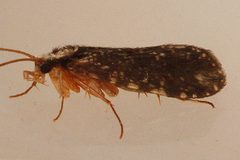
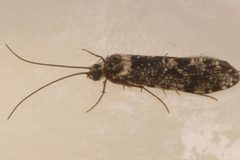
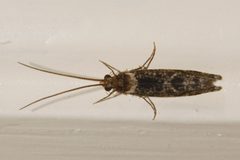
Polycentropus is a large of caddisflies (Trichoptera) in the Polycentropodidae, containing more than 190 described . The genus is commonly referred to as 'tube maker caddisflies' due to the silken retreat structures constructed by larvae. Species occur across multiple continents including Europe, Asia, and South America. Larvae are predatory and inhabit running waters, where they build silken retreats with capture nets to trap prey.
Pronunciation
How to pronounce Polycentropus: /ˌpɒlɪˈsɛntrəpəs/
These audio files are automatically generated. While they are not always 100% accurate, they are a good starting point.
Identification
Larvae are distinguished from other caddisfly by their predatory habit and associated silken retreat construction, combined with specific morphological characters of the and . -level identification requires detailed examination of larval using regional keys; three species occur in Greece (P. excisus, P. flavomaculatus, P. ierapetra), with diagnostic characters established for this region. require identification using genitalic morphology.
Images
Habitat
Running waters (lotic environments) including streams and rivers. Specific microhabitat preferences vary by but generally involve areas where larvae can construct stable silken retreats.
Distribution
Widespread across the Palearctic region including Europe and western Asia; also recorded from South America (Colombia: Boyacá, Cundinamarca, Huila, Tolima, Magdalena, Antioquia, Chocó). GBIF records indicate presence in Denmark. The is represented in Greece by at least three .
Diet
Predatory (larval stage). Larvae are active that use silken capture nets to trap prey.
Behavior
Larvae construct silken retreats and capture nets in running waters for prey capture. This tube-building gives the group its .
More Details
Taxonomic scope
With over 190 described , Polycentropus represents a significant radiation within the Polycentropodidae. Species-level relies heavily on genitalic characters; larval descriptions remain incomplete for many species.
Research gaps
Larval descriptions are lacking for numerous ; ecological data beyond basic associations are sparse for most of the . Most detailed studies focus on European species.
Sources and further reading
- BugGuide
- Wikipedia
- GBIF taxonomy match
- iNaturalist taxon
- NCBI Taxonomy
- Catalogue of Life
- The larva of Polycentropus ierapetra Malicky 1972 (Trichoptera: Polycentropodidae), including a key to the larvae of genus <br />Polycentropus (Curtis 1835) in the Hellenic western Balkan region
- Description of the larva ofPolycentropus schmidiNovak & Botosaneanu, 1965 (Trichoptera: Polycentropodidae) with some notes on its ecology