Predator
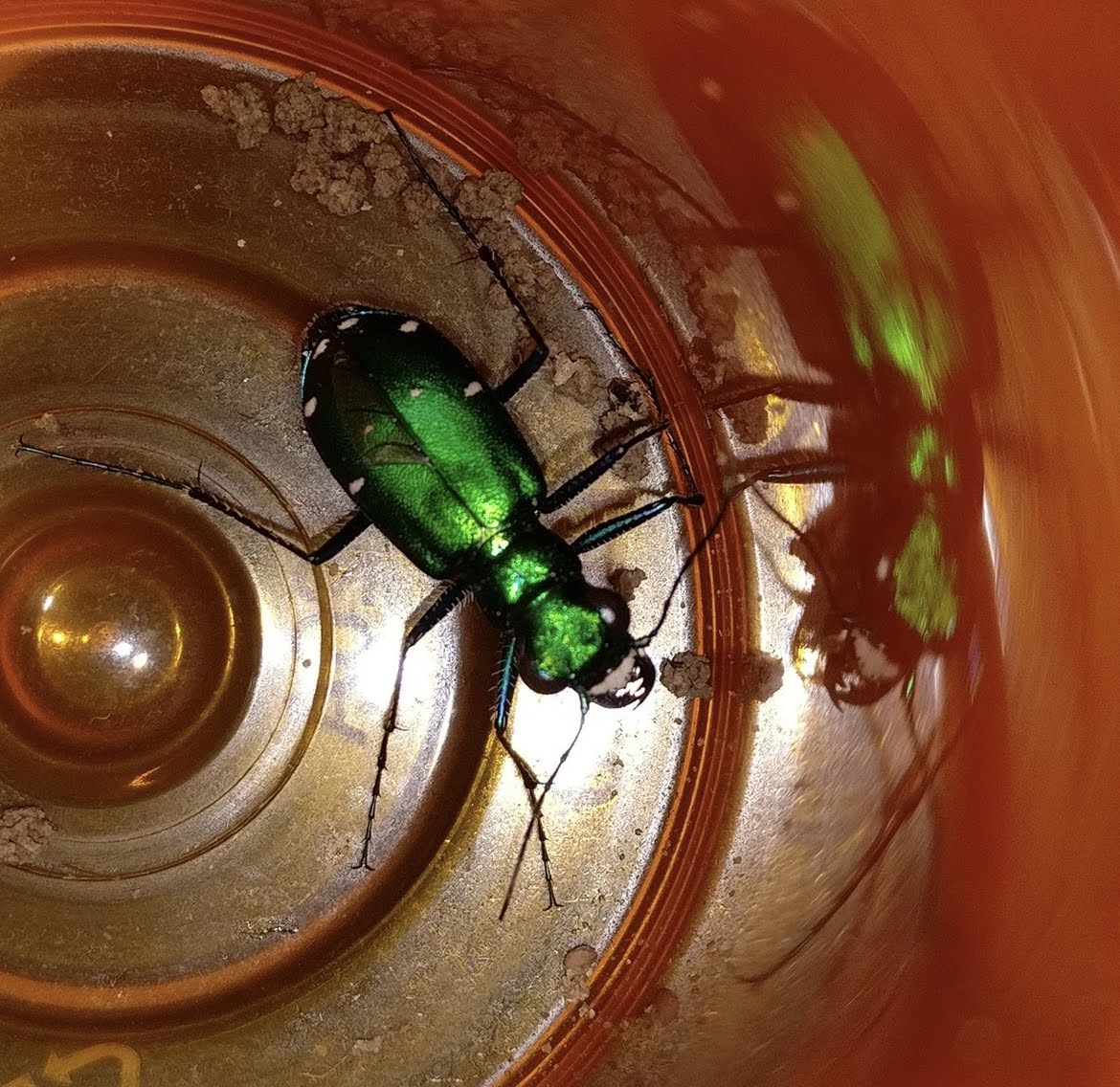
- Tiger beetles are some of the most charismatic insects on Earth: metallic, sharp-eyed, absurdly fast, and every bit as predatory as their name suggests. Come learn how they hunt, why their larvae live like tiny trapdoor monsters in the soil, and what their decline says about the fragile open habitats many other species need too.
Guides
Bicyrtes insidiatrix
Bicyrtes insidiatrix is a species of sand wasp in the family Crabronidae. It is found in North America. Like other members of the genus Bicyrtes, it is a solitary, fossorial wasp that nests in sandy or coarse soils. The species is part of a group of wasps known for preying on true bugs (Hemiptera), though specific prey records for this species are not well documented in the available literature.
Bicyrtes ventralis
Bicyrtes ventralis is a sand wasp in the family Crabronidae, distributed across Central America and North America. Like other members of the genus Bicyrtes, it is a solitary, fossorial wasp that nests in soil. Females provision underground burrows with paralyzed true bugs as food for their larval offspring. The species is one of approximately eight North American species in the genus Bicyrtes.
Bisnius fimetarius
Bisnius fimetarius is a rove beetle in the family Staphylinidae, originally described from Europe and now known to occur across the Palearctic region. The species has been introduced to eastern Canada. As a member of the genus Bisnius, it belongs to a group of rove beetles often associated with dung and carrion habitats where they function as predators.
Bittacus punctiger
Brown Spotted Hanging-fly
Bittacus punctiger is a species of hangingfly in the family Bittacidae, commonly known as the Brown Spotted Hanging-fly. It is found in North America. Hangingflies are predatory insects that capture prey with their raptorial hind legs while suspended from vegetation by their forelegs. The specific epithet 'punctiger' refers to spotted or punctate markings.
Blissus occiduus
Western Chinch Bug
Blissus occiduus, the western chinch bug, is a phloem-feeding true bug (Hemiptera: Blissidae) that is a significant pest of warm-season turfgrasses, particularly buffalograss and zoysiagrass. The species exhibits strong host preference hierarchies, with buffalograss being the most preferred host followed by zoysiagrass, though it can survive and reproduce on a broad range of grasses including agronomic crops. Field studies have documented inconsistent control with neonicotinoid insecticides, with thiamethoxam showing particularly rapid degradation in buffalograss tissues compared to imidacloprid and clothianidin.
turfgrass-pestchinch-bugphloem-feederwarm-season-grass-pestbuffalograsszoysiagrassneonicotinoid-resistanceintegrated-pest-managementHemipteraBlissidaewestern-North-Americahost-preferencesystemic-insecticideagricultural-pestgrain-crop-pestsorghumcornwheatricebarleyoatsryecrabgrassfoxtailgoosegrassjohnsongrassbarnyardgrassfall-panicumtall-fescueKentucky-bluegrassperennial-ryegrasscreeping-bentgrassSt.-Augustinegrasscentipedegrassbermudagrassphloem-sap-feederturfgrass-managementinsecticide-degradationimidaclopridclothianidinthiamethoxampesticide-efficacyhost-suitabilitynymphal-mortalityfecunditysurvivalhost-relocationstoloniferous-growthgrass-architecturechoice-behaviorpolyphagyspecialist-feedingpest-of-lawnsgolf-course-pestsports-turf-pestresidential-pestagricultural-entomologyeconomic-entomologyintegrated-turf-managementBarber-1918Western-NearcticCentral-AmericaNorth-AmericaUnited-StatesCanadaCaliforniaColoradoKansasMontanaNebraskaNew-MexicoAlbertaBritish-ColumbiaManitobaSaskatchewantrue-bugLygaeidaeHeteropteraPentatomomorphaLygaeoideaHexapodaArthropodaInsectaAnimaliaEukaryotaMetazoaarthropodinsectbugplant-feeding-insectsap-feedereconomic-pestmanaged-grasslandresearch-subjectfield-efficacyHPLC-analysissystemic-distributionleaf-tissue-concentrationdifferential-mortalityinconsistent-controlinsecticide-resistancepest-managementturfgrass-scienceagronomyhorticulturelandscape-managementhost-plant-resistancecultivar-susceptibilitypopulation-dynamicsmovement-behaviorcolonizationreproductiondevelopmentnymphadultwing-polymorphismmorphologyidentification-keydiagnostic-charactergeographic-rangespecies-distributionnative-rangeintroduced-rangeoccasional-pestseasonal-activitymonitoringscoutingtreatment-thresholdaction-thresholdeconomic-injury-leveldamage-symptomplant-discolorationstuntingturf-damageyield-losscrop-protectionpest-controlchemical-controlbiological-controlcultural-controlresistant-varietieshybrid-selectionplanting-datecrop-rotationweed-managementhabitat-manipulationconservation-biological-controlnatural-enemiespredatorsparasitoidspathogenspopulation-regulationecosystem-servicedisserviceagricultural-intensificationurbanizationclimate-changerange-expansioninvasive-potentialquarantinephytosanitaryregulatory-pestspecies-complexcryptic-speciesmolecular-identificationDNA-barcodingmorphological-taxonomysystematicsphylogenyevolutionadaptationhost-racebiotypepopulation-geneticsgene-flowselection-pressureinsecticide-selectionresistance-managementintegrated-resistance-managementsustainable-agricultureecological-intensificationprecision-agriculturesmart-farmingdigital-agricultureremote-sensingproximal-sensingdecision-support-systemexpert-systemmodelingsimulationforecastingrisk-assessmentvulnerabilityexposuresensitivityadaptive-capacityresiliencetransformationfood-securitynutrition-securitylivelihoodsrural-developmenturban-agricultureperi-urban-agriculturegreen-infrastructurenature-based-solutionecosystem-approachOne-Healthplanetary-healthsustainability-sciencetransdisciplinary-researchstakeholder-engagementknowledge-co-productionscience-policy-interfaceevidence-based-policyadaptive-governanceadaptive-managementlearning-by-doingparticipatory-researchcitizen-sciencecommunity-based-monitoringtraditional-ecological-knowledgeindigenous-knowledgelocal-knowledgefarmer-knowledgepractitioner-knowledgeexpert-knowledgescientific-knowledgeknowledge-integrationknowledge-translationknowledge-mobilizationextensionadvisory-servicecapacity-buildingeducationtrainingawarenesscommunicationoutreachengagementpartnershipcollaborationnetworkplatformdatabaserepositoryopen-accessopen-dataopen-scienceFAIR-principlesdata-sharingdata-interoperabilitystandardizationharmonizationquality-assurancequality-controlmetadataprovenancetransparencyreproducibilityreplicabilityrigorrobustnessuncertaintyconfidencevalidationverificationcalibrationsensitivity-analysisuncertainty-quantificationdecision-making-under-uncertaintyprecautionary-principleadaptive-decision-makingrobust-decision-makingdynamic-adaptive-policy-pathwaysreal-options-analysisportfolio-analysismulti-criteria-decision-analysiscost-benefit-analysiscost-effectiveness-analysiseconomic-analysissocio-economic-analysisimpact-assessmentrisk-analysisvulnerability-assessmentadaptation-assessmentmitigation-assessmentsustainability-assessmentlife-cycle-assessmentfootprint-analysismaterial-flow-analysisinput-output-analysiscomputable-general-equilibriumagent-based-modelingsystem-dynamicsBayesian-networkmachine-learningartificial-intelligencedeep-learningneural-networkrandom-forestsupport-vector-machinegenetic-algorithmoptimizationheuristicmetaheuristicsimulation-modelprocess-based-modelstatistical-modelempirical-modelmechanistic-modelhybrid-modelensemble-modelmodel-selectionmodel-averagingmodel-validationmodel-calibrationmodel-evaluationgoodness-of-fitpredictive-performanceforecast-skillearly-warningearly-actionrapid-responseemergency-preparednesscontingency-planningcrisis-managementdisaster-risk-reductionresilience-buildingtransformational-adaptationincremental-adaptationmaladaptationadaptation-limitsadaptation-constraintsenabling-conditionsbarriersopportunitiesco-benefitstrade-offssynergiesantagonismsspillover-effectsleakageadditionalitypermanencereversibilityirreversibilitytipping-pointthresholdnon-linearitycomplexityemergenceself-organizationfeedbackcascading-effectteleconnectiontelecouplingspatial-heterogeneitytemporal-variabilityscalecross-scale-interactioncross-sectoral-interactioncross-disciplinary-integrationinterdisciplinaritytransdisciplinaritymode-2-knowledge-productionpost-normal-scienceextended-peer-communityboundary-workboundary-objecttrading-zonecontact-zonethird-spacehybrid-spaceliminal-spacereflexivitypositionalitysituated-knowledgestrong-objectivityfeminist-science-studiesscience-and-technology-studiesactor-network-theorysocial-construction-of-technologylarge-technical-systemssociotechnical-systemssociotechnical-transitionsmulti-level-perspectivestrategic-niche-managementtransition-managementbackcastingvisioningscenario-planningfutures-studiesanticipatory-governanceresponsible-innovationresponsible-research-and-innovationethicsequityjusticefairnessinclusiondiversitydecolonizationindigenous-rightsfood-sovereigntyagroecologyregenerative-agricultureorganic-agricultureconservation-agricultureclimate-smart-agriculturesustainable-intensificationagroforestrysilvopastureintegrated-crop-livestock-systemintegrated-pest-and-disease-managementintegrated-soil-fertility-managementintegrated-water-managementintegrated-landscape-managementecosystem-based-adaptationecosystem-based-mitigationblue-infrastructureurban-green-spacecommunity-gardenallotment-gardenhome-gardenkitchen-gardenpermaculturefood-forestedible-landscapeproductive-landscapemultifunctional-landscapecultural-landscapeheritage-landscapeprotected-areaconservation-arearestoration-arearewildingreconciliation-ecologyconservation-biologyrestoration-ecologylandscape-ecologyecosystem-ecologypopulation-ecologycommunity-ecologybehavioral-ecologyevolutionary-ecologyfunctional-ecologytrait-based-ecologymacroecologybiogeographyphylogeographytaxonomybiosystematicsevolutionary-biologyquantitative-geneticsmolecular-ecologygenomicstranscriptomicsproteomicsmetabolomicsphenomicsgeographic-information-systemglobal-positioning-systemunmanned-aerial-vehiclesatellite-imageryhyperspectral-imagingthermal-imagingLiDARradaracoustic-monitoringeDNAenvironmental-DNAmetabarcodingmetagenomicsparticipatory-monitoringindigenous-and-local-knowledgefarmer-field-schoolplant-clinicintegrated-crop-managementintegrated-natural-resource-managementlearning-based-managementknowledge-based-managementevidence-based-managementsmart-agricultureagroecological-agriculturebiodynamic-agricultureholistic-managementmanaged-grazingrotational-grazingmob-grazingforest-farmingalley-croppingriparian-bufferwindbreakshelterbeltliving-fencecontour-farmingterracingcover-croppinggreen-manurecompostingvermicompostingbiocharbiofertilizerbiostimulantbiocontrolaugmentative-biological-controlclassical-biological-controlmicrobial-controlentomopathogenic-nematodeentomopathogenic-fungusentomopathogenic-bacteriumentomopathogenic-viruspredatorparasitoidparasitecompetitorantagonistnatural-enemybeneficial-insectpollinatordecomposerdetritivorenutrient-cyclingsoil-healthsoil-biologysoil-microbiomerhizospherephyllosphereendospheremycorrhizanitrogen-fixationphosphorus-solubilizationplant-growth-promotioninduced-systemic-resistancesystemic-acquired-resistancepriminghormesiscross-tolerancestress-memoryepigeneticstransgenerational-effectmaternal-effectpaternal-effectparental-effecthost-microbe-interactionplant-microbe-interactioninsect-microbe-interactionmultitrophic-interactionfood-webtrophic-cascadeapparent-competitionresource-competitioninterference-competitionexploitation-competitionscramble-competitioncontest-competitiondensity-dependencedensity-independenceregulationlimitationbottom-up-controltop-down-controlsideways-controlmesopredator-releasetrophic-trickletrophic-subsidyspatial-subsidytemporal-subsidyecosystem-engineerfoundation-specieskeystone-speciesumbrella-speciesflagship-speciesindicator-speciessentinel-speciesbioindicatorbiomonitorecosystem-service-providerecosystem-service-beneficiaryprovisioning-serviceregulating-servicecultural-servicesupporting-servicehabitat-servicepollination-servicepest-control-servicenutrient-cycling-servicewater-purification-serviceair-purification-serviceclimate-regulation-serviceerosion-control-servicerecreation-serviceaesthetic-servicespiritual-serviceeducational-servicescientific-serviceexistence-valueoption-valuebequest-valuedirect-use-valueindirect-use-valuenon-use-valuetotal-economic-valuewillingness-to-paywillingness-to-acceptcontingent-valuationchoice-experimentbenefit-transferecosystem-accountingnatural-capital-accountinggreen-accountinginclusive-wealthgenuine-progress-indicatorindex-of-sustainable-economic-welfarehappy-planet-indexplanetary-boundariesdoughnut-economicsdegrowthsteady-state-economycircular-economysharing-economycollaborative-consumptionprosumermaker-movementurban-farmingvertical-farmingcontrolled-environment-agriculturehydroponicsaeroponicsaquaponicsbioponicsintegrated-multi-trophic-aquaculturerecirculating-aquaculture-systembiofloc-technologyalgae-cultivationinsect-farmingcellular-agricultureprecision-fermentationcultivated-meatplant-based-meatalternative-proteinnovel-foodfood-technologyfood-innovationfood-system-transformationfood-lossfood-wastepost-harvest-lossvalue-chainsupply-chaincold-chainlogisticsinfrastructurestorageprocessingpackagingdistributionretailconsumptiondietary-patternfood-choiceconsumer-behaviorfood-environmentfood-policyfood-governancewater-securityenergy-securityclimate-securityenvironmental-securityhuman-securitysustainable-development-goalsagenda-2030paris-agreementkunming-montreal-global-biodiversity-frameworkunited-nations-framework-convention-on-climate-changeunited-nations-convention-to-combat-desertificationunited-nations-convention-on-biological-diversitystockholm-conventionrotterdam-conventionbasel-conventionmontreal-protocolkyoto-protocolnagoya-protocolcartagena-protocolaitar-guidelinesipbesipccfaowhowtoundpunepunescoworld-bankimfoecdg20g7euauaseanmercosurnaftausmcacptpprcepbretton-woods-institutionsmultilateral-development-banksbilateral-development-agenciesnon-governmental-organizationscivil-society-organizationscommunity-based-organizationsfarmer-organizationsproducer-organizationscooperativessocial-enterprisesimpact-investingblended-financegreen-bondsocial-bondsustainability-bondcatastrophe-bondinsurancereinsurancerisk-poolingrisk-transferrisk-retentionrisk-reductionpreventionpreparednessresponserecoveryreconstructionrehabilitationbuild-back-betterbuild-back-greenerbuild-back-fairerjust-transitiongreen-transitiondigital-transitionsocial-protectionsafety-netcash-transferin-kind-transferfood-assistancenutrition-assistanceschool-feedingsocial-and-behavior-change-communicationnutrition-educationdietary-diversificationbiofortificationindustrial-fortificationsupplementationtherapeutic-feedingcommunity-based-management-of-acute-malnutritioninpatient-management-of-acute-malnutritionprevention-of-acute-malnutritiontreatment-of-acute-malnutritionmanagement-of-moderate-acute-malnutritionmanagement-of-severe-acute-malnutritionwastingunderweightmicronutrient-deficiencyanemiaiodine-deficiencyvitamin-A-deficiencyzinc-deficiencyiron-deficiencyfolate-deficiencyvitamin-D-deficiencycalcium-deficiencyobesityoverweightdiet-related-non-communicable-diseasediabetescardiovascular-diseasecancerdental-cariesmental-healthcognitive-developmenthuman-capitaleconomic-growthproductivitylabor-force-participationemploymentlivelihoodincomepovertyinequalitysocial-exclusionmarginalizationsustainabilityintergenerational-equityintragenerational-equityspatial-equitytemporal-equityprocedural-equitydistributional-equityrecognitional-equitycapability-approachhuman-developmenthuman-flourishingwell-beingquality-of-lifelife-satisfactionhappinesssubjective-well-beingobjective-well-beingmaterial-well-beingrelational-well-beingexperiential-well-beingeudaimonic-well-beinghedonic-well-beingpsychological-well-beingsocial-well-beingphysical-well-beingspiritual-well-beingenvironmental-well-beingplanetary-well-beingecohealthglobal-healthpublic-healthenvironmental-healthoccupational-healthfood-safetywater-safetyair-qualitysoil-qualitybiodiversityecosystem-functionecosystem-stabilityecosystem-resilienceecosystem-servicesnatural-capitalnature's-contributions-to-peopleurban-natureurban-biodiversityurban-ecosystemurban-forestryurban-greeningurban-coolingurban-heat-islandclimate-change-adaptationclimate-change-mitigationclimate-resilient-agriculturelow-emission-agriculturecarbon-neutral-agriculturecarbon-negative-agricultureagroecological-intensificationintegrated-watershed-managementintegrated-coastal-zone-managementintegrated-marine-and-coastal-area-managementintegrated-water-resources-managementparticipatory-managementpolycentric-governancecollaborative-governancenetwork-governanceparticipatory-governancedeliberative-governancetransformative-governancesocial-innovationtechnological-innovationinstitutional-innovationorganizational-innovationbusiness-model-innovationpolicy-innovationsystem-innovationsocio-technical-transitionsustainability-transitiondigital-transformationagricultural-transformationrural-transformationurban-transformationlandscape-transformationecosystem-restorationecosystem-rehabilitationecosystem-reconstructionecosystem-replacementecosystem-protectionecosystem-conservationecosystem-managementecosystem-stewardshipecosystem-governancebiocultural-diversitybiocultural-heritagebiocultural-rightsbiocultural-community-protocolfree-prior-and-informed-consentaccess-and-benefit-sharingtraditional-knowledgeaction-researchinterdisciplinary-researchmultidisciplinary-researchcross-disciplinary-researchproblem-oriented-researchsolution-oriented-researchuse-inspired-researchfundamental-researchapplied-researchdevelopment-researchimplementation-researchscaling-researchoutcome-evaluationprocess-evaluationeconomic-evaluationmulti-criteria-analysisparticipatory-evaluationdevelopmental-evaluationutilization-focused-evaluationrealist-evaluationtheory-based-evaluationcontribution-analysisprocess-tracingqualitative-comparative-analysissocial-network-analysisinstitutional-analysispolitical-economy-analysispower-analysisgender-analysissocial-inclusion-analysispoverty-analysisvulnerability-analysisresilience-analysisadaptation-analysismitigation-analysissustainability-analysisscenario-analysisforesightanticipatory-analysisroadmappingpathway-analysistransition-analysistransformation-analysisgovernance-innovationfinancial-innovationmarket-based-instrumentpayment-for-ecosystem-servicesecosystem-service-valuationinclusive-wealth-accountingsustainable-development-goals-indexenvironmental-performance-indexglobal-food-security-indexglobal-hunger-indexnutrition-indexwater-poverty-indexenergy-development-indexmultidimensional-poverty-indexhuman-development-indexgender-development-indexgender-inequality-indexinequality-adjusted-human-development-indexplanetary-pressures-adjusted-human-development-indexsustainable-development-reportworld-happiness-reportworld-development-reportworld-resources-reportglobal-risks-reportglobal-adaptation-reportemissions-gap-reportproduction-gap-reportadaptation-gap-reportfinance-gap-reportbiodiversity-outlookclimate-change-outlookland-degradation-outlookwater-outlookenergy-outlookfood-outlookagriculture-outlookforestry-outlookfisheries-outlookaquaculture-outlooklivestock-outlookcrop-outlooktechnology-outlooksocial-outlookeconomic-outlookregional-outlookcountry-outlooksectoral-outlookthematic-outlookspecial-reporttechnical-reportworking-paperdiscussion-paperpolicy-briefissue-brieffact-sheetguidelinemanualhandbooktoolkitframeworkprotocolstandardindicatorbenchmarktargetgoalobjectivestrategyplanprogramprojectinitiativealliancecoalitionhubcenterinstituteacademyuniversitycollegeschoolresearch-centerthink-tankobservatorymonitoring-systemearly-warning-systemalert-systemresponse-systemrecovery-systemlearning-systemknowledge-systeminformation-systemdata-systemarchivelibrarymuseumcollectionexhibitiondemonstrationpilotcase-studybest-practicelesson-learnedsuccess-storyfailure-storyinnovationinventiondiscoverybreakthroughfrontiercutting-edgestate-of-the-artemergingtrendingdisruptivetransformativerevolutionaryevolutionaryincrementalradicalsystemicholisticintegratedinterconnectedinterdependentcomplexcomplicatedsimplewickedtameuncertainambiguousvolatiledynamicadaptiveresilientrobustfragilevulnerablesensitiveexposedat-riskin-dangerthreatenedendangeredcriticalurgentimmediateshort-termmedium-termlong-termstrategictacticaloperationalfoundationalstructuralfunctionalproceduralbehavioralattitudinalculturalsocialeconomicpoliticalenvironmentaltechnologicalinstitutionalorganizationalindividualcollectivecommunitysocietalgloballocalnationalregionallandscapeseascapewaterscapeairscapebiospherenoospheretechnospheresociosphereecospherehydrosphereatmospherelithospherepedospherecryosphereanthroposphereurban-sphererural-sphereagricultural-spherenatural-spheremanaged-sphereprotected-sphererestored-spheredegraded-spheretransformed-sphereconnected-spheredisconnected-sphereintegrated-spherefragmented-sphereresilient-spherevulnerable-sphereadaptive-spheremaladaptive-spheresustainable-sphereunsustainable-sphereequitable-sphereinequitable-spherejust-sphereunjust-sphereinclusive-sphereexclusive-spherediverse-spherehomogeneous-spherecomplex-spheresimple-spheredynamic-spherestatic-spherestable-sphereunstable-spherepredictable-sphereunpredictable-spherecontrollable-sphereuncontrollable-spheremanageable-sphereunmanageable-spheregovernable-sphereungovernable-spherenavigable-sphereunnavigable-spheretraversable-sphereuntraversable-spherepermeable-sphereimpermeable-sphereporous-spherenon-porous-spheretransparent-sphereopaque-spherevisible-sphereinvisible-spheretangible-sphereintangible-spherematerial-sphereimmaterial-spherephysical-spheremetaphysical-sphereempirical-spheretheoretical-spherepractical-sphereapplied-spherepure-spherebasic-spherestrategic-spheretactical-sphereoperational-spherefoundational-spheresuperstructural-sphereinfrastructural-spherestructural-spherefunctional-sphereprocedural-spherebehavioral-sphereattitudinal-spherecultural-spheresocial-sphereeconomic-spherepolitical-sphereenvironmental-spheretechnological-sphereinstitutional-sphereorganizational-sphereindividual-spherecollective-spherecommunity-spheresocietal-sphereglobal-spherelocal-spherenational-sphereregional-spherelandscape-sphereseascape-spherewaterscape-sphereairscape-spherebiosphere-spherenoosphere-spheretechnosphere-spheresociosphere-sphereecosphere-spherehydrosphere-sphereatmosphere-spherelithosphere-spherepedosphere-spherecryosphere-sphereanthroposphere-sphereurban-sphere-sphererural-sphere-sphereagricultural-sphere-spherenatural-sphere-spheremanaged-sphere-sphereprotected-sphere-sphererestored-sphere-spheredegraded-sphere-spheretransformed-sphere-sphereconnected-sphere-spheredisconnected-sphere-sphereintegrated-sphere-spherefragmented-sphere-sphereresilient-sphere-spherevulnerable-sphere-sphereadaptive-sphere-spheremaladaptive-sphere-spheresustainable-sphere-sphereunsustainable-sphere-sphereequitable-sphere-sphereinequitable-sphere-spherejust-sphere-sphereunjust-sphere-sphereinclusive-sphere-sphereexclusive-sphere-spherediverse-sphere-spherehomogeneous-sphere-spherecomplex-sphere-spheresimple-sphere-spheredynamic-sphere-spherestatic-sphere-spherestable-sphere-sphereunstable-sphere-spherepredictable-sphere-sphereunpredictable-sphere-spherecontrollable-sphere-sphereuncontrollable-sphere-spheremanageable-sphere-sphereunmanageable-sphere-spheregovernable-sphere-sphereungovernable-sphere-spherenavigable-sphere-sphereunnavigable-sphere-spheretraversable-sphere-sphereuntraversable-sphere-spherepermeable-sphere-sphereimpermeable-sphere-sphereporous-sphere-spherenon-porous-sphere-spheretransparent-sphere-sphereopaque-sphere-spherevisible-sphere-sphereinvisible-sphere-spheretangible-sphere-sphereintangible-sphere-spherematerial-sphere-sphereimmaterial-sphere-spherephysical-sphere-spheremetaphysical-sphere-sphereempirical-sphere-spheretheoretical-sphere-spherepractical-sphere-sphereapplied-sphere-spherepure-sphere-spherebasic-sphere-spherestrategic-sphere-spheretactical-sphere-sphereoperational-sphere-spherefoundational-sphere-spheresuperstructural-sphere-sphereinfrastructural-sphere-spherestructural-sphere-spherefunctional-sphere-sphereprocedural-sphere-spherebehavioral-sphere-sphereattitudinal-sphere-spherecultural-sphere-spheresocial-sphere-sphereeconomic-sphere-spherepolitical-sphere-sphereenvironmental-sphere-spheretechnological-sphere-sphereinstitutional-sphere-sphereorganizational-sphere-sphereindividual-sphere-spherecollective-sphere-spherecommunity-sphere-spheresocietal-sphere-sphereglobal-sphere-spherelocal-sphere-spherenational-sphere-sphereregional-sphere-spherelandscape-sphere-sphereseascape-sphere-spherewaterscape-sphere-sphereairscape-sphere-spherebiosphere-sphere-spherenoosphere-sphere-spheretechnosphere-sphere-spheresociosphere-sphere-sphereecosphere-sphere-spherehydrosphere-sphere-sphereatmosphere-sphere-spherelithosphere-sphere-spherepedosphere-sphere-spherecryosphere-sphere-sphereanthroposphere-sphere-sphereurban-sphere-sphere-sphererural-sphere-sphere-sphereagricultural-sphere-sphere-spherenatural-sphere-sphere-spheremanaged-sphere-sphere-sphereprotected-sphere-sphere-sphererestored-sphere-sphere-spheredegraded-sphere-sphere-spheretransformed-sphere-sphere-sphereconnected-sphere-sphere-spheredisconnected-sphere-sphere-sphereintegrated-sphere-sphere-spherefragmented-sphere-sphere-sphereresilient-sphere-sphere-spherevulnerable-sphere-sphere-sphereadaptive-sphere-sphere-spheremaladaptive-sphere-sphere-spheresustainable-sphere-sphere-sphereunsustainable-sphere-sphere-sphereequitable-sphere-sphere-sphereinequitable-sphere-sphere-spherejust-sphere-sphere-sphereunjust-sphere-sphere-sphereinclusive-sphere-sphere-sphereexclusive-sphere-sphere-spherediverse-sphere-sphere-spherehomogeneous-sphere-sphere-spherecomplex-sphere-sphere-spheresimple-sphere-sphere-spheredynamic-sphere-sphere-spherestatic-sphere-sphere-spherestable-sphere-sphere-sphereunstable-sphere-sphere-spherepredictable-sphere-sphere-sphereunpredictable-sphere-sphere-spherecontrollable-sphere-sphere-sphereuncontrollable-sphere-sphere-spheremanageable-sphere-sphere-sphereunmanageable-sphere-sphere-spheregovernable-sphere-sphere-sphereungovernable-sphere-sphere-spherenavigable-sphere-sphere-sphereunnavigable-sphere-sphere-spheretraversable-sphere-sphere-sphereuntraversable-sphere-sphere-spherepermeable-sphere-sphere-sphereimpermeable-sphere-sphere-sphereporous-sphere-sphere-spherenon-porous-sphere-sphere-spheretransparent-sphere-sphere-sphereopaque-sphere-sphere-spherevisible-sphere-sphere-sphereinvisible-sphere-sphere-spheretangible-sphere-sphere-sphereintangible-sphere-sphere-spherematerial-sphere-sphere-sphereimmaterial-sphere-sphere-spherephysical-sphere-sphere-spheremetaphysical-sphere-sphere-sphereempirical-sphere-sphere-spheretheoretical-sphere-sphere-spherepractical-sphere-sphere-sphereapplied-sphere-sphere-spherepure-sphere-sphere-spherebasic-sphere-sphere-spherestrategic-sphere-sphere-spheretactical-sphere-sphere-sphereoperational-sphere-sphere-spherefoundational-sphere-sphere-spheresuperstructural-sphere-sphere-sphereinfrastructural-sphere-sphere-spherestructural-sphere-sphere-spherefunctional-sphere-sphere-sphereprocedural-sphere-sphere-spherebehavioral-sphere-sphere-sphereattitudinal-sphere-sphere-spherecultural-sphere-sphere-spheresocial-sphere-sphere-sphereeconomic-sphere-sphere-spherepolitical-sphere-sphere-sphereenvironmental-sphere-sphere-spheretechnological-sphere-sphere-sphereinstitutional-sphere-sphere-sphereorganizational-sphere-sphere-sphereindividual-sphere-sphere-spherecollective-sphere-sphere-spherecommunity-sphere-sphere-spheresocietal-sphere-sphere-sphereglobal-sphere-sphere-spherelocal-sphere-sphere-spherenational-sphere-sphere-sphereregional-sphere-sphere-spherelandscape-sphere-sphere-sphereseascape-sphere-sphere-spherewaterscape-sphere-sphere-sphereairscape-sphere-sphere-spherebiosphere-sphere-sphere-spherenoosphere-sphere-sphere-spheretechnosphere-sphere-sphere-spheresociosphere-sphere-sphere-sphereecosphere-sphere-sphere-spherehydrosphere-sphere-sphere-sphereatmosphere-sphere-sphere-spherelithosphere-sphere-sphere-spherepedosphere-sphere-sphere-spherecryosphere-sphere-sphere-sphereanthroposphere-sphere-sphere-sphereBohartia isabella
Sierra Longhorn Robber
Bohartia isabella is a species of robber fly in the family Asilidae, described by Adisoemarto and Wood in 1975. The species is known by the common name 'Sierra Longhorn Robber'. As a member of the Asilidae family, it belongs to a group of predatory flies known for their aggressive hunting behavior and powerful flight. Very little specific information about this species has been documented in the provided sources.
Bohartia tenuis
Slender Longhorn Robber
Bohartia tenuis is a species of robber fly in the family Asilidae, described by Adisoemarto and Wood in 1975. The species belongs to a genus of slender, longhorn-like robber flies. The common name "Slender Longhorn Robber" reflects its elongated body form. As with other Asilidae, it is a predatory fly, though specific details of its biology remain poorly documented.
Bothriocera omani
Bothriocera omani is a species of planthopper in the family Cixiidae, first described by Kramer in 1983. The species has been identified as a predator of the Dubas bug (Ommatissus lybicus), a serious pest of date palms in the Middle East and North Africa, based on molecular gut content analysis. It was collected from date palm plantations in Oman as part of a study identifying natural enemies of O. lybicus.
Boyeria vinosa
fawn darner
Boyeria vinosa, the fawn darner, is a dragonfly species in the family Aeshnidae. It inhabits rivers and streams in eastern North America, from southeastern Canada through the eastern United States. Adults are crepuscular, being most active at dusk. The species has a univoltine life cycle with egg diapause and approximately 10 months of larval development.
Brachynemurus californicus
Brachynemurus californicus is a species of antlion (family Myrmeleontidae) first described by Banks in 1895. As a member of the order Neuroptera, it shares the characteristic net-veined wings and complete metamorphosis typical of this group. The genus Brachynemurus contains species known for their distinctive adult morphology and predatory larval behavior. This species occurs in western North America, with records from California and surrounding regions.
Brachynemurus ferox
Brachynemurus ferox is a species of antlion in the family Myrmeleontidae, first described by Walker in 1853. The species is distributed across North America and Middle America. Like other antlions, it belongs to an order of predatory insects characterized by their distinctive larval pit-digging behavior and elongated, net-veined wings in adults.
Brachynemurus hubbardii
Brachynemurus hubbardii is an antlion species in the family Myrmeleontidae, distributed across Central America and North America. The genus Brachynemurus belongs to a diverse group of antlions whose larvae typically do not construct the characteristic funnel-shaped pits associated with the more familiar genus Myrmeleon. Instead, Brachynemurus larvae bury themselves just below the soil surface and wait for prey to pass by. Adults are delicate, lacy-winged insects that resemble damselflies but possess short, clubbed antennae.
Brachynemurus nebulosus
antlion
Brachynemurus nebulosus is a species of antlion in the family Myrmeleontidae, distributed across North America. Like other antlions, it undergoes complete metamorphosis with a predatory larval stage and a delicate, lacy-winged adult stage. The species belongs to a genus characterized by distinctive wing patterns and morphology among antlions.
Brachynemurus pulchellus
Brachynemurus pulchellus is a species of antlion in the family Myrmeleontidae, first described by Banks in 1911. The genus Brachynemurus belongs to the diverse neuropteran lineage of antlions, which are predatory insects known for their distinctive larval pit-trap construction behavior. As a member of this genus, it shares the elongated body form and relatively long, narrow wings typical of Brachynemurus species. The specific epithet 'pulchellus' (diminutive of 'pulcher', meaning beautiful) suggests this species was noted for its attractive appearance among its describers.
Brachynemurus ramburi
Brachynemurus ramburi is a species of antlion (family Myrmeleontidae) described by Nathan Banks in 1907. Like other antlions, it undergoes complete metamorphosis with a predatory larval stage and a delicate, aerial adult stage. The genus Brachynemurus is one of 18 genera of antlions recorded north of Mexico. Adults of this genus are typically nocturnal and attracted to lights.
Brachypsectra fulva
Texas beetle
Brachypsectra fulva, commonly known as the Texas beetle, is a species in the family Brachypsectridae. Adults are rarely observed but are attracted to light and active from May to August. The larvae are predatory, living under bark, in leaf litter, and rock crevices, where they ambush small arthropod prey. The species occurs in the southwestern United States and Mexico.
Broscus cephalotes
coastal ground beetle
Broscus cephalotes is a nocturnal, flightless ground beetle in the family Carabidae. It is native to coastal regions of temperate Europe and western Siberia, and was introduced to eastern Canada around 1975, subsequently spreading into the United States. The species is recognized as beneficial in agricultural contexts due to its predatory habits.
Brumus
Brumus is a genus of lady beetles (family Coccinellidae) established by Mulsant in 1850. The genus contains approximately 10 described species distributed across Europe, Asia, and Africa. Species in this genus are generally small to medium-sized coccinellids with somewhat elongated body forms compared to the more rounded typical lady beetles.
Brumus quadripustulatus
Cream-spot ladybird, Cream-spot lady beetle
Brumus quadripustulatus is a small ladybird beetle native to Europe and northern Asia, now established in North America. It is recognized by its distinctive cream-colored spots on a dark, nearly black background. The species inhabits various wooded and shrubby environments and has been observed preying on aphids and scale insects.
Buenoa
backswimmer
Buenoa is a genus of backswimmers (family Notonectidae) established by George Willis Kirkaldy in 1904 to accommodate Western Hemisphere species formerly placed in Anisops. The genus is distinguished from Anisops by males having a two-segmented front tarsus, versus one-segmented in the latter genus. Buenoa contains 69 described species distributed across the Americas. Members are aquatic predators inhabiting diverse freshwater and saltwater environments.
Buenoa arida
Buenoa arida is a species of backswimmer in the family Notonectidae, first described by Truxal in 1953. The genus Buenoa comprises aquatic predatory insects that swim upside down. This species is part of a diverse group of true bugs adapted to freshwater environments.
Buenoa platycnemis
Buenoa platycnemis is a species of backswimmer in the family Notonectidae. It is a predatory aquatic insect found in freshwater habitats across the Americas. The genus Buenoa is distinguished by males producing audible stridulatory sounds, a rare trait among aquatic Heteroptera. This species has been recorded from North, Central, and South America, including multiple states in Brazil.
Bythotrephes longimanus
Spiny Water Flea, Spiny Waterflea
Bythotrephes longimanus is a predatory planktonic cladoceran crustacean native to northern Europe and Asia that has become a significant invasive species in North America since its introduction to the Great Lakes in the 1980s. Adults reach up to 15 mm in length, with females growing substantially larger than males. The species exhibits cyclic parthenogenesis and produces distinctive morphological forms depending on reproductive mode and season. Its invasion has caused substantial ecological disruption through direct predation on native zooplankton and non-lethal effects that alter prey behavior and population dynamics.
Caeculidae
rake-legged mites
Caeculidae, commonly called rake-legged mites, is a family of large prostigmatic mites (750–3000 µm) and the sole family of the superfamily Caeculoidea. The family contains approximately 100 described species in seven genera distributed worldwide, with the oldest fossil records dating to the Cenomanian (approximately 100 million years ago) in Burmese amber. These mites are specialized ambush predators of arid environments, using modified forelegs to capture prey.
Caeculus
rake-legged mites
Caeculus is a genus of large prostigmatic mites in the family Caeculidae, commonly known as rake-legged mites. The genus contains approximately 20 described species, predominantly distributed in North America. Members are characterized by spiniform setae on their first pair of legs, which function in prey capture. These mites are ambush predators of small arthropods in arid environments.
Caliadurgus
Caliadurgus is a genus of medium-sized spider wasps in the family Pompilidae, subfamily Pepsinae. The genus was established by Pate in 1946 as a replacement for the preoccupied name Calicurgus. These wasps are known for hunting orb-weaving spiders (Araneidae) and long-jawed orb weavers (Tetragnathidae) to provision nests for their larvae. The genus has a Holarctic and Neotropical distribution, with species recorded across North America, Europe, and South America.
Calleida
Calleida is a large genus of ground beetles in the family Carabidae, tribe Lebiini, comprising more than 300 species. The genus is distributed across multiple continents with significant diversity in the Oriental Region. Oriental species have been organized into nine species groups based on external morphology and genitalia characters. At least one North American species, C. viridipennis, has been documented as a predator of lepidopteran pests.
Calleida viridipennis
Calleida viridipennis is a ground beetle in the family Carabidae, characterized by a metallic green-black exoskeleton, large eyes, and functional wings enabling flight. It is a spring breeder that overwinters as an adult under tree bark, emerging in late February or early March. The species is a documented predator of specific insect larvae, including the tortoise beetle Hemisphaerota cyanea and the fruittree leafroller Archips argyrospila.
Calliodis
Calliodis is a genus of minute pirate bugs in the family Anthocoridae, established by Reuter in 1871. The genus is placed in the tribe Scolopini. At least one species, C. maculipennis, has been documented to reproduce by constant parthenogenesis. Adults of C. temnostethoides have been observed in dead-leaf clusters of black oak following wind disturbance events.
Calliopius laeviusculus
Planktonic Amphipod
Calliopius laeviusculus is a marine amphipod crustacean distributed across the North Atlantic in both European and North American waters. The species exhibits a semiannual life cycle in southern parts of its range, with overwintering adults releasing young in spring and early summer. Population dynamics are tightly coupled to seasonal food availability, particularly capelin egg deposits. Multiple generations per year occur in warmer regions, while single-generation annual cycles prevail in colder northern waters.
Calopompilus deceptus
Calopompilus deceptus is a species of spider wasp in the family Pompilidae. The genus Calopompilus contains species that are specialized predators of spiders, with females paralyzing their prey to provision nests for their larvae. Very little specific information is documented for C. deceptus; the species has been recorded from only two observations on iNaturalist, indicating it is rarely encountered or underreported. As with other members of its genus, it is presumed to be a solitary hunting wasp with specialized predatory behavior.
Calosoma angulatum
angulate caterpillar hunter
Calosoma angulatum, commonly known as the angulate caterpillar hunter, is a large ground beetle in the family Carabidae. First described by Chevrolat in 1834, this species ranges from the southwestern United States through Central America into northern South America. It inhabits premontane moist forests and oak-savannah ecosystems. Adults are known to prey on Spodoptera frugiperda (fall armyworm), indicating a role as a predator of agricultural pest caterpillars.
Calosoma latipenne
broad beautiful black searcher
Calosoma latipenne is a large ground beetle in the family Carabidae, commonly known as the broad beautiful black searcher. It inhabits sandy soils in arid and semi-arid regions of the southwestern United States. Adults are brachypterous (short-winged) and have been observed preying on grasshopper species. The species belongs to a genus renowned for its caterpillar-hunting behavior, though specific ecological details for this species remain limited.
Calosoma luxatum
dislocated beautiful black searcher
Calosoma luxatum, commonly known as the dislocated beautiful black searcher, is a large ground beetle in the family Carabidae. Adults are brachypterous, meaning they have reduced wings and are flightless. The species is distributed across western and central North America, from the Canadian prairies through the western United States. It inhabits open short grass prairies and dry forest clearings, where it hunts as an active predator.
Calosoma macrum
long caterpillar hunter
Calosoma macrum is a large ground beetle in the family Carabidae, commonly known as the long caterpillar hunter. It was described by John Lawrence LeConte in 1853. The species is found in the southwestern United States and northern Mexico, where it inhabits mid-elevation open areas. Adults are active predators that hunt caterpillars, including arboreal species.
Calosoma marginale
rimmed caterpillar hunter, Wrinkle-winged Calosoma
A large ground beetle in the genus Calosoma, commonly known as the rimmed caterpillar hunter. Adults are crepuscular and active predators that hunt caterpillars and scarabaeid beetles. The species occurs across a broad geographic range from Central America through the southern and central United States. Adults overwinter in the ground.
Calosoma monticola
mountain beautiful black searcher
Calosoma monticola is a ground beetle in the family Carabidae, described by Casey in 1913. It is found in the western United States, where it inhabits sagebrush areas. Adults are brachypterous (short-winged) and have been documented preying on various soil-dwelling insect larvae and other beetles. The species belongs to a genus known for active predation on caterpillars and other soft-bodied insects.
Calosoma sayi
Black Caterpillar Hunter, Say's Caterpillar Hunter
Calosoma sayi is a large ground beetle in the subfamily Carabinae, commonly known as the Black Caterpillar Hunter or Say's Caterpillar Hunter. It is one of the largest carabid beetles in North America, measuring 25–28 mm in length. Unlike many congeners, it lacks metallic coloration, instead appearing uniformly lustrous black. Both adults and larvae are active predators that specialize in hunting caterpillars and other soft-bodied insect larvae.
Calosoma semilaeve
Black Calosoma, Semi-smooth Beautiful Black Searcher
Calosoma semilaeve is a large ground beetle in the subfamily Carabinae, commonly known as the black calosoma or semi-smooth beautiful black searcher. First described by John Lawrence LeConte in 1851, this species inhabits cultivated fields and roadsides in the western United States and northwestern Mexico. Like other members of the genus Calosoma, it is an active predator of caterpillars and other insects.
Calosoma wilcoxi
Wilcox's Spring Caterpillar Hunter, Wilcox's caterpillar hunter
Calosoma wilcoxi is a medium-sized ground beetle in the genus Calosoma, commonly known as Wilcox's Spring Caterpillar Hunter. It is an arboreal predator that climbs trees to hunt caterpillars, including fall cankerworms, spring cankerworms, gypsy moth larvae, and eastern tent caterpillars. The species is smaller than its congener Calosoma scrutator (the fiery searcher), typically reaching about one third of that species' size. It has been observed in large numbers during caterpillar outbreaks in deciduous forests. Adults are active both day and night and possess potent chemical defenses including methacrylic acid and salicylaldehyde.
Calvia quatuordecimguttata
cream-spot ladybird, cream-spotted ladybird, polkadot ladybird, eighteen spot ladybird
A small Holarctic ladybird measuring 4–5.5 mm, highly variable in coloration across its range. In Europe it appears maroon-brown with fourteen cream spots; in North America and eastern Asia, color forms range from black with white spots to yellow or pink with eighteen large blotches. It inhabits deciduous woodlands, hedgerows, and ruderal areas, overwintering in bark crevices and leaf litter.
Cantharidae
Soldier Beetles, Leatherwings
Soldier beetles (Cantharidae) are soft-bodied, elongate beetles with flexible, velvety elytra that give rise to the common name 'leatherwings.' The family is cosmopolitan, with approximately 160 species in 11 genera occurring in California alone. Adults are frequently observed on flowers, particularly in late summer and fall, where they feed on pollen and nectar and prey on small insects. Both adults and larvae produce defensive chemicals from specialized glands, making them distasteful to predators. The common name derives from the red-and-black color pattern of some species, reminiscent of British military uniforms.
Cantharis
soldier beetle, leatherwing
Cantharis is a large genus of soldier beetles in the family Cantharidae. Members possess soft, flexible elytra that give rise to the common name 'leatherwings.' Both adults and larvae are partially carnivorous, preying on soft-bodied invertebrates, though adults may feed primarily on nectar, pollen, and honeydew. The genus is frequently encountered in meadows and agricultural settings where it contributes to natural pest control.
Cantharis livida
pale soldier beetle
Cantharis livida, commonly known as the pale soldier beetle, is a soft-bodied beetle in the family Cantharidae. Adults measure 10–15 mm and display variable coloration, with bright red or orange head, thorax, and abdomen contrasting with yellow to reddish-brown elytra. Both adults and larvae are predatory, feeding on small invertebrates. The species is widespread across Europe and the eastern Palearctic, and has been introduced to eastern North America.
Cantharis rufa
soldier beetle
Cantharis rufa is a soldier beetle (family Cantharidae) measuring 8–11 mm in length. It is widely distributed across the Palaearctic region and has been introduced to North America, where it is expanding its range. The species has an annual life cycle with two 'prolarval' and six larval instars. Adults are active from mid-May to mid-July.
Carabus auratus
Golden Ground Beetle
Carabus auratus, commonly known as the golden ground beetle, is a flightless predatory beetle in the family Carabidae. Native to central and western Europe, it has been introduced to North America. Adults are diurnal hunters that prey on insects, snails, and worms using digestive secretions to subdue prey. The species is considered beneficial in agricultural settings due to its predation on pest species such as the Colorado potato beetle.
Carabus finitimus
Haldeman's worm and slug hunter
Carabus finitimus is a bluish-colored ground beetle in the family Carabidae. It inhabits bottomland forests along rivers in Kansas, Oklahoma, and Texas. Adults are brachypterous (short-winged) and nocturnal. The common name "Haldeman's worm and slug hunter" reflects its predatory habits.
Carabus goryi
Gory's worm and slug hunter
Carabus goryi is a North American ground beetle in the family Carabidae, commonly known as Gory's worm and slug hunter. The species inhabits cool, moist forests as well as agricultural settings including orchards and cultivated fields. Adults are brachypterous (short-winged), nocturnal, and exhibit gregarious behavior. They are predatory, feeding on soft-bodied insect larvae including those of the spongy moth (Lymantria dispar).
Carabus granulatus
Granulated Ground Beetle
Carabus granulatus is a small, winged ground beetle native to the Palearctic, ranging from Ireland to the Russian Far East, with introduced populations in North America. Adults measure 14–20 mm and exhibit metallic greenish-bronze, green, or occasionally black coloration with distinctive granulated elytra. Unlike most Carabus species, it has retained functional flight ability, though it primarily remains ground-dwelling. The species occupies diverse habitats including forests, fields, prairies, taiga, river margins, fens, lakeshores, and upland peat, occasionally occurring in gardens.
Carabus nemoralis
Bronze Ground Beetle, Bronze Carabid
Carabus nemoralis is a large ground beetle native to central and northern Europe, Iceland, and parts of Asia. It has been introduced to North America and New Zealand, where it is actively expanding its range. Adults measure 20–25 mm and are active year-round. The species is recognized as a beneficial predator in agricultural systems, with documented effectiveness against slugs and other pests.