
Cantharis livida
Linnaeus, 1758
pale soldier beetle
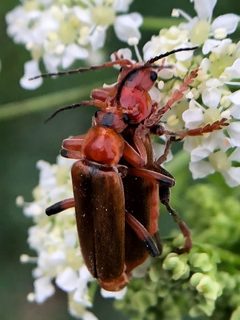
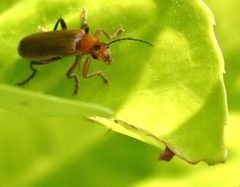
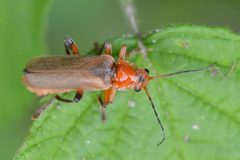
Cantharis livida, commonly known as the pale soldier beetle, is a soft-bodied in the Cantharidae. measure 10–15 mm and display variable coloration, with bright red or orange , , and contrasting with yellow to reddish-brown . Both adults and larvae are predatory, feeding on small . The is widespread across Europe and the eastern Palearctic, and has been introduced to eastern North America.
Pronunciation
How to pronounce Cantharis livida: /ˈkanθəˌris ˈlɪvɪdə/
These audio files are automatically generated. While they are not always 100% accurate, they are a good starting point.
Identification
Distinguished from other Cantharis by the combination of bright red and pronotum with yellow to reddish-brown in the nominate form. The rufipes with dark elytra may resemble other dark soldier beetles but retains the characteristic red head and pronotum. Separation from Chauliognathus and Podabrus requires examination of antennal structure and body proportions: Cantharis has threadlike and pronotum wider than long.
Images
Habitat
Bushes, forest edges, and meadows. frequently found on flowers, trees, and shrubs.
Distribution
Native to most of Europe and the eastern , extending to North Africa. Introduced to eastern United States and Canada.
Seasonality
active from May to July.
Diet
hunt small insects on vegetation. Larvae prey on snails and earthworms.
Behavior
hunt actively on flowers and foliage during daylight hours. When disturbed, adults may withdraw legs and drop to the ground in (death feigning). Adults, larvae, and pupae can excrete defensive chemicals from specialized abdominal glands.
Ecological Role
of small including agricultural pests such as aphids.
Human Relevance
agent for aphids and other soft-bodied plant pests in gardens and agricultural settings.
Similar Taxa
- Chauliognathus speciesSimilar elongate body form and coloration, but Chauliognathus typically has different antennal structure and pronotal proportions
- Podabrus speciesOverlapping use, but Podabrus generally has more robust body and different color patterns
- Cantharis rusticaSimilar coloration; requires careful examination of elytral punctation and body proportions for separation