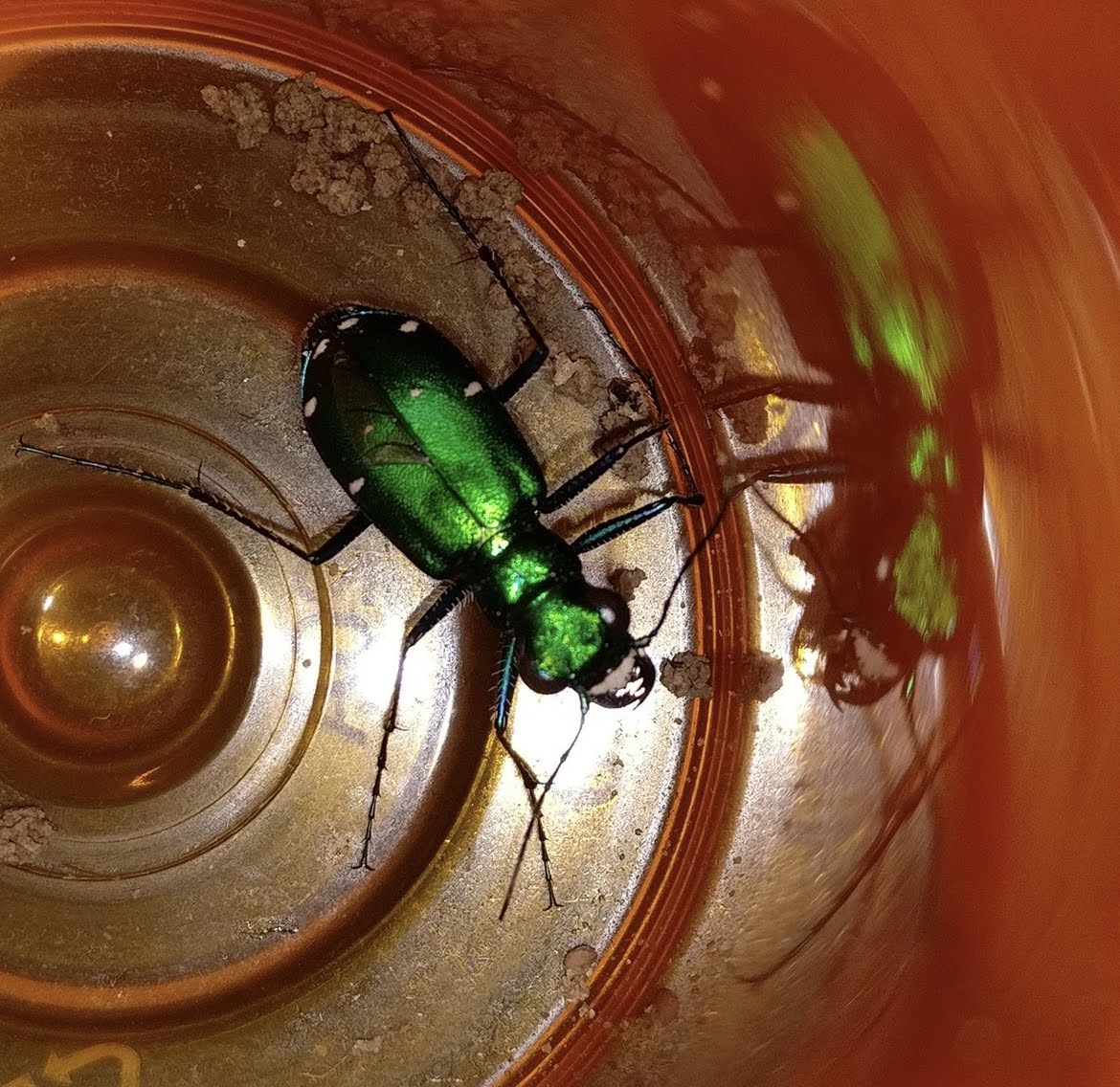
woodland ground beetle, sylvan worm and slug hunter, silvan worm and slug hunter
Carabus sylvosus, commonly known as the woodland ground beetle or sylvan worm and slug hunter, is a species of ground beetle in the family Carabidae. It is native to North America, where it inhabits wooded environments including deciduous mixed forests, coniferous forests, and orchards. Adults are brachypterous (short-winged) and nocturnal, preying on Lepidoptera pupae and scarabaeids. The species has been documented in Canada and the United States.
Vietinghoff's worm and slug hunter
Carabus vietinghoffii is a ground beetle in the family Carabidae with a broad distribution spanning northern regions of North America, Europe, and Asia. The species occurs in boreal forest, sub-Arctic, and Arctic tundra habitats, where it has been documented as far north as 81°N latitude on Ellesmere Island. Research indicates this beetle is a predator, contributing to the high proportion of carnivorous beetles found in northern ecosystems. The species exhibits several recognized subspecies across its range, including C. v. vietinghoffii in North America and Alaska, and C. v. fulgidus and others in Russia and China.
poultryhouse pill beetle
Carcinops pumilio is a small histerid beetle widely distributed across Africa, Europe, Northern Asia, and North America. It is a specialized predator of filth flies, particularly house flies (Musca domestica) and little house flies (Fannia canicularis), consuming both eggs and first-instar larvae. The species has been extensively studied for its potential as a biological control agent in poultry operations, where it inhabits manure accumulations. Adults exhibit a distinctive prey-mediated dispersal behavior, clinging to flies to locate ephemeral breeding resources more efficiently than by walking or flying alone.
European green crab, green crab, shore crab, green shore crab, European shore crab
Carcinus maenas is a highly invasive littoral crab native to the northeast Atlantic Ocean and Baltic Sea. Listed among the world's 100 worst invasive alien species, it has established populations across temperate coastlines worldwide including North America, Australia, South America, and South Africa. The species exhibits remarkable phenotypic plasticity, with color morphs ranging from green to red that differ in aggression and stress tolerance. Its successful global dispersal occurs through multiple mechanisms including ballast water, ship hull fouling, and aquaculture transfers.
Cathartus is a monotypic genus of flat bark beetles in the family Silvanidae, containing the single species Cathartus quadricollis. The genus is known from both stored product environments and agricultural systems, with documented populations in Hawaii functioning as predators of scolytine pests. Laboratory studies have characterized its developmental biology on various grain substrates.
square-necked warrior beetle
A small predatory flat bark beetle in the family Silvanidae with a broad global distribution spanning the Americas, Africa, and the Galápagos Islands. In Hawaii, it serves as an important natural enemy of agricultural scolytine pests including the coffee berry borer, tropical nut borer, and black twig borer. Laboratory studies confirm it can complete development on various stored grains and seeds. The species shows potential for augmentative biological control programs due to its limited dispersal from release sites and established predation rates on pest eggs.
Celina is a genus of small predaceous diving beetles (family Dytiscidae) first described by Aubé in 1837. These aquatic beetles belong to the subfamily Hydroporinae and tribe Methlini. The genus occurs primarily in the Neotropical region, with records from northern South America including Colombia. Members of this genus are aquatic predators inhabiting freshwater environments.
Banded Pennant
Celithemis fasciata, commonly known as the banded pennant, is a dragonfly species in the skimmer family Libellulidae native to the eastern and central United States. Adults are approximately 33 mm in length and are distinguished by extensive, sharply defined black markings on the wings, though wing pattern intensity varies geographically with northern individuals showing less coloration. The species inhabits lentic waters including ponds, lakes, and ditches. Research has demonstrated that individuals exhibit prey preference for small dipteran prey over larger alternatives and engage in prey switching behavior based on relative prey densities.
Ceraeochrysa cincta is a green lacewing species in the family Chrysopidae, distributed across the Americas from North America through the Caribbean to South America. Laboratory studies demonstrate its potential as a biological control agent, with larvae showing instar-specific predatory preferences on prey eggs. Populations in southeast Brazilian agroecosystems exhibit high genetic diversity with broad gene flow across different crop systems. The species produces non-pedunculated infertile eggs in later generations under laboratory conditions, a trait relevant to mass rearing programs.
green lacewing
Ceraeochrysa cubana is a green lacewing species widely distributed across the Americas, from the Caribbean and Middle America through South America. Larvae are voracious polyphagous predators important for biological control of agricultural pests. The species exhibits high genetic diversity in agroecosystems and shows associative learning capabilities in immature stages.
Ceraeochrysa valida is a green lacewing species in the family Chrysopidae. Like other Ceraeochrysa species, its larvae are predatory and construct dorsal packets of debris for camouflage. The species has been documented as a predator of Diaphorina citri nymphs, the Asian citrus psyllid, a significant agricultural pest. Adults are likely green lacewings with delicate, net-veined wings typical of the family.
Predaceous Biting Midges
Ceratopogonini is a tribe of biting midges within the family Ceratopogonidae. Members are commonly known as predaceous biting midges, reflecting their primarily predatory lifestyle. The tribe includes species that serve as important biological control agents, particularly against aphid pests in agricultural and greenhouse settings. Adults are small, delicate flies, while larvae are minute predators that subdue prey using paralytic venom.
Cerceris californica is a solitary predatory wasp in the family Crabronidae. It occurs in Central America and North America. The species is a known predator of Buprestidae beetles (jewel beetles), paralyzing them with its sting to provision underground nests for its offspring. Like other members of the genus Cerceris, it exhibits prey specialization, though the full breadth of its prey preferences has not been extensively documented.
Cerceris rufopicta is a solitary ground-nesting wasp in the family Crabronidae (formerly Philanthidae). It is native to North America, with records from Canada and the United States. Like other members of the genus Cerceris, it is a specialist predator that captures and paralyzes prey to provision underground nests for its larvae. The specific prey preferences for this species have not been documented in the available literature.
Cesonia is a genus of ground spiders in the family Gnaphosidae, first described by Eugène Simon in 1893. The genus contains 31 species distributed across North America, the Caribbean, and parts of the Mediterranean. Despite their common name as "ground spiders," many species are frequently found on vegetation and in arboreal habitats. Cesonia bilineata, the type species, has been documented engaging in predation on spiderlings of other spider species.
Two-lined Stealthy Ground Spider
Cesonia bilineata is a small ground spider in the family Gnaphosidae, first described by Nicholas Marcellus Hentz in 1847. Despite its common name suggesting terrestrial habits, this species is frequently observed climbing vegetation and scaling walls. It has been documented preying on spiderlings of other spider species, including in nursery webs of Pisaurina mira and Peucetia viridans. The species is widespread in eastern North America.
ground spider
Cesonia classica is a ground spider in the family Gnaphosidae, first described by Chamberlin in 1924. The species occurs in the southern United States and Mexico. Like other members of the genus Cesonia, it belongs to a group of active hunting spiders that do not build webs to capture prey. The genus Cesonia includes species that have been documented exhibiting predatory behavior toward other spiders, including raiding nursery webs to feed on spiderlings.
Cesonia ubicki is a species of ground spider in the family Gnaphosidae, described by Platnick and Shadab in 1980. The species is distributed across the southwestern United States and Mexico. Like other members of the genus Cesonia, it is a small, agile predator. Specific details about its ecology and behavior remain poorly documented in the scientific literature.
silver-flies
Chamaemyia is a genus of small flies in the family Chamaemyiidae, commonly known as silver-flies. It serves as the type genus for its family. Larvae of at least one species, Chamaemyia polystigma, are known predators of mealybugs, suggesting a broader role in biological control within the genus.
silver flies, aphid flies
Chamaemyiidae is a small family of acalyptrate flies comprising fewer than 200 described species worldwide. Adults are minute (1–5 mm), typically greyish, and morphologically characterized by reduced bristling. Larvae are active predators of Sternorrhyncha, particularly aphids, adelgids, and scale insects, making several species valuable biological control agents. The family has been deployed in classical biological control programs targeting invasive pests such as the hemlock woolly adelgid and pink hibiscus mealybug. Fossil records are sparse but extend to the Eocene.
windscorpion, sun spider
Chanbria rectus is a species of solifuge (windscorpion or sun spider) in the family Eremobatidae, described by Muma in 1962. As a member of the order Solifugae, it is an arachnid characterized by large, powerful chelicerae and rapid movement. The species occurs in North America and is placed in the subfamily Therobatinae. Like other eremobatids, it is a fast-moving, primarily nocturnal predator adapted to arid and semi-arid environments.
phantom midge
Chaoborus albatus is a species of phantom midge described by Johnson in 1921. As a member of the family Chaoboridae, it is an aquatic dipteran whose larvae are known for their transparent, nearly invisible bodies. The genus Chaoborus is characterized by larvae that lack respiratory siphons and possess unique gas-filled tracheal sacs that function as hydrostatic organs for vertical migration in water columns.
phantom midge
Chaoborus festivus is a species of phantom midge in the family Chaoboridae, first described by Dyar and Shannon in 1924. The genus Chaoborus comprises aquatic midges known for their transparent, nearly invisible larvae that inhabit freshwater systems. Larvae are predatory and possess unique gas-filled sacs that aid in buoyancy control. Adults are short-lived and do not feed.
Pilose Checkered Beetle
Chariessa pilosa is a species of checkered beetle in the family Cleridae. It is a predator of wood-boring beetles and has been recorded from Europe, Northern Asia (excluding China), and North America. The species is known to inhabit galleries made by wood-boring beetles, including during its pupation stage.
Colorado Soldier Beetle
Chauliognathus basalis, commonly known as the Colorado soldier beetle, is a species of soldier beetle in the family Cantharidae. It is found in North America and is particularly common on the plains. The species exhibits Müllerian mimicry with other toxic beetles, sharing a black and orange color pattern that advertises its chemical defenses. Adults are active during the day and frequently observed on flowers, especially those of Gutierrezia sarothrae (broom snakeweed).
Lewis' soldier beetle (striped subspecies)
Chauliognathus lewisi vittatus is a subspecies of soldier beetle in the family Cantharidae. The nominate species C. lewisi is distributed in western North America, and the subspecies vittatus appears to represent a striped or banded color morph. Soldier beetles in this genus are commonly found on flowers where they feed on pollen and nectar, and adults are known predators of soft-bodied insects such as aphids. The subspecific epithet "vittatus" refers to the presence of longitudinal stripes or bands on the elytra, distinguishing it from other populations of C. lewisi.
Margined Leatherwing, Margined Soldier Beetle
Chauliognathus marginatus is a soldier beetle (family Cantharidae) distributed across North and Central America. Adults are diurnal and strongly associated with flowers, particularly white-blooming species. A 2023 study using iNaturalist data demonstrated that this species exhibits statistically significant color preference for white flowers compared to availability, distinguishing it from the closely related Chauliognathus pensylvanicus which prefers yellow flowers. Both larvae and adults are predatory, contributing to biological control of pest insects.
Goldenrod Soldier Beetle, Pennsylvania Leatherwing
Chauliognathus pensylvanicus, commonly known as the goldenrod soldier beetle or Pennsylvania leatherwing, is a species of soldier beetle (family Cantharidae) native to North America. Adults are active in late summer and autumn, where they are frequently observed on goldenrod flowers and other Asteraceae. Both adult and larval stages are predatory, feeding on various plant pests. The species is notable for its susceptibility to the fungal pathogen Eryniopsis lampyridarum, which causes behavioral manipulation and death.
Chelicerates
Chelicerata is a major subphylum of arthropods characterized by the presence of chelicerae—pincer-like or fang-like appendages that are the first pair of structures before the mouth. The group includes horseshoe crabs, sea spiders, and arachnids (spiders, scorpions, mites, ticks, harvestmen, and allies). Chelicerates diverged from other arthropods by the mid-Cambrian period, approximately 508 million years ago. With over 77,000 described living species and estimates suggesting hundreds of thousands more undescribed species, chelicerates represent one of the most diverse animal groups after insects. Most living species are terrestrial air-breathers, though marine lineages persist.
House Pseudoscorpion
Chelifer cancroides, the house pseudoscorpion, is a small pseudoscorpion species measuring 2.5–4.5 mm in body length with pedipalps extending to 7–9 mm. It is the most widely distributed pseudoscorpion species globally, occurring across North America, Europe, Africa, Australia, and the Caribbean. The species is strongly synanthropic, frequently found in human dwellings, barns, and beehives, but also occurs in natural habitats including under tree bark, in caves, and in bird nests. It is harmless to humans and preys on small arthropods.
black earwig
Chelisoches morio, commonly known as the black earwig, is a cosmopolitan earwig species in the family Chelisochidae. Adults are uniformly jet black and among the largest earwigs, reaching up to 36 mm in length. The species exhibits extended maternal care, with females guarding eggs and feeding first-instar nymphs before they disperse. Males possess distinctive widely separated, serrated cerci that differ markedly from female morphology. The species has been investigated as a potential biological control agent due to its predatory habits and high consumption rates of agricultural pests.
Scale-feeding Lady Beetles
Chilocorinae are a subfamily of lady beetles (Coccinellidae) commonly known as scale-feeding lady beetles. They are specialized predators of scale insects, though some species have been observed feeding on cowpea aphids. Members are typically medium-sized with shiny, often unmarked elytra and rounded, helmet-shaped bodies. They exhibit defensive reflex bleeding when disturbed and may form winter aggregations.
cactus lady beetle, twice-stabbed cactus lady beetle
Chilocorus cacti is a small predatory lady beetle in the family Coccinellidae, native to the New World and introduced to several regions including South Africa, India, and New Zealand. Both adults and larvae are specialized predators of scale insects, with documented consumption of numerous agricultural pest species. The species has been evaluated for biological control programs with variable success. Its common name derives from its frequent association with prickly pear cacti and the distinctive two reddish-brown spots on its otherwise black elytra.
twice-stabbed lady beetle, two-stabbed lady beetle
Chilocorus orbus is a small predatory lady beetle native to western North America. Adults are readily identified by their shiny black, dome-shaped bodies with two prominent oval red patches positioned near the head on the elytra. The species is an important biological control agent, feeding voraciously on scale insects in forests, orchards, and gardens. Both adults and larvae are predatory, with larvae described as resembling miniature alligators with branching spines.
Twice-stabbed Lady Beetle, Twice-stabbed Ladybird Beetle
Chilocorus stigma, commonly known as the twice-stabbed lady beetle, is a predatory coccinellid native to eastern North America. It is recognized by its glossy black elytra each bearing a single red spot, giving the appearance of two "stabs." The species primarily inhabits forested environments where it preys on scale insects and other small arthropods. It has been introduced to Hawaii and is valued as a biological control agent, though it is not commercially available for this purpose.
Centipedes
Chilopoda is a class of venomous, predatory arthropods comprising the centipedes. These elongated metameric animals possess one pair of legs per body segment, with leg counts ranging from 30 to 354 depending on species. Centipedes are distinguished from millipedes (class Diplopoda) by their single pair of legs per segment, flattened body profile, and venomous forcipules derived from modified first leg pairs. The class contains four extant orders: Scutigeromorpha (house centipedes), Lithobiomorpha (stone centipedes), Geophilomorpha (soil centipedes), and Scolopendromorpha (giant centipedes). All are obligate carnivores with predatory lifestyles.
Vivid Metallic Ground Beetles
Chlaenius is a large and diverse genus of ground beetles in the family Carabidae, comprising approximately 1,000 recognized species worldwide. The genus is most diverse in the Oriental and Afrotropical regions, though it also occurs extensively in the Palearctic, Near East, North Africa, and Nearctic realms. Members are commonly known as vivid metallic ground beetles due to their often striking metallic coloration. The genus is divided into numerous subgenera and includes species that serve as important biological indicators of soil health and agricultural practices.
Chlaenius platyderus is a species of ground beetle in the family Carabidae. It is one of approximately 1,000 species in the large and diverse genus Chlaenius, which is distributed across the Palearctic, Near East, North Africa, Afrotropical region, and Nearctic. The species was described by Chaudoir in 1856. Observations of this species have been recorded in North America, specifically in the USA and Manitoba, Canada.
Chlaenius ruficauda is a ground beetle in the family Carabidae, native to North America with confirmed records from the United States and Mexico. As a member of the large genus Chlaenius, which contains approximately 1,000 species worldwide, this species shares the characteristic metallic coloration and predatory habits typical of the genus. The specific epithet 'ruficauda' refers to the reddish coloration of the abdomen or tail region. Like other Chlaenius species, it possesses chemical defense glands that emit aromatic compounds when disturbed.
Brown Chlaenius Carabid
Chlaenius tomentosus is a ground beetle in the family Carabidae, native to North America. The species belongs to a large and diverse genus of predatory beetles found across multiple continents. Like other members of Chlaenius, it likely exhibits rapid running behavior and possesses chemical defense capabilities. The specific epithet "tomentosus" refers to a hairy or woolly appearance.
Tricolored Harp Ground Beetle, Vivid Metallic Ground Beetle
Chlaenius tricolor is a ground beetle in the family Carabidae, recognized by its vivid metallic coloration. The species ranges from southern Canada to Guatemala, with two recognized subspecies divided by the Rocky Mountains. It has been documented as a predator of slugs in agricultural settings and is considered sensitive to soil disturbance, making it a useful bioindicator of farming practices.
Chlaenius tricolor tricolor is a subspecies of ground beetle in the family Carabidae. It has been documented as a predator of slugs in agricultural systems, making it a beneficial species in horticultural contexts. The subspecies occurs in North America, with records from Canada, the United States, Mexico, and Guatemala. Like other members of the genus Chlaenius, it exhibits vivid metallic coloration.
vivid metallic ground beetle
Chlaenius tricolor vigilans is a subspecies of ground beetle in the family Carabidae, recognized by its vivid metallic coloration. This subspecies occurs across North America from Canada to Guatemala. It has been documented as a predator of slugs in agricultural settings and is considered sensitive to soil management practices, making it a useful bioindicator of environmental disturbance.
Chlaenius viduus is a species of ground beetle in the family Carabidae. As a member of the genus Chlaenius, it belongs to a diverse group of approximately 1,000 species worldwide, with the genus being native to multiple biogeographic regions including the Palearctic, Near East, North Africa, Afrotropical region, and Nearctic. The species was described by G.Horn in 1871 and is recorded as present in the USA and North America. Ground beetles in this genus are generally recognized as beneficial predators in agricultural and natural ecosystems.
purplish-blue cricket hunter, Iridescent Cockroach-hunter Wasp
Chlorion cyaneum, commonly known as the purplish-blue cricket hunter or iridescent cockroach-hunter wasp, is a species of thread-waisted wasp in the family Sphecidae. It is a solitary predatory wasp that hunts cockroaches as prey. The species exhibits a distinctive metallic blue to purplish coloration and is found in North America and Middle America.
Colorado green lacewing
Chrysopa coloradensis is a species of green lacewing in the family Chrysopidae, described by Nathan Banks in 1895. It occurs in North America. As with other members of the genus Chrysopa, adults are predatory and feed on soft-bodied insects and other small arthropods. The larvae are known as "aphid lions" for their voracious consumption of aphids and other pests.
Chrysopa excepta is a species of green lacewing in the family Chrysopidae, described by Banks in 1911. It belongs to a genus whose larvae are predatory and commonly known as 'aphid lions' due to their voracious consumption of soft-bodied insects. Adults are recognized for their delicate appearance with long antennae and translucent, veined wings. The species is recorded from North America.
Black-horned Green Lacewing
Chrysopa nigricornis, commonly known as the Black-horned Green Lacewing, is a species of green lacewing in the family Chrysopidae. It is distributed across Central America and North America. The species exhibits a facultative larval diapause during the third instar within its cocoon, induced by short-day photoperiods acting on the first three free-living larval stages. As both larvae and adults, it is predatory, feeding on soft-bodied insects such as aphids.
Four-spotted Green Lacewing
Chrysopa quadripunctata, commonly known as the Four-spotted Green Lacewing, is a species of predatory lacewing native to North America. Adults are recognized by their delicate green bodies, long filamentous antennae, and transparent, finely veined wings. Larvae are aggressive generalist predators, often called "aphid lions" for their voracious consumption of soft-bodied prey. The species has been studied for its behavioral plasticity, with documented individual repeatability and geographic variation in larval behavior.
Slosson's Green Lacewing
Chrysopa slossonae is a species of green lacewing in the family Chrysopidae, described by Nathan Banks in 1924. The species is named in honor of entomologist Annie Trumbull Slosson. Like other Chrysopa species, it is a predatory insect with adults that feed on pollen, nectar, and honeydew, while larvae are voracious predators of soft-bodied insects. It is native to North America.