
Chauliognathus pensylvanicus
(DeGeer, 1774)
Goldenrod Soldier Beetle, Pennsylvania Leatherwing
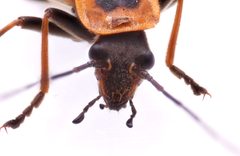
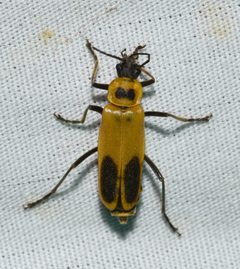
Chauliognathus pensylvanicus, commonly known as the goldenrod soldier beetle or Pennsylvania leatherwing, is a of soldier beetle ( Cantharidae) native to North America. are active in late summer and autumn, where they are frequently observed on goldenrod flowers and other Asteraceae. Both adult and larval stages are predatory, feeding on various plant pests. The species is notable for its susceptibility to the fungal Eryniopsis lampyridarum, which causes behavioral manipulation and death.

Pronunciation
How to pronounce Chauliognathus pensylvanicus: //ˌkaʊ.li.əʊɡˈneɪ.θəs ˌpɛn.səlˈvæn.ɪ.kəs//
These audio files are automatically generated. While they are not always 100% accurate, they are a good starting point.
Identification
Distinguished from the closely related Chauliognathus marginatus by its strong preference for yellow flowers, particularly goldenrod (Solidago), whereas C. marginatus is more commonly associated with white flowers. Both prefer Asteraceae, but C. pensylvanicus shows narrower flower range. Distinguished from other Cantharidae by its specific color pattern and . May be confused with other yellow-and-black beetles such as Megacyllene decora (amorpha borer) and M. robiniae (locust borer), but soldier beetles have softer, more flexible and lack the robust form of cerambycids.
Images
Habitat
Found in open including meadows, fields, roadsides, and gardens where goldenrod and other Asteraceae are abundant. Also occurs in woodland edges and disturbed areas. Larvae occur in soil, leaf litter, and beneath loose bark. frequently visit human-modified environments such as flowerbeds and landscaped areas.
Distribution
Native to North America. Documented from Canada (Manitoba, Ontario) and throughout the United States. Widespread and common across its range.
Seasonality
active primarily in late summer and autumn, with peak activity coinciding with goldenrod bloom. Larvae present in autumn and overwinter in soil or protected locations. Adults emerge after in spring.
Diet
are predatory, feeding on soft-bodied plant pests including aphids and caterpillars. Adults also consume nectar and pollen from flowers, particularly Asteraceae. Larvae are predatory on ground-dwelling insects and will ascend plants to hunt in flowers and on foliage.
Host Associations
- Solidago - food source (nectar/pollen)strongly preferred; primary derives from this association
- Asteraceae - food source-level preference for flower visitation
- Eupatorium - food sourceoccasionally visited
Life Cycle
Complete with four stages: , larva, pupa, . Larvae are dark grey, velvety, and covered in fine hairs. They pass winter in soil, under leaf litter, or beneath loose bark. occurs in spring, with adult following. Mating occurs throughout adult activity period.
Behavior
are and active on flowers. Mating is frequent and conspicuous; females are selective and prefer larger males, which are better able to subdue females. When infected by Eryniopsis lampyridarum, beetles exhibit "summiting" behavior: climbing to upper leaves, clamping onto vegetation with jaws, and spreading wings post-mortem to facilitate fungal spore .
Ecological Role
Important of agricultural and garden pests in both and larval stages. Contributes to of aphids and caterpillars. Serves as a model for Müllerian or complexes involving other yellow-and-black insects. Acts as for fungal entomopathogens that may regulate .
Human Relevance
Considered beneficial in gardens and agricultural settings due to on pests. Sometimes enters homes in autumn when larvae seek shelter, but easily relocated without harm. Subject of behavioral research on and mate choice. Used in studies demonstrating the utility of citizen science data for ecological research.
Similar Taxa
- Chauliognathus marginatusOverlaps in distribution and flower visitation; distinguished by C. marginatus preference for white flowers and broader flower use
- Megacyllene decoraSimilar yellow-and-black coloration on goldenrod; distinguished by harder , more robust body, and larger size of cerambycid beetles
- Megacyllene robiniaeSimilar color pattern and ; distinguished by association with black locust and morphological differences typical of longhorn beetles
More Details
Fungal pathogen interaction
The is a documented of Eryniopsis lampyridarum (synonymized with Entomophthora lampyridarum in some sources), a fungal that causes during cool, moist conditions. Infected beetles exhibit terminal behavioral manipulation: climbing to elevated positions, clamping jaws onto vegetation, and spreading wings after death to expose fungal fruiting bodies. This represents a well-studied case of host manipulation by an entomopathogen.
Sexual selection research
Studies have demonstrated size-assortative mating in this , with mating individuals significantly larger than non-mating individuals. Female mate choice favors larger males not for visual preference but because larger size enables more effective subduing of females during mating attempts.
Sources and further reading
- BugGuide
- GBIF taxonomy match
- iNaturalist taxon
- NCBI Taxonomy
- Amorpha borer on goldenrod | Beetles In The Bush
- Bug Eric: I Am Not a Scientist
- Bug of the Week
- Pixelated Entomology: Analyzing Beetles' Flower Use Through Digital Samples
- Soggy death to friendly soldiers: Soldier beetles, Chauliognathus pennsylvanicus, and their deadly fungus, Entomophthora lampyridarum — Bug of the Week
- Gelechiidae | Beetles In The Bush