
Cesonia classica
Chamberlin, 1924
ground spider
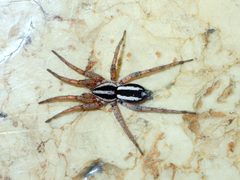
Cesonia classica is a ground spider in the Gnaphosidae, first described by Chamberlin in 1924. The occurs in the southern United States and Mexico. Like other members of the Cesonia, it belongs to a group of active hunting spiders that do not build webs to capture prey. The genus Cesonia includes species that have been documented exhibiting predatory toward other spiders, including raiding nursery webs to feed on spiderlings.
Pronunciation
How to pronounce Cesonia classica: //sɛˈsoʊniə ˈklæsɪkə//
These audio files are automatically generated. While they are not always 100% accurate, they are a good starting point.
Images
Distribution
Found in the United States and Mexico. GBIF records indicate presence in Middle America and North America.
Similar Taxa
- Cesonia bilineataCongeneric with documented predatory on spiderlings of other species, suggesting similar ecological strategies may occur within the .
Sources and further reading
- BugGuide
- Wikipedia
- GBIF taxonomy match
- iNaturalist taxon
- Catalogue of Life
- Bugs and Beat: Talented UC Davis Graduate Students Form Insect-Themed Band | Bug Squad
- New methods needed to boost success of Classical Biological Control to fight insect pests | Blog #
- Bug Eric: October 2014
- Wasps Used to Combat Citrus Greening Disease are Unlikely to Threaten Non-target Insects
- Re-publication of ‘Flora of Northumberland and Durham’ (1831): A dramatic account of change | Blog
- Why Augmentative Biological Control Holds Promise for Advancing Agriculture in Developing Countries