
Cesonia
Simon, 1893
Species Guides
8- Cesonia bilineata(Two-lined Stealthy Ground Spider)
- Cesonia classica(ground spider)
- Cesonia gertschi
- Cesonia josephus
- Cesonia rothi(ground spider)
- Cesonia sincera
- Cesonia trivittata
- Cesonia ubicki
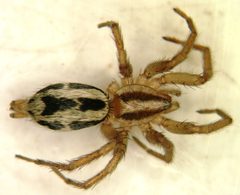
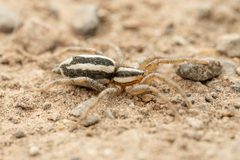
Cesonia is a of ground spiders in the Gnaphosidae, first described by Eugène Simon in 1893. The genus contains 31 distributed across North America, the Caribbean, and parts of the Mediterranean. Despite their as "ground spiders," many species are frequently found on vegetation and in arboreal . Cesonia bilineata, the type species, has been documented engaging in on spiderlings of other spider species.

Pronunciation
How to pronounce Cesonia: //sɛˈsoʊ.ni.ə//
These audio files are automatically generated. While they are not always 100% accurate, they are a good starting point.
Identification
Members of Cesonia can be distinguished from other ground spiders by their characteristic body proportions and arrangement typical of Gnaphosidae. Cesonia bilineata, the most studied , has a body length of 4.3–7.0 mm in females—substantially smaller than many sympatric spiders such as Pisaurina mira (12.5–16.5 mm). The lacks the prominent seen in some other gnaphosid genera. Species identification requires examination of genitalic structures and often geographic provenance.
Images
Habitat
Wooded , forest edges, and shrubbery. Many are arboreal rather than strictly ground-dwelling, frequently found on foliage, twigs, and walls. Cesonia bilineata occurs in wooded habitats from New England to the Florida panhandle and west to Nebraska.
Distribution
North America (eastern United States, southern Canada, Mexico, southwestern United States), Caribbean (Cuba, Jamaica, Hispaniola, Puerto Rico, Virgin Islands, Panama, St. Vincent, Dominica, St. Kitts and Nevis), and Mediterranean region (Greece, Crete, Turkey).
Diet
Cesonia bilineata preys on other spiders, including spiderlings of Pisaurina mira and Peucetia viridans. The attacks victims from behind. Specific prey for other Cesonia species is not documented.
Behavior
Highly agile climbers, frequently observed on vegetation rather than ground surfaces. Cesonia bilineata has been observed entering nursery webs of other spider to prey on guarded spiderlings.
Ecological Role
, including intraguild on other spiders.
Similar Taxa
- Other GnaphosidaeGround spiders share general body plan and arrangement; Cesonia distinguished by specific genitalic and preferences.
- Pisaurina miraSympatric and larger nursery web spider; Cesonia bilineata has been documented preying on its spiderlings, but are easily distinguished by size (C. bilineata females 4.3–7.0 mm vs. P. mira females 12.5–16.5 mm) and leg proportions.
Misconceptions
The "ground spider" is misleading for many Cesonia , which are more frequently encountered on vegetation and walls than on soil surfaces.
Sources and further reading
- BugGuide
- Wikipedia
- GBIF taxonomy match
- iNaturalist taxon
- NCBI Taxonomy
- Catalogue of Life
- Breathtaking Bluebonnets and Butterflies | Bug Squad
- Bug Eric: Spider v. Spider: A case of predation by Cesonia bilineata (Araneae: Gnaphosidae) upon spiderlings of Pisaurina mira (Araneae: Pisauridae)?
- Bug Eric: September 2010
- Bug Eric: (Wild) Butterfly Magic
- Mating Behaviors in Zerene cesonia (Pieridae) and Their Impact on Localized Distributions
- Zerene cesonia limonellaLamas (Pieridae): First Distribution Record in Chile and First Host Plant Record