
Gnaphosa
Latreille, 1804
ground spiders
Species Guides
8Gnaphosa is a of ground spiders in the Gnaphosidae, comprising some of the largest members of this family. occur across the Palaearctic region, with distributions concentrated in natural non-forest that are increasingly threatened. Several species groups exist within the genus, including the G. bicolor group characterized by distinctive male palpal bulb and female epigyne . The genus has received recent taxonomic attention due to its conservation significance and ongoing discovery of new species and range extensions.
Pronunciation
How to pronounce Gnaphosa: /nəˈfoʊsə/
These audio files are automatically generated. While they are not always 100% accurate, they are a good starting point.
Identification
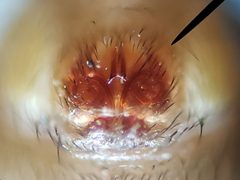
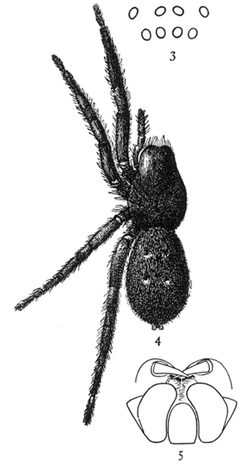
Members of Gnaphosa are among the largest gnaphosid spiders. The G. bicolor group is characterized by males possessing a retrolaterally-shifted embolus that occupies at least part of the middle one-third of the palpal bulb; females in this group have laterally expanded epigynes and often exhibit very elongated epigynal ducts. Species-level identification typically requires examination of genitalic structures.
Images
Habitat
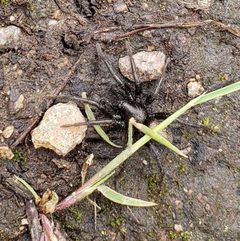
Natural non-forest , particularly disappearing open habitats such as dry sandpits and gravel sandpits. Some occupy semi-desert landscapes. In Hungary, G. modestior has been recorded from untreated shrubby habitats in mountainous regions.
Distribution
Palaearctic region, with records from Europe (including Scandinavia: Denmark, Norway, Sweden), Russia (Tuva, Russian Far East), Central Asia, Mongolia, China, India, and the Middle East (Iraq). The shows a broad east-west distribution across Eurasia with individual exhibiting more restricted ranges.
Seasonality
At least one , G. modestior, has been recorded as active from April to June in Hungary, suggesting stenochronous (narrow seasonal) activity patterns for some members of the .
Ecological Role
Of interest in nature conservation due to restricted distributions in threatened, disappearing natural non-forest . The serves as an indicator group for epigeic spider in endangered open habitat types such as Central European steppes and aeolian sands.
Human Relevance
Subject of ongoing taxonomic and conservation research; some have been rediscovered after decades without documentation. The 2025 rediscovery of G. jodhpurensis in Iraq after 48 years highlights the potential for new finds even in understudied regions.
Sources and further reading
- BugGuide
- GBIF taxonomy match
- NCBI Taxonomy
- Catalogue of Life
- A forgotten spider rediscovered after 48 Years
- European species of the Gnaphosa alpica complex (Araneae, Gnaphosidae)
- Gnaphosa badia (Araneae: Gnaphosidae) in the Ukrainian Carpathians with comments on its distribution
- A survey of East Palaearctic Gnaphosidae (Araneae). 8. New data on Berlandina and Gnaphosa from Mongolia
- First record of Gnaphosa jodhpurensis Tikader & Gajbe, 1977 (Araneae, Gnaphosidae) from Iraq and the Middle East
- A survey of East Palaearctic Gnaphosidae (Araneae). 3. On new and poorly known Gnaphosa Latreille, 1804
- On the distribution of Gnaphosa orites (Araneae: Gnaphosidae) with a note on its southernmost record, from the Russian Far East
- Contribution to the knowledge on distribution in Hungary and habitat preferences of Gnaphosa modestior Kulczyński, 1897 a little-known spider species