
Chlaenius ruficauda
Chaudoir, 1856
Chlaenius ruficauda is a ground beetle in the Carabidae, native to North America with confirmed records from the United States and Mexico. As a member of the large Chlaenius, which contains approximately 1,000 worldwide, this species shares the characteristic metallic coloration and predatory habits typical of the genus. The specific epithet 'ruficauda' refers to the reddish coloration of the or tail region. Like other Chlaenius species, it possesses chemical defense glands that emit aromatic compounds when disturbed.
Pronunciation
How to pronounce Chlaenius ruficauda: /ˈkleɪniːəs ˌruːfɪˈkaʊdə/
These audio files are automatically generated. While they are not always 100% accurate, they are a good starting point.
Identification
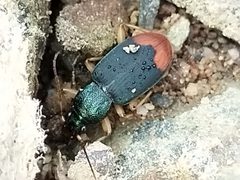
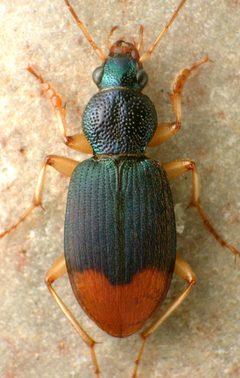
Distinguished from similar ground beetles by the combination of metallic and reddish abdominal coloration indicated by its . Chlaenius can be separated from darkling beetles (Tenebrionidae) by their with elongated segments (not bead-like), exposed forward-directed , and rapid running . Within Chlaenius, identification to species level requires examination of genitalia and other subtle morphological features; the reddish caudal coloration is a key diagnostic feature for C. ruficauda.
Images
Appearance
exhibit the typical Chlaenius body plan: moderately elongated, somewhat flattened body with metallic green, blue, or bronze . The 'ruficauda' indicates reddish coloration on the or portion. are with segments longer than wide. are prominent, exposed, and directed forward. Legs are relatively long and adapted for running.
Habitat
Specific preferences for C. ruficauda are not documented, but occur in diverse habitats including wetlands, grasslands, forest edges, and agricultural areas. Chlaenius are often associated with moist environments.
Distribution
Confirmed present in United States and Mexico; North American distribution.
Diet
Predatory, feeding on other insects and small . Specific prey records for C. ruficauda are not documented, but are known .
Life Cycle
Complete with , larval, pupal, and stages. Specific details for C. ruficauda are not documented. Eggs are laid in or on soil. Larvae are ground-dwelling .
Behavior
are or that run rapidly when disturbed. When handled, individuals may emit defensive secretions from abdominal glands.
Ecological Role
in soil and ground-level , contributing to regulation of insect .
Human Relevance
Ground beetles in this are generally beneficial in agricultural settings, preying on pest insects. No specific economic importance documented for C. ruficauda.
Similar Taxa
- Chlaenius tricolorAnother metallic Chlaenius ; C. ruficauda distinguished by reddish caudal coloration versus tricolor pattern
- Chlaenius impunctifrons with similar body form; distinguished by specific coloration patterns and genitalia
- Darkling beetles (Tenebrionidae)Superficially similar dark, ground-dwelling beetles; distinguished by bead-like , concealed , and slower movement in Tenebrionidae
More Details
Chemical defense
Chlaenius , including C. ruficauda, possess pygidial glands that release defensive secretions containing aromatic compounds when the is disturbed. This is a characteristic feature of the .
Taxonomic note
Chlaenius is a large and taxonomically complex with many subgenera; identification often requires examination of male genitalia and other fine morphological details.