
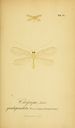
Chrysopa quadripunctata
Burmeister, 1839
Four-spotted Green Lacewing
Chrysopa quadripunctata, commonly known as the Four-spotted Green Lacewing, is a of predatory native to North America. are recognized by their delicate green bodies, long filamentous , and transparent, finely veined wings. Larvae are aggressive , often called "aphid lions" for their voracious consumption of soft-bodied prey. The species has been studied for its behavioral plasticity, with documented individual repeatability and geographic variation in larval .


Pronunciation
How to pronounce Chrysopa quadripunctata: //kɹɪˈsoʊpə ˌkwɔːdɹɪˌpʌŋkˈteɪtə//
These audio files are automatically generated. While they are not always 100% accurate, they are a good starting point.
Identification
identified by four dark spots on the or body, combined with green coloration and typical wing venation. Requires careful examination to distinguish from Chrysopa oculata and other congeneric . Larvae possess distinctive sickle-shaped and carry debris as camouflage, traits shared with other chrysopid larvae.
Images
Appearance
have slender green bodies, long thin , and large, metallic golden . Wings are transparent with dense, intricate venation. The name "quadripunctata" refers to four spots, likely on the or body. Larvae have elongated bodies with prominent, sickle-shaped used to impale prey.
Habitat
Found in diverse terrestrial including agricultural fields, gardens, and natural vegetation. frequent flowering plants where they feed on pollen, nectar, and honeydew. Larvae occur on vegetation with abundant soft-bodied prey.
Distribution
Native to North America. Documented across the continent with specific studied in behavioral research, though precise range boundaries require further documentation.
Diet
Larvae are consuming aphids, mites, , soft scales, and other soft-bodied arthropods. feed primarily on pollen, nectar, and honeydew, with limited .
Life Cycle
Complete with , larval, pupal, and stages. Eggs laid on plant stems on slender stalks. Larvae pass through three instars before pupating in silken cocoons. Multiple per year likely, though specific timing varies with latitude.
Behavior
Larvae exhibit individually repeatable behavioral traits, with consistent hunting strategies within individuals. Geographic variation in larval documented between . Larvae are aggressive that may engage in intraguild , including . are weak fliers with or activity patterns.
Ecological Role
Important agent in agricultural and natural . Larvae suppress of pest aphids and other soft-bodied herbivores. Contributes to natural enemy complex in crops including alfalfa, cotton, and strawberries.
Human Relevance
Valued as a beneficial insect in . Larval reduces economic damage from aphids and related pests in multiple cropping systems. may be attracted to lights.
Similar Taxa
- Chrysopa oculataSimilar green lacewing with spotted pattern; distinguished by number and arrangement of spots
- Chrysoperla spp.Convergent appearance in stage; larvae similarly predatory but separable by subtle morphological and behavioral differences
More Details
Behavioral Research
Subject of landmark study on individual repeatability in insect , demonstrating that larval hunting behaviors are consistent within individuals but vary geographically between
Conservation Status
Not formally assessed; common and widespread in North America
Sources and further reading
- BugGuide
- Wikipedia
- GBIF taxonomy match
- iNaturalist taxon
- NCBI Taxonomy
- Catalogue of Life
- Meloidae Holdings | Entomology Research Museum
- Encyrtid Holdings | Entomology Research Museum
- Looking for Lygus | Bug Squad
- The Beauty and the Beast | Bug Squad
- Individual repeatability and geographical variation in the larval behaviour of the generalist predator, Chrysopa quadripunctata