
Chamaemyiidae
Hendel, 1910
silver flies, aphid flies
Genus Guides
5- Chamaemyia(silver-flies)
- Leucopis(silver flies)
- Parochthiphila
- Plunomia
- Pseudodinia
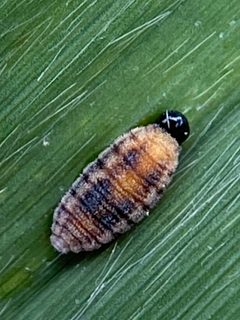
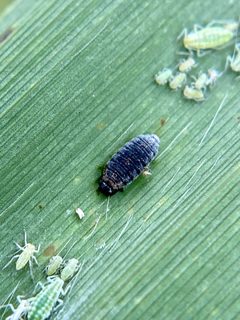
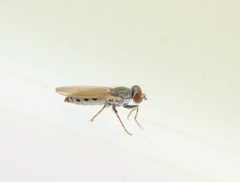
Chamaemyiidae is a small of acalyptrate flies comprising fewer than 200 described worldwide. are minute (1–5 mm), typically greyish, and morphologically characterized by reduced bristling. Larvae are active of Sternorrhyncha, particularly aphids, adelgids, and scale insects, making several species valuable agents. The family has been deployed in programs targeting pests such as the hemlock woolly adelgid and . Fossil records are sparse but extend to the Eocene.
Pronunciation
How to pronounce Chamaemyiidae: //kəˌmiːˈɪd.i.aɪ//
These audio files are automatically generated. While they are not always 100% accurate, they are a good starting point.
Identification
Small greyish flies 1–5 mm in length. wide, with at most two pairs of bristles (often bare). gently concave or strongly receding; oral vibrissae absent. Postvertical bristles convergent or absent. and short. Prothoracic bristles absent; one sternopleural bristle present. Mesopleura usually bare. Front bear bristles; tibiae lack preapical bristles. Wing with subcosta entire, sometimes touching R1 before its apex; anal short, not reaching wing margin; anal and second basal complete; unbroken. short to slightly elongated.
Images
Distribution
Worldwide distribution with fewer than 200 described . Documented from the Holarctic region (including Sweden, northeastern Ohio, Pacific Northwest of North America), Chile, Turkey, Middle East, Japan, and Australia. Leucotaraxis argenticollis is Holarctic; other Leucotaraxis species are Nearctic. Leucopis formosana has one of the most extensive distributions, ranging from Israel and West Africa to Australia.
Diet
Larvae are predatory on Sternorrhyncha (), including aphids (Aphididae), adelgids (Adelgidae), scale insects (Coccidae, Pseudococcidae, Monophlebidae), phylloxerids (Phylloxeridae), and ortheziids (Ortheziidae). Specific prey documented include Pseudococcus comstocki (mealybugs), Pineus strobi (pine bark ), Adelges tsugae (hemlock woolly adelgid), Phylloxera vitifoliae (grape phylloxera), and Cinara aphids on Pinus.
Ecological Role
of sap-sucking Hemiptera (Sternorrhyncha), serving as natural agents. Several have been deployed or evaluated for of forest and agricultural pests, including Leucotaraxis argenticollis and L. piniperda for hemlock woolly adelgid management, and Leucopis species for mealybug and control.
Human Relevance
Used as agents for pests. Leucotaraxis argenticollis and L. piniperda are reared and released for management of hemlock woolly adelgid (Adelges tsugae) in eastern North America. Leucopis verticalis and related control mealybugs on ornamental shrubs. Leucopina nyiaybsa and other species prey on () in Colombia.
Similar Taxa
- SyrphidaeBoth contain aphidophagous larvae; Chamaemyiidae are distinguished by reduced bristling, bare mesopleura, and specific wing venation (short anal , complete anal and second basal )
- CecidomyiidaeSome predatory cecidomyiids also prey on adelgids and scale insects; Chamaemyiidae differ in (acalyptrate condition, distinct wing venation) and larval feeding habits (internal vs. various cecidomyiid strategies)
Sources and further reading
- BugGuide
- Wikipedia
- GBIF taxonomy match
- iNaturalist taxon
- NCBI Taxonomy
- Catalogue of Life
- Unusual Galls Trigger National Survey of Adelgids and Their Predators in Bhutan Forests
- Pests, Predators, and Parasitoids: Wasps Target Flies That Eat Hemlock Woolly Adelgid
- A catalog of the Chamaemyiidae of Chile (Diptera: Lauxanioidea)
- BIOLOGY AND IMMATURE STAGES OF LEUCOPIS VERTICALIS (DIPTERA: CHAMAEMYIIDAE)
- New records of Chamaemyiidae and Cryptochaetidae (Diptera) on Scale Insects (Hemiptera: Coccomorpha) in Turkey Türkiye’de Coccomorpha (Hemiptera) üzerindeki Chamaemyiidae ve Cryptochaetidae türlerine ait yeni kayıtlar
- Two new genera of Nearctic Chamaemyiidae (Diptera: Lauxanioidea) associated with Cinara aphids (Hemiptera: Aphididae) on Pinus
- An annotated list of the Chamaemyiidae (Diptera, Acalyptrata) of Turkey with new records and additional data
- <i>Leucopis formosana</i> Hennig (Diptera, Chamaemyiidae) - synonymy, distribution, food links
- Natural enemies of Maconellicoccus hirsutus (Green) (Hemiptera: Coccomorpha: Pseudococcidae), with description of a new species of Leucopina Malloch (Diptera: Chamaemyiidae)
- Food utilization of aphidophagous hoverfly larvae (Diptera: Syrphidae, Chamaemyiidae) on herbaceous plants in an urban habitat
- IDENTITY OF LEUCOPIS ARGENTICOLLIS AND DESCRIPTION OF A NEW SPECIES (DIPTERA: CHAMAEMYIIDAE)
- A new genus of Chamaemyiidae (Diptera: Lauxanioidea) predaceous on Adelgidae (Hemiptera), with a key to chamaemyiid species associated with Pinaceae-feeding Sternorrhyncha
- A conspectus of the silver-flies (Diptera: Chamaemyiidae) of the Middle East with descriptions of new species of Chamaemyia Meigen and Melanochthiphila Frey, from the Arabian Peninsula
- BIOLOGY AND IMMATURE STAGES OF LEUCOPIS PIMCOLA AND CHAMAEMYIA POLYSTIGMA (DIPTERA: CHAMAEMYIIDAE)
- LEUCOPIS SIMPLEX (DIPTERA: CHAMAEMYIIDAE) AND OTHER SPECIES OCCURRING IN GALLS OF PHYLLOXERA VITIFOLIAE (HOMOPTERA: PHYLLOXERIDAE) IN ONTARIO
- First Quantification of Courtship Behavior in a Silver Fly, Leucopis palumbii (Diptera: Chamaemyiidae): Role of Visual, Olfactory and Tactile Cues
- Prey Suitability and Phenology of Leucopis spp. (Diptera: Chamaemyiidae) Associated With Hemlock Woolly Adelgid (Hemiptera: Adelgidae) in the Pacific Northwest