
Plunomia
Curran, 1934
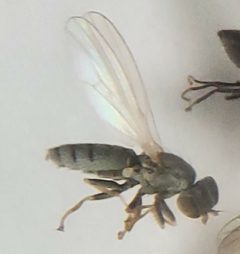
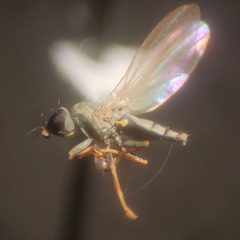
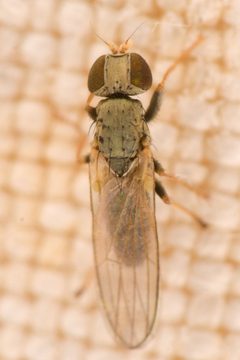
Plunomia is a of flies in the Chamaemyiidae, described by Curran in 1934. Members of this family are commonly known as aphid flies or chammy flies, many of which are or of aphids and other . The genus is rarely encountered and poorly represented in collections, with only two observations recorded on iNaturalist. Chamaemyiidae as a whole are small, delicate flies that occupy a specialized as agents.
Pronunciation
How to pronounce Plunomia: /pluːˈnoʊ.mi.ə/
These audio files are automatically generated. While they are not always 100% accurate, they are a good starting point.
Identification
As a within Chamaemyiidae, Plunomia would be expected to share characteristics: small size (usually 2–5 mm), slender body, reduced wing venation with a simple R4+5 that does not fork, and a characteristic wing fold at rest. Specific diagnostic features for Plunomia versus other chamaemyiid genera (such as Chamaemyia, Leucopis, or Paraleucopis) are not documented in readily accessible literature. Accurate identification to genus likely requires examination of male terminalia and other microscopic characters.
Images
Distribution
The precise distribution of Plunomia is not well documented. The Chamaemyiidae has a worldwide distribution, with greatest diversity in temperate regions. Given the description by Curran (1934), an American entomologist who worked extensively with Neotropical and Nearctic dipteran fauna, Plunomia likely occurs in the Americas. The two iNaturalist observations provide insufficient geographic data to establish range.
Ecological Role
Based on -level characteristics, Plunomia likely functions as a or of aphids, scale insects, or other small . Chamaemyiidae are recognized as important natural enemies of agricultural pests, with larvae typically feeding on colonies. The presumably contributes to of pest in its native range, though specific interactions remain undocumented.
Human Relevance
No direct human relevance has been documented for Plunomia specifically. The Chamaemyiidae has potential significance in programs targeting pests, but Plunomia has not been reported as a used or studied for this purpose. The is of primarily taxonomic and systematic interest.
Similar Taxa
- ChamaemyiaMost -rich in Chamaemyiidae; shares small size and reduced wing venation but differs in specific chaetotaxy and male genitalia structure
- LeucopisCommon and widespread chamaemyiid ; similar overall habitus but distinguished by wing venation details and larval
- ParaleucopisAnother small chamaemyiid ; separation requires examination of chaetotaxy and phallus structure
More Details
Taxonomic obscurity
Plunomia is among the most poorly known in Chamaemyiidae. The original description by Curran (1934) has not been widely cited, and no subsequent taxonomic revisions or -level treatments are readily available in modern literature. The genus may be known from very few specimens.
Data deficiency
With only two iNaturalist observations and minimal presence in public biodiversity databases, Plunomia exemplifies the taxonomic impediment in Diptera. Many small, morphologically similar fly remain understudied due to identification difficulties and lack of expertise.