
Daktulosphaira
Shimer, 1866
grape phylloxera
Species Guides
1- Daktulosphaira vitifoliae(Grape Phylloxera)
Daktulosphaira is a of phylloxerid insects within Hemiptera, containing the economically devastating D. vitifoliae. Members are small, -like insects that induce distinctive galls on grapevines (Vitis spp.) and are obligate on this genus. The genus is notable for extremely high transcriptional plasticity when transferred between host , with over one-third of expressed genes showing differential expression. D. vitifoliae exhibits both root-feeding and leaf-galling forms, with complex involving parthenogenetic and . The genus is native to eastern North America but has become a global pest of commercial viticulture.
Pronunciation
How to pronounce Daktulosphaira: //ˌdæktjʊloʊˈsfaɪrə//
These audio files are automatically generated. While they are not always 100% accurate, they are a good starting point.
Identification
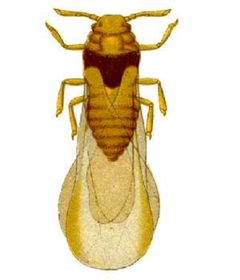
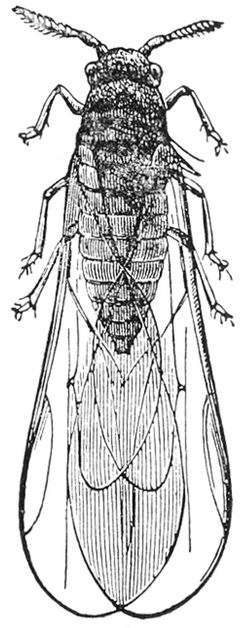
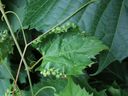
Small, soft-bodied insects resembling aphids. Daktulosphaira are distinguished from true aphids (Aphididae) by their placement in Phylloxeridae, though external is similar. The is specifically associated with gall formation on grapevines, which separates it from other phylloxerid genera on different . D. vitifoliae produces characteristic galls: root galls (nodosities and tuberosities) and leaf galls (typically on Vitis vinifera). Gall morphology varies by feeding site—root galls are swellings on root tissue, while leaf galls are pouch-like or hairy projections on leaf undersides. Molecular identification may be necessary to distinguish from morphologically similar phylloxerids.
Images
Habitat
Associated exclusively with grapevines (Vitis ). Insects occupy two distinct microhabitats: leaf surfaces where gall-forming forms induce foliar galls, and root systems where feeding forms cause nodosities and tuberosities. Root-feeding forms occur in soil around vine roots; gall-forming forms occur on aerial plant parts. suitability varies dramatically by —some cultivars (e.g., Vitis vinifera 'Cabernet Sauvignon') support complete development while others (e.g., Vitis rotundifolia 'Magnolia') cause 100% first-instar mortality.
Distribution
Native to eastern North America. Introduced to Europe and now present in major wine-producing regions worldwide. Documented in Australia (Victoria), southern Brazil, and throughout European viticultural areas. Northern European (above 43° latitude) are genetically distinct from southern populations, possibly reflecting differences in reproductive mode.
Diet
Phloem-feeding herbivore specialized on grapevines (Vitis spp.). Feeds on vascular tissues of both roots and leaves depending on form.
Host Associations
- Vitis vinifera - primary European wine grape; supports high and growth
- Vitis labrusca - 'Bordô' cultivar supports development but with reduced
- Vitis rotundifolia - 'Magnolia' cultivar causes complete first-instar mortality
- Vitis berlandieri × Vitis rupestris - 'Paulsen 1103' rootstock; found on trunks but lignified roots prevent nymphal development
- Vitis spp. - obligate herbivore unable to survive on non-Vitis plants
Life Cycle
Complex with multiple forms. Includes: (1) gall-forming forms on leaves that produce parthenogenetic , (2) root-feeding forms that reproduce parthenogenetically on roots, and (3) sexual forms that produce eggs. Overwintering eggs have been documented on rootstock trunks. Development from egg to completed on roots of some cultivars; nymphal mortality occurs on . time approximately 21.5 days on favorable hosts.
Behavior
Induces gall formation on plants through manipulation of plant developmental . Exhibits rapid and widespread transcriptional plasticity when transferred to different host —4,820 genes (37% of expressed genes) show differential expression. Upregulates genes encoding predicted secretory effectors, detoxification , and - and -associated proteins when feeding on non-native hosts. Reconfigures plant stomata to create novel structures in leaf galls. Clonal predominates; occurs in some .
Ecological Role
herbivore acting as a gall inducer. Galls serve as nutrient-rich sinks that concentrate soil resources and contaminants. Research demonstrates that induced galls accumulate toxic soil contaminants (heavy metals, 1,4-dioxane, hexavalent chromium, VOCs) at concentrations thousands of times higher than surrounding plant tissues, with potential application as bioindicators for environmental monitoring.
Human Relevance
Major economic pest of commercial viticulture. D. vitifoliae devastated European wine production in the 19th century and remains a significant threat globally. reduces vine vigor, productivity, and longevity. Management relies on grafting susceptible V. vinifera scions onto rootstocks (particularly those with V. berlandieri or V. rupestris parentage). protocols established in affected regions. Emerging research explores use of phylloxera-induced galls as sensitive, cost-effective detectors of soil and groundwater .
Similar Taxa
- PhylloxeraFormerly used as name for ; now recognized as Daktulosphaira. Historical taxonomic confusion exists between these names.
- Aphididae (true aphids)Morphologically similar soft-bodied phloem-feeders in same suborder (Sternorrhyncha), but distinguished by -level characters and gall-inducing specific to Daktulosphaira on grapevines.
Sources and further reading
- BugGuide
- GBIF taxonomy match
- iNaturalist taxon
- NCBI Taxonomy
- Catalogue of Life
- Daktulosphaira vitifoliae Archives - Entomology Today
- The Insects Behind the Weird Growths on Plants
- How Some Insects Turn Plants Into Pollution Detectors
- Transfer to different host grapevines causes rapid and widespread transcriptional plasticity in the specialist insect Daktulosphaira vitifoliae
- Effects of Short-term Spontaneous Mutation Accumulation for Life History Traits in Grape Phylloxera, Daktulosphaira vitifoliae
- The distribution of grape phylloxera, Daktulosphaira vitifolii (Fitch), in central and north-eastern Victoria
- The Biology, Physiology and Host–Plant Interactions of Grape Phylloxera Daktulosphaira vitifoliae
- Genetic structure of an introduced pest, grape phylloxera (Daktulosphaira vitifoliaeFitch), in Europe
- Occurrence of Sexual Reproduction ofDaktulosphaira vitifoliae(Hemiptera: Phylloxeridae) in Southern Brazil and Biology and Fertility Life Table in Grapevine Cultivars