
Chaoborus albatus
Johnson, 1921
phantom midge
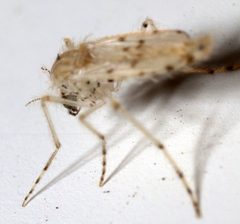
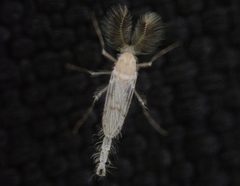
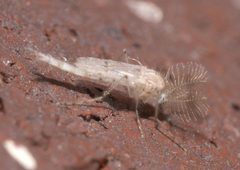
Chaoborus albatus is a of phantom midge described by Johnson in 1921. As a member of the Chaoboridae, it is an aquatic dipteran whose larvae are known for their transparent, nearly invisible bodies. The Chaoborus is characterized by larvae that lack respiratory siphons and possess unique gas-filled tracheal sacs that function as hydrostatic organs for vertical in water columns.
Pronunciation
How to pronounce Chaoborus albatus: //kaɪˈoʊbɔːrəs ælˈbeɪtəs//
These audio files are automatically generated. While they are not always 100% accurate, they are a good starting point.
Identification
of Chaoborus are generally small, delicate flies with reduced mouthparts and non-functional . Specific identification of C. albatus requires examination of male genitalia and antennal structure; the species epithet 'albatus' (whitened) may refer to pale coloration distinguishing it from . Larvae are transparent with paired gas sacs visible as silvery spheres, but species-level larval identification is difficult without molecular analysis.
Images
Habitat
Aquatic environments, specifically standing freshwater bodies including lakes, ponds, and . Larvae inhabit the water column, typically occupying deeper strata during daylight hours.
Distribution
North America; documented observations span Canada and the United States. Precise range boundaries require further survey.
Seasonality
typically occurs during summer months; exact timing varies with latitude and local climate conditions.
Life Cycle
Complete (holometabolous). Larval development occurs entirely in freshwater, with four instars. takes place in water. are short-lived and do not feed.
Behavior
Larvae exhibit diel vertical , ascending to surface waters at night to feed and descending to deeper, darker waters during daylight to avoid . This movement is facilitated by gas-filled tracheal sacs that regulate buoyancy.
Ecological Role
Larvae are predatory on small zooplankton including copepods and cladocerans, and serve as important prey for fish and other aquatic . They function as key intermediate consumers in lentic .
Human Relevance
No direct economic importance. Occasionally collected as fish food or for scientific study of aquatic . Not known to bite humans or transmit .
Similar Taxa
- Chaoborus punctipennisOverlapping distribution and similar ; distinguished by male genitalic structure and subtle differences in antennal
- Chaoborus trivittatusSympatric in many North American lakes; requires microscopic examination of terminalia for reliable separation
- Corethrella spp.Related chaoborid with superficially similar ; distinguished by larval (tree holes vs. open water) and adult antennal proportions
More Details
Taxonomic history
Described by Charles Willison Johnson in 1921 based on specimens from North America. The specific epithet 'albatus' derives from Latin, meaning 'whitened' or 'clothed in white', likely referring to a diagnostic pale marking.
Research significance
Chaoborus larvae, including C. albatus, are frequently studied in limnology for their role in lake and their unique buoyancy regulation mechanisms. The serves as a model for understanding diel vertical in aquatic .