
Corethrella
Coquillett, 1902
frog-biting midges
Species Guides
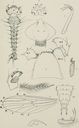
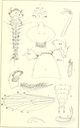
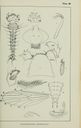
1- Corethrella brakeleyi(frog-biting midge)
Corethrella is the sole in the Corethrellidae, comprising 132 extant and 10 fossil . These are unique among Diptera in using acoustic cues to locate . females are and feed on frog blood, while larvae are aquatic . The genus has a predominantly pantropical distribution with fossil records extending to the Lower Cretaceous.
Pronunciation
How to pronounce Corethrella: //kɒˈrɛθrəla//
These audio files are automatically generated. While they are not always 100% accurate, they are a good starting point.
Images
Habitat
Larvae develop in aquatic environments including streams, pools, tree holes, bamboo internodes, and other water-filled containers. are associated with frog in tropical and subtropical forests.
Distribution
Pantropical distribution across Central and South America, Caribbean, Africa, Asia, and Oceania. Absent from Europe, northern Africa, and middle to northern Asia. Fossil known from Cretaceous Lebanese and Burmese ambers, Eocene Baltic and Rovno ambers, and Miocene Dominican amber.
Seasonality
activity pattern in .
Diet
Larvae are , feeding on other aquatic organisms. females are , feeding on blood of frogs and toads.
Host Associations
- frogs (Anura) - blood females feed on frog blood
- toads (Anura) - blood females feed on toad blood
Life Cycle
Aquatic larval and pupal stages. Larvae pass through multiple instars before pupating. Females exhibit autogeny (can produce without blood meal). Final instar larvae show canalized threshold with lengthy postthreshold period.
Behavior
females use phonotaxis to locate , flying toward male frog advertisement calls. Prefer low frequencies (below 1 kHz) and short pulse durations (125–500 ms). Attraction increases with higher call rates and greater call complexity. host-seeking .
Ecological Role
Larvae function as in aquatic systems. females act as micropredators and of frogs. Serve as for (Trypanosoma), with in ranging from 2.9% to 23.5% across localities.
Human Relevance
Research interest due to unique acoustic -finding . Serve as model organisms for studying -host and transmission . No direct economic or medical significance to humans established.
Similar Taxa
- Culicidae (mosquitoes)both are nematoceran Diptera with aquatic larvae and blood-feeding females; distinguished by Corethrella's unique phonotactic location and association with frogs rather than mammals or birds
- Chaoboridae (phantom midges)historically Corethrellidae was classified within Chaoboridae; distinguished by Corethrella's females and phonotactic versus Chaoboridae's non-biting adults
Sources and further reading
- BugGuide
- Wikipedia
- GBIF taxonomy match
- iNaturalist taxon
- NCBI Taxonomy
- Catalogue of Life
- FIRST CANADIAN RECORD OF CORETHRELLA BRAKELEYI (DIPTERA: CHAOBORIDAE)
- Host Preference and Phylogenetic Analysis of Corethrella nippon Miyagi 1980 in Taiwan
- Corethrella (Diptera: Corethrellidae) of North America North of Mexico: Distribution and Morphology of Immature Stages
- Pan Traps as an efficient and low cost method for sampling Corethrella Coquillet, 1902 (Diptera: Corethrellidae)
- Corethrella (Diptera: Corethrellidae) of Eastern North America: Laboratory Life History and Field Responses to Anuran Calls
- Cues used in host-seeking behavior by frog-biting midges (Corethrellaspp. Coquillet)
- Testing Developmental Plasticity in Aquatic Larvae ofCorethrella appendiculata(Diptera: Corethrellidae)
- Uninvited guests: diversity and specificity of Trypanosoma infections in frog-biting midges (Corethrella spp.)
- Two new species of fossil Corethrella Coquillett from Late Eocene Rovno amber, with a species‐level phylogeny for the family based on morphological traits (Diptera: Corethrellidae)
- Acoustic Preference of Frog‐Biting Midges (Corethrella spp) Attacking Túngara Frogs in their Natural Habitat
- Acoustic localisation of frog hosts by blood‐sucking flies Corethrella Coquillet (Diptera: Corethrellidae) in Borneo
- The sound of a blood meal: Acoustic ecology of frog‐biting midges (Corethrella) in lowland Pacific Costa Rica
- <p><strong>First male of <em>Corethrella</em> <em>andersoni</em> Poinar & Szadziewski, 2007 (Diptera: </strong><strong>Corethrellidae) from mid-Cretaceous Burmese amber</strong></p>
- Preliminary Study on Host Use and Phylogenetic Analysis of Corethrella nippon in Taiwan