
Corethrellidae
Edwards, 1932
frog-biting midges
Genus Guides
1- Corethrella(frog-biting midges)
are a of tiny flies in the order Diptera. The family contains a single , Corethrella, with approximately 105 extant and seven fossil worldwide. Females are obligate external of frogs, locating by eavesdropping on male anuran mating calls using their . The family has a fossil record extending to the Lower Cretaceous, approximately 110 million years ago.
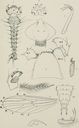
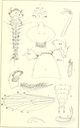
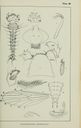
Pronunciation
How to pronounce Corethrellidae: //kɔˌrɛθrɛˈlɪdi.aɪ//
These audio files are automatically generated. While they are not always 100% accurate, they are a good starting point.
Identification
Distinguished from other biting midges by the combination of: wing venation with R1 closer to Sc than in Culicidae; presence of a short (approximately 135 µm) with open salivary groove; and association with frog . Females possess a on the second antennal segment for detecting frog calls. Larvae resemble those of Chaoboridae but differ in and predatory using elongated to seize prey.
Images
Appearance
Minute flies with wing length of 0.6–2.5 mm. Wing venation similar to Culicidae: R with four branches, M with two branches, Cu with two branches; branches of Rs and M nearly parallel. R1 positioned closer to Sc or nearly midway between Sc and R2. Females possess a short piercing-sucking approximately 135 µm in length, with delicate mandibular piercing structures forming the food canal together with the and hypopharynx. The salivary canal transitions into an open salivary groove with one forming a seal.
Habitat
occupy all strata of tropical and subtropical forests from ground level to (up to 38 m). Larvae inhabit small water collections including tree holes, leaf axils, and occasionally subterranean pools; some occupy phytotelmata (water held by plants such as Nepenthes). Distribution closely tied to presence of frogs. Most species found below 1500 m elevation.
Distribution
Worldwide between 50°N and 50°S, with majority of between 30°N and 30°S. Strongly concentrated in tropical regions. Documented from North America, Central America, South America, Borneo, Southeast Asia, and Madagascar. Some lineages show Gondwanan connections; at least one lineage dispersed from the New World to Southeast Asia. Some species occur on volcanic Caribbean islands indicating capability.
Diet
Females are obligate hematophages, feeding almost exclusively on blood of frogs. Larvae are predatory, seizing small arthropods using elongated in a rapid snap-like motion.
Host Associations
- frogs (Anura) - obligate for blood-feedingfemales attracted to male mating calls; some show specificity and feeding site selection
Life Cycle
Larvae develop in small water collections. are . Females require blood meals for . Specific details of , pupal stages, and developmental duration not documented in available sources.
Behavior
Females locate by phonotaxis, eavesdropping on male frog mating calls. Approach to calling hosts follows a vertical trajectory from above. Can detect acoustic stimuli in the far field, responding to sound pressure levels as low as 56 dBA equivalent to a calling frog at ~30 m distance. Exhibit feeding site specificity with partitioning among sympatric ; documented feeding sites include nostrils, /dorsum, hindlegs, and toes. Some species show preference for particular forest strata including .
Ecological Role
As , may influence frog and . Some are of frog-specific Trypanosoma protozoa, causing in . Larval may regulate small populations in phytotelmata and other small water bodies.
Human Relevance
No direct human health or economic significance. Serve as model organisms for studying - , sensory of phonotaxis, and . Used in ecological research on frog and acoustic dynamics.
Similar Taxa
- Culicidae (mosquitoes)Similar wing venation; distinguished by R1 position closer to Sc in , shorter with open salivary groove, and exclusive association with frog rather than diverse vertebrate hosts
- Chaoboridae (phantom midges)Larvae resemble ; distinguished by different and non- adult feeding. Corethrellidae were formerly classified as tribe Corethrellini within Chaoborinae (1962–1989)
More Details
Evolutionary history
Fossil evidence from Burmese amber (Corethrella andersoni) dates to the Lower Cretaceous (~110 mya), indicating females have been feeding on calling frogs since at least the Early Cretaceous. The Corethrella-frog-Trypanosoma association is also likely ancient.
Taxonomic history
Classified as tribe Corethrellini within Chaoborinae, of Culicidae, from 1962 to 1989; now recognized as distinct .
Sampling methods
Classically sampled using modified CDC traps with speakers broadcasting frog calls; recently developed pan trap method (PTM) has demonstrated over 20× higher capture rates with lower cost and greater practicality for remote fieldwork.
Sources and further reading
- BugGuide
- Wikipedia
- GBIF taxonomy match
- iNaturalist taxon
- Catalogue of Life
- Feeding site specificity in frog-biting midges (Corethrellidae)
- Feeding Site Specificity in Frog-biting Midges (Corethrellidae)
- World catalog of extant and fossil Corethrellidae (Diptera)
- The Frog-Biting Midges of the World (Corethrellidae: Diptera)
- Specialisation in frog‐biting midges (Diptera: Corethrellidae): A landscape perspective
- Preferences for anuran calls in hematophagous corethrellids (Diptera: Corethrellidae) from Southern Brazil
- The Frog-Biting Midges of Borneo—From Two to Eleven Species (Corethrellidae: Diptera)
- Four new species and some new records of Brazilian frog-biting midges (Diptera: Corethrellidae)
- The Mouthparts of Female Blood-Feeding Frog-Biting Midges (Corethrellidae, Diptera)
- Molecular Confirmation of Frogs (Anura) as Hosts of Corethrellidae (Diptera) in the Southeastern United States
- Corethrella (Diptera: Corethrellidae) of Eastern North America: Laboratory Life History and Field Responses to Anuran Calls
- Feeding Site Selection by Frog-Biting Midges (Diptera: Corethrellidae) on Anuran Hosts
- Look up! Stratification and vertical approach to auditory prey cues in frog-biting midges (Corethrellidae)
- Corethrella (Diptera: Corethrellidae) of North America North of Mexico: Distribution and Morphology of Immature Stages
- Pan Traps as an efficient and low cost method for sampling Corethrella Coquillet, 1902 (Diptera: Corethrellidae)