
Chaoboridae
Edwards, 1912 [1904]
phantom midges, glassworms
Genus Guides
3- Chaoborus(glassworm)
- Eucorethra(phantom midges)
- Mochlonyx
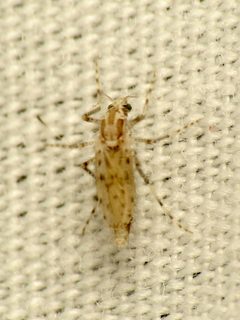
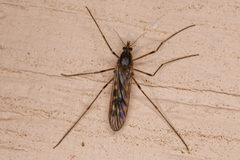
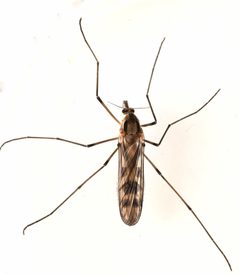
, known as phantom midges or glassworms, is a of aquatic with distribution. The family comprises approximately 55–90 across six , including the widespread Chaoborus and the Australian genera Promochlonyx and Australomochlonyx. are delicate, -like flies distinguished by wing venation and male . Larvae are nearly transparent aquatic with modified antennae used to capture prey.
Pronunciation
How to pronounce Chaoboridae: //ˌkeɪoʊˈbɒrɪˌdiː//
These audio files are automatically generated. While they are not always 100% accurate, they are a good starting point.
Identification
distinguished from Chironomidae by specific wing venation patterns and 15-segmented (males , females bristly). Larvae identified by near-transparency, paired thoracic and abdominal air sacs, and antennae—unique among aquatic Diptera larvae. Chaoborus larvae are the most commonly encountered; Corethrella, Promochlonyx, and Australomochlonyx are regionally restricted (Australia, southern North America).
Images
Habitat
Lacustrine (lake-dwelling) , including sublittoral and profundal zones. Larvae occur in standing freshwater bodies; Chaoborus punctipennis has been documented at 8 m (sublittoral) and 30 m (profundal) depths in . Some form large larval swarms in open water.
Distribution
. Documented from North America (Lake Norman, North Carolina; Vermont; Quebec, Canada), Australia (nine in four ), Scandinavia (Denmark, Norway, Sweden), and Asia (Ryukyu Islands). Australian fauna includes genera Promochlonyx and Australomochlonyx, plus Chaoborus and Corethrella.
Seasonality
Chaoborus punctipennis exhibits two annually: an spring generation and a summer generation. Activity period February through January in North Carolina .
Diet
: primarily nectar if feeding occurs at all. Larvae: predatory, feeding on small aquatic insects including mosquito larvae, and crustaceans such as Daphnia. Corethrella brakeleyi adults are haemophagous (blood-feeding)—exceptional within .
Life Cycle
Two per year observed in Chaoborus punctipennis ( spring generation and summer generation). Larvae aquatic; pupae aquatic; terrestrial but closely associated with water bodies.
Behavior
Larvae swim actively and sometimes form large swarms in lacustrine . Larval feeding involves impaling or crushing prey with before bringing to mouth. of most have reduced or non-existent feeding; Corethrella brakeleyi actively blood-feeds.
Ecological Role
Important in freshwater , controlling of mosquito larvae and zooplankton such as Daphnia. Contribute significantly to secondary production in lakes—Chaoborus punctipennis reached 30.9 mg·m⁻² (profundal) with production of 170.8 mg·m⁻². P/B ratios of 5.5–6.3 indicate moderate turnover. Some serve as indicators of deep, stratified lake conditions.
Human Relevance
Larvae may reduce mosquito through on larvae. Corethrella brakeleyi is a blood-feeding pest. larvae are sometimes used as bioindicators in limnological studies. No significant economic damage documented.
Similar Taxa
- Chironomidae closely resemble ; distinguished by wing venation details and 15-segmented structure
- CorethrellidaeHistorically closely related and sometimes confused; now treated as separate but shares aquatic larval habits and some morphological features
Misconceptions
The 'glassworm' refers specifically to the transparent larval stage, not to any worm-like form. Not all are predatory as adults—only Corethrella is known to blood-feed; most adults have reduced mouthparts and do not feed.
More Details
Evolutionary history
The dates to at least the early Cretaceous. Australian Promochlonyx and Australomochlonyx, plus Chaoborus vagus, are considered relicts from Gondwanaland fauna. Phylogenetic studies suggest Chaoborinae (excluding Corethrella and Eucorethra) are monophyletic, with Corethrella possibly an early offshoot of culicid stock and Eucorethra representing primitive Culicoidea.
Taxonomic note
count varies between sources: approximately 55 species in six (Wikipedia) versus 90 species in 17 extant and 11 extinct genera (alternative estimate). Corethrella and Eucorethra are sometimes segregated or included depending on classification scheme.
Sources and further reading
- BugGuide
- Wikipedia
- GBIF taxonomy match
- iNaturalist taxon
- NCBI Taxonomy
- Catalogue of Life
- The Australian Chaoboridae (Diptera)
- The life history and production of Chaoborus punctipennis (Diptera: Chaoboridae) in Lake Norman, North Carolina, U.S.A.
- FIRST CANADIAN RECORD OF CORETHRELLA BRAKELEYI (DIPTERA: CHAOBORIDAE)
- Ecology of Chironomidae, Chaoboridae, and Other Benthos in Fourteen Wisconsin Lakes1