
Chlaenius tomentosus
Say, 1823
Brown Chlaenius Carabid
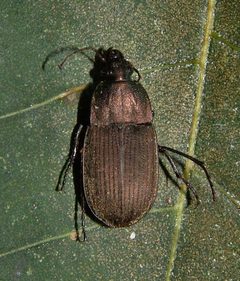
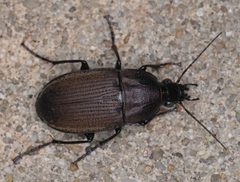
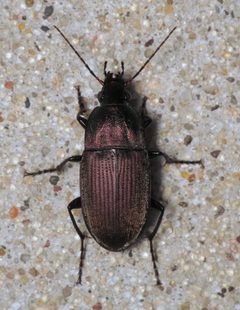
Chlaenius tomentosus is a ground beetle in the Carabidae, native to North America. The belongs to a large and diverse of predatory beetles found across multiple continents. Like other members of Chlaenius, it likely exhibits rapid running and possesses chemical defense capabilities. The specific epithet "tomentosus" refers to a hairy or woolly appearance.
Pronunciation
How to pronounce Chlaenius tomentosus: //klɒˈiːniəs tɒˈmɛntoʊsəs//
These audio files are automatically generated. While they are not always 100% accurate, they are a good starting point.
Identification
Chlaenius tomentosus can be distinguished from similar ground beetles by its tomentose (hairy or woolly) body covering, referenced in its specific epithet. Members of the Chlaenius typically have with segments longer than wide, and exposed directed forward. The genus is characterized by vivid metallic coloration in many , though C. tomentosus specifically is referred to as "Brown Chlaenius Carabid," suggesting more subdued coloration. Chlaenius species possess chemical defenses released from abdominal glands.
Images
Distribution
North America, specifically recorded from Canada and the United States.
Behavior
Members of the Chlaenius are known for rapid running , moving quickly when disturbed. Like other Chlaenius , C. tomentosus likely possesses chemical defenses involving pungent aromatic compounds released from abdominal glands when threatened. The species has been observed at blacklight traps, indicating activity.
Ecological Role
As a ground beetle, Chlaenius tomentosus likely functions as a in soil and ground-level . Members of the Chlaenius serve as bioindicators of environmental conditions due to their sensitivity to habitat disturbance, soil management practices, and minor climate changes. The is known to be parasitized by in the genus Trimorus ( Platygastridae), which lay eggs inside ground beetle eggs.
Similar Taxa
- Chlaenius tricolorAnother North American Chlaenius , distinguished by vivid metallic coloration rather than the brown, tomentose appearance of C. tomentosus.
- Darkling beetles (Tenebrionidae)Easily confused with ground beetles, but possess bead-like antennal segments (vs. in Chlaenius), concealed beneath the (vs. exposed), and slower, lumbering movement (vs. rapid running).
More Details
Parasitoid relationships
The Chlaenius, including C. tomentosus, is known to in the Teleasinae ( Platygastridae), particularly the genus Trimorus. These minute wasps (often under 2 mm) lay eggs inside ground beetle eggs, with larvae developing within the host egg.
Light trapping
Chlaenius tomentosus has been documented at blacklight traps in autumn, suggesting foraging and attraction to artificial light sources.
Sources and further reading
- BugGuide
- GBIF taxonomy match
- iNaturalist taxon
- NCBI Taxonomy
- They eat dead things - Part I - Burying beetles Silphidae — Bug of the Week
- Beneficial Beetle Diversity Blooms on Strip-Tilled Farms
- Bug Eric: Wasp Wednesday: Trimorus
- Bug Eric: Last Night to Blacklight?
- Burying Beetles Are Part of Nature's Clean-up Crew
- Bug Eric: ID Tip: Ground Beetle or Darkling Beetle?