
Platygastridae
Haliday, 1833
Subfamily Guides
2is a of minute in the superfamily Platygastroidea, comprising approximately 1100-2000 described . Members are exclusively parasitoids, with most species measuring only 1–2 mm in length. The family is divided into two traditional : Platygastrinae, which are koinobiont parasitoids of cecidomyiid (gall midge) and larvae, and Sceliotrachelinae, which are generally idiobionts attacking eggs of beetles or Hemiptera. Several , including Synopeas, Trimorus, and Telenomus, contain species of agricultural importance as agents.
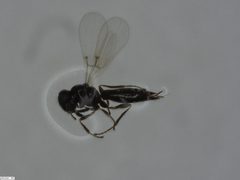
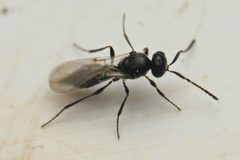
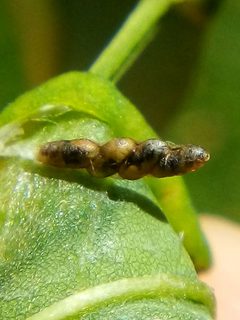
Pronunciation
How to pronounce Platygastridae: //ˌplætɪˈɡæstriˌdeɪ//
These audio files are automatically generated. While they are not always 100% accurate, they are a good starting point.
Identification
can be distinguished from other small by the combination of geniculate with eight-segmented and reduced wing venation. The is separated from Scelionidae (now treated as a separate family) based on molecular and morphological evidence, including differences in antennal structure and wing venation patterns. Within Platygastridae, are distinguished by associations and subtle morphological traits: Platygastrinae typically lack forewing venation and parasitize cecidomyiids, while Sceliotrachelinae often show forewing and attack or hemipteran . such as Synopeas possess a diagnostic short spine on the scutellum. -level identification requires microscopic examination of genitalic and other subtle morphological characters.
Images
Appearance
are minute, typically 1–2 mm in length (though some such as Chromoteleia reach 3–9 mm), with compact, often shining black bodies. are geniculate (elbowed) with an eight-segmented . Wings usually lack visible venation and may bear slight fringes of setae along the margins. Some genera show pronounced : in Trimorus, males possess extremely long, uniformly thick antennae while females have short, clubbed antennae. Wing is common, with individuals ranging from fully winged to brachypterous (nearly or completely wingless).
Habitat
are diverse and closely tied to availability. Platygastrinae are found in association with gall midge habitats including agricultural crops, forest vegetation, and freshwater wetlands where cecidomyiids occur. Sceliotrachelinae occupy habitats supporting their or hemipteran hosts. Some inhabit highly specialized environments: Echthrodesis lamorali is restricted to intertidal zones of the Cape Peninsula, South Africa, where it parasitizes spider . Trimorus species occur in soil and ground litter where ground beetles (Carabidae) deposit eggs. Agricultural habitats are significant for many species, including soybean fields, corn crops, and rice paddies.
Distribution
distribution with records from all major biogeographic regions. Documented occurrences include: North America (USA, Canada, extensive records from Ottawa region), Central and South America (Mexico to Paraguay and southern Brazil), Europe (including new records from Finland and the Mediterranean), Africa (South Africa, Congo), Asia (India, China, Japan, Philippines, Papua New Guinea), and Oceania (Australia, New Zealand, Fiji). The shows highest diversity in tropical and subtropical regions, though significant diversity exists in temperate zones.
Seasonality
Activity patterns vary by region and availability. In temperate North America, peak activity occurs in spring, summer, and early fall, with multiple seasonal peaks observed. In agricultural systems, activity corresponds to host pest cycles. Intertidal such as Echthrodesis lamorali show activity patterns tied to tidal cycles and host spider breeding seasons.
Host Associations
- Cecidomyiidae (gall midges) - primary Primary for Platygastrinae; includes agricultural pests such as soybean gall midge (Resseliella maxima) and balsam gall midge
- Carabidae (ground beetles) - primary Primary for Teleasinae; parasitized in soil and ground litter
- Pentatomidae (stink bugs) - primary for Telenomus and Trissolcus ; includes agricultural pests such as and Nezara viridula
- Coreidae (leaf-footed bugs) - primary for Gryon ; includes Leptoglossus zonatus in corn crops
- Aleyrodidae (whiteflies) - primary for some Sceliotrachelinae such as Masnerium wellsae
- Desidae (maritime spiders) - primary Specialized for Echthrodesis lamorali; parasitized in intertidal zone
- Curculionidae (weevils) - primary for some Sceliotrachelinae
- Scolytinae (bark beetles) - primary for some platygastrid in forest
Life Cycle
All are with development inside or larvae. Koinobiont species (Platygastrinae) oviposit in host eggs or early instar larvae, with larval development completing when the host reaches prepupal or pupal stage. Idiobiont species (Sceliotrachelinae) attack host eggs directly, killing the host immediately. Development time from egg to is approximately 12–14 days under favorable conditions. Some species show female-biased sex ratios. Only females have been documented in some species (e.g., Synopeas ruficoxum), suggesting potential , though this remains unconfirmed.
Behavior
are active searchers for , using olfactory cues to locate hosts. Some demonstrate learning and memory capabilities: Telenomus podisi exposed to lemongrass extract during development shows learned preference for this odor persisting up to 72 hours after . Synopeas species are attracted to freshly cut wood, presumably through volatile chemical cues, arriving before their gall midge hosts. Echthrodesis lamorali exhibits physiological adaptations to intertidal existence, including formation of a physical gill and induction of torpor during saltwater inundation. Wing affects , with brachypterous individuals showing limited movement compared to fully winged forms.
Ecological Role
Important natural agents, particularly in agricultural and forest . Platygastrinae regulate of gall midges, including significant crop pests. Sceliotrachelinae contribute to control of and hemipteran populations. Teleasinae, including Trimorus, are significant mortality factors for ground beetle in soil . The represents a major component of diversity, with abundance and diversity indicating substantial but often overlooked ecosystem function. such as Aphanomerus pusillus have been successfully deployed for of pests.
Human Relevance
Several are significant for of agricultural pests. Synopeas ruficoxum and Synopeas maximum are being investigated for control of soybean gall midge (Resseliella maxima) in North American soybean production. Telenomus podisi and Trissolcus basalis are important natural enemies of stink bugs in rice and soybean systems in South America. Aphanomerus pusillus was successfully introduced for control of the pandanus planthopper (Jamella australiae) in Australia. The 's minute size and morphological uniformity create challenges for identification, limiting practical application in some cases. Research interest is growing due to potential for programs.
Similar Taxa
- ScelionidaeFormerly treated as a of ; separated based on molecular and morphological evidence including differences in antennal structure and wing venation
- MegaspilidaeSimilar minute size and reduced wing venation in superfamily Platygastroidea; distinguished by different antennal structure and associations
- Myrmicidae (Formicidae)Wingless platygastrid females may resemble ants in size and habitus; distinguished by waist structure and antennal
More Details
Taxonomic History
Scelionidae was formerly treated as a of , but molecular and morphological evidence led to its elevation to rank. The family name is sometimes misspelled 'Platygasteridae' in older literature.
Molecular Tools
has proven effective for identification and discovery in , including detection of cryptic species and validation of - associations. Genetic barcode similarity of 99.5% was used to confirm status of Synopeas ruficoxum across North America.
Research Challenges
The extreme miniaturization of most (often under 2 mm) creates significant challenges for morphological study and identification. Many species await description, and associations remain unknown for numerous . The 'craterum group' within Synopeas, characterized by elongate metasoma, shows particularly complex with only three validated host associations despite containing 34+ species.
Sources and further reading
- BugGuide
- Wikipedia
- GBIF taxonomy match
- iNaturalist taxon
- NCBI Taxonomy
- Catalogue of Life
- species distribution | Blog
- Bug Eric: Wasp Wednesday: Trimorus
- Bug Eric: A One Millimeter Mystery
- wasps | Blog - Part 3
- From Curiosity to Control: A New Wasp Joins the Fight Against Soybean Gall Midge
- From curiosity to control: A new wasp joins the fight against soybean gall midge | Blog
- TWO NEW SPECIES OF PLATYGASTRIDAE (HYMENOPTERA: PROCTOTRUPOIDEA)
- Encyrtoscelio Dodd (Hymenoptera: Platygastridae) From India
- Aprendizagem e memória de Telenomus podisi (Hymenoptera, Platygastridae)
- New records of Platygastridae (Hymenoptera: Platygastroidea) from Finland
- Life history of the maritime platygastrid Echthrodesis lamorali Masner 1968 (Hymenoptera: Platygastridae: Scelioninae)
- Respostas comportamentais dos parasitoides de ovos Telenomus podisi e Trissolcus basalis (Hymenoptera : Platygastridae) a rastros químicos de percevejos (Hemiptera : Pentatomidae)
- Platygastridae from the Canary Islands and Madeira (Hymenoptera: Platygastroidea)
- Gryon vitripenne Masner (Hymenoptera: Platygastridae), new host-parasitoid association with Leptoglossus zonatus (Dallas) (Heteroptera: Coreidae) in corn crop and extension of geographic range
- THE NEARCTIC SPECIES OF ACEROTELLA MASNER (HYMENOPTERA, PROCTOTRUPOIDEA, PLATYGASTRIDAE)
- Masnerium wellsae gen. n., sp. n. (Hymenoptera, Platygastridae, Sceliotrachelinae) a parasitoid of Aleuroduplidens wellsae Martin (Hemiptera, Aleyrodidae) in Australia