
Scelionidae
Haliday, 1839
Subfamily Guides
3is a large of minute with over 3,000 described in approximately 176 . Members are exclusively parasitoids of , including those of insects and spiders. They range from 0.5–10 mm in body length and are frequently black with highly sculptured . The family has been subject to taxonomic revision, having been treated historically as a of Platygastridae before being reinstated as a distinct family in recent classifications of Platygastroidea.
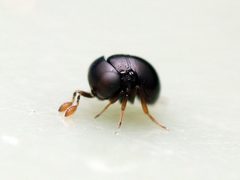
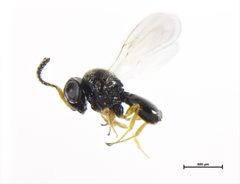
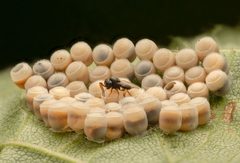
Images
Distribution
. Documented from New Zealand, Chile, Brazil, North America, and Europe. Some exhibit austral disjunct distributions consistent with Gondwanan relict status.
Sources and further reading
- BugGuide
- Wikipedia
- GBIF taxonomy match
- iNaturalist taxon
- NCBI Taxonomy
- Catalogue of Life
- Bug Eric: Wasp Wednesday: Trimorus
- Non-native pest-controlling wasp in Canada | Blog
- Bug Eric: Wasp Wednesday: Neorileya
- Entomology 2021: Attendees Share Early Favorites Among On-Demand Presentations, Posters
- In Search for Better Stink Bug Management, Scientists Look Up
- Assessment of conceptual and taxonomic aspects of the Scelionidae Family (Hymenoptera: Scelionidae)
- Revision of Archaeoteleia Masner (Hymenoptera: Platygastroidea, Scelionidae)
- Potential of Beauveria bassiana in the control of Euschistus crenator (Hemiptera: Pentatomidae) and selectivity to the parasitoid Telenomus podisi (Hymenoptera: Scelionidae).