
Teleasinae
Genus Guides
2Teleasinae is a of minute in the Scelionidae. Members are exclusively parasitoids of ground beetles (Carabidae), making them unique among Scelionidae in this specialization. The subfamily contains approximately 14 and over 480 described worldwide, with Trimorus alone comprising 389 species. Taxonomic placement has shifted historically, having been treated previously as a subfamily of Platygastridae before molecular analyses reclassified Scelionidae as a subfamily within Platygastridae.

Pronunciation
How to pronounce Teleasinae: /tɛˈliːəˌsaɪniː/
These audio files are automatically generated. While they are not always 100% accurate, they are a good starting point.
Identification
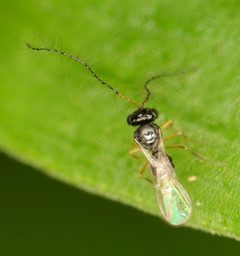
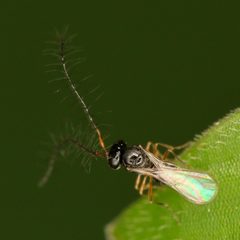
in is pronounced: males possess extremely long, uniformly slender antennae while females have short, distinctly clubbed antennae. Wing is common, with individuals ranging from fully winged to completely wingless (brachypterous), including intermediate forms with reduced, non-functional wing flaps. Body size is minute, rarely exceeding 2 mm and often under 1 mm.
Images
Habitat
Soil and ground surface environments where carabid occur. Found in both natural and agricultural .
Distribution
Worldwide distribution with described from North America, South America, and other regions.
Host Associations
- Carabidae - exclusive ; female lay inside carabid eggs
Life Cycle
: females oviposit directly into carabid eggs, with larvae developing internally and consuming the egg contents.
Behavior
Females are ground-active and frequently captured in pitfall traps, suggesting they search for at or below the soil surface rather than flying. Wing correlates with this ground-dwelling habit, with reduced-winged forms common.
Ecological Role
Plays a crucial role in regulating carabid in natural and agricultural . As specialized , they influence ground beetle dynamics and may affect services provided by carabid .
Human Relevance
Potential importance in agricultural pest management through regulation of ground beetle , though direct applications remain unexplored. Presence in pitfall trap indicates they are commonly encountered in biodiversity surveys and ecological monitoring.
Similar Taxa
- ScelioninaeAlso in Scelionidae but attack different groups (primarily Orthoptera, Hemiptera, and spider eggs rather than Carabidae); structure and host associations differ.
- PlatygastrinaeFormerly placed in the same Platygastridae; distinguished by associations with Cecidomyiidae (gall midges) rather than Carabidae, and different antennal .
Sources and further reading
- BugGuide
- Wikipedia
- iNaturalist taxon
- NCBI Taxonomy
- Catalogue of Life
- Bug Eric: Wasp Wednesday: Trimorus
- A semantically enriched taxonomic revision of Gryonoides Dodd, 1920 (Hymenoptera, Scelionidae), with a review of the hosts of Teleasinae
- Figure 3 from: Mikó I, Masner L, Ulmer JM, Raymond M, Hobbie J, Tarasov S, Margaría CB, Seltmann KC, Talamas EJ (2021) A semantically enriched taxonomic revision of Gryonoides Dodd, 1920 (Hymenoptera, Scelionidae), with a review of the hosts of Teleasinae. In: Lahey Z, Talamas E (Eds) Advances in the Systematics of Platygastroidea III. Journal of Hymenoptera Research 87: 523-573. https://doi.org/10.3897/jhr.87.72931
- Figure 24 from: Mikó I, Masner L, Ulmer JM, Raymond M, Hobbie J, Tarasov S, Margaría CB, Seltmann KC, Talamas EJ (2021) A semantically enriched taxonomic revision of Gryonoides Dodd, 1920 (Hymenoptera, Scelionidae), with a review of the hosts of Teleasinae. In: Lahey Z, Talamas E (Eds) Advances in the Systematics of Platygastroidea III. Journal of Hymenoptera Research 87: 523-573. https://doi.org/10.3897/jhr.87.72931
- Supplementary material 1 from: Mikó I, Masner L, Ulmer JM, Raymond M, Hobbie J, Tarasov S, Margaría CB, Seltmann KC, Talamas EJ (2021) A semantically enriched taxonomic revision of Gryonoides Dodd, 1920 (Hymenoptera, Scelionidae), with a review of the hosts of Teleasinae. In: Lahey Z, Talamas E (Eds) Advances in the Systematics of Platygastroidea III. Journal of Hymenoptera Research 87: 523-573. https://doi.org/10.3897/jhr.87.72931
- Supplementary material 3 from: Mikó I, Masner L, Ulmer JM, Raymond M, Hobbie J, Tarasov S, Margaría CB, Seltmann KC, Talamas EJ (2021) A semantically enriched taxonomic revision of Gryonoides Dodd, 1920 (Hymenoptera, Scelionidae), with a review of the hosts of Teleasinae. In: Lahey Z, Talamas E (Eds) Advances in the Systematics of Platygastroidea III. Journal of Hymenoptera Research 87: 523-573. https://doi.org/10.3897/jhr.87.72931
- Figure 28 from: Mikó I, Masner L, Ulmer JM, Raymond M, Hobbie J, Tarasov S, Margaría CB, Seltmann KC, Talamas EJ (2021) A semantically enriched taxonomic revision of Gryonoides Dodd, 1920 (Hymenoptera, Scelionidae), with a review of the hosts of Teleasinae. In: Lahey Z, Talamas E (Eds) Advances in the Systematics of Platygastroidea III. Journal of Hymenoptera Research 87: 523-573. https://doi.org/10.3897/jhr.87.72931
- Supplementary material 2 from: Mikó I, Masner L, Ulmer JM, Raymond M, Hobbie J, Tarasov S, Margaría CB, Seltmann KC, Talamas EJ (2021) A semantically enriched taxonomic revision of Gryonoides Dodd, 1920 (Hymenoptera, Scelionidae), with a review of the hosts of Teleasinae. In: Lahey Z, Talamas E (Eds) Advances in the Systematics of Platygastroidea III. Journal of Hymenoptera Research 87: 523-573. https://doi.org/10.3897/jhr.87.72931
- Figure 27 from: Mikó I, Masner L, Ulmer JM, Raymond M, Hobbie J, Tarasov S, Margaría CB, Seltmann KC, Talamas EJ (2021) A semantically enriched taxonomic revision of Gryonoides Dodd, 1920 (Hymenoptera, Scelionidae), with a review of the hosts of Teleasinae. In: Lahey Z, Talamas E (Eds) Advances in the Systematics of Platygastroidea III. Journal of Hymenoptera Research 87: 523-573. https://doi.org/10.3897/jhr.87.72931
- Figure 19 from: Mikó I, Masner L, Ulmer JM, Raymond M, Hobbie J, Tarasov S, Margaría CB, Seltmann KC, Talamas EJ (2021) A semantically enriched taxonomic revision of Gryonoides Dodd, 1920 (Hymenoptera, Scelionidae), with a review of the hosts of Teleasinae. In: Lahey Z, Talamas E (Eds) Advances in the Systematics of Platygastroidea III. Journal of Hymenoptera Research 87: 523-573. https://doi.org/10.3897/jhr.87.72931
- Figure 26 from: Mikó I, Masner L, Ulmer JM, Raymond M, Hobbie J, Tarasov S, Margaría CB, Seltmann KC, Talamas EJ (2021) A semantically enriched taxonomic revision of Gryonoides Dodd, 1920 (Hymenoptera, Scelionidae), with a review of the hosts of Teleasinae. In: Lahey Z, Talamas E (Eds) Advances in the Systematics of Platygastroidea III. Journal of Hymenoptera Research 87: 523-573. https://doi.org/10.3897/jhr.87.72931
- Figure 17 from: Mikó I, Masner L, Ulmer JM, Raymond M, Hobbie J, Tarasov S, Margaría CB, Seltmann KC, Talamas EJ (2021) A semantically enriched taxonomic revision of Gryonoides Dodd, 1920 (Hymenoptera, Scelionidae), with a review of the hosts of Teleasinae. In: Lahey Z, Talamas E (Eds) Advances in the Systematics of Platygastroidea III. Journal of Hymenoptera Research 87: 523-573. https://doi.org/10.3897/jhr.87.72931
- Figure 25 from: Mikó I, Masner L, Ulmer JM, Raymond M, Hobbie J, Tarasov S, Margaría CB, Seltmann KC, Talamas EJ (2021) A semantically enriched taxonomic revision of Gryonoides Dodd, 1920 (Hymenoptera, Scelionidae), with a review of the hosts of Teleasinae. In: Lahey Z, Talamas E (Eds) Advances in the Systematics of Platygastroidea III. Journal of Hymenoptera Research 87: 523-573. https://doi.org/10.3897/jhr.87.72931
- Figure 23 from: Mikó I, Masner L, Ulmer JM, Raymond M, Hobbie J, Tarasov S, Margaría CB, Seltmann KC, Talamas EJ (2021) A semantically enriched taxonomic revision of Gryonoides Dodd, 1920 (Hymenoptera, Scelionidae), with a review of the hosts of Teleasinae. In: Lahey Z, Talamas E (Eds) Advances in the Systematics of Platygastroidea III. Journal of Hymenoptera Research 87: 523-573. https://doi.org/10.3897/jhr.87.72931
- Figure 11 from: Mikó I, Masner L, Ulmer JM, Raymond M, Hobbie J, Tarasov S, Margaría CB, Seltmann KC, Talamas EJ (2021) A semantically enriched taxonomic revision of Gryonoides Dodd, 1920 (Hymenoptera, Scelionidae), with a review of the hosts of Teleasinae. In: Lahey Z, Talamas E (Eds) Advances in the Systematics of Platygastroidea III. Journal of Hymenoptera Research 87: 523-573. https://doi.org/10.3897/jhr.87.72931
- Figure 8 from: Mikó I, Masner L, Ulmer JM, Raymond M, Hobbie J, Tarasov S, Margaría CB, Seltmann KC, Talamas EJ (2021) A semantically enriched taxonomic revision of Gryonoides Dodd, 1920 (Hymenoptera, Scelionidae), with a review of the hosts of Teleasinae. In: Lahey Z, Talamas E (Eds) Advances in the Systematics of Platygastroidea III. Journal of Hymenoptera Research 87: 523-573. https://doi.org/10.3897/jhr.87.72931