
Chauliognathus basalis
LeConte, 1859
Colorado Soldier Beetle
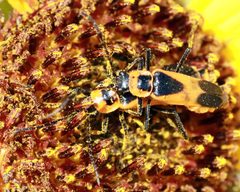
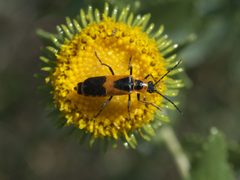
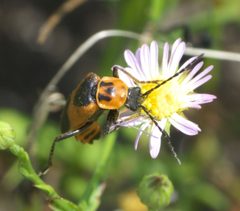
Chauliognathus basalis, commonly known as the Colorado soldier beetle, is a of soldier beetle in the Cantharidae. It is found in North America and is particularly common on the plains. The species exhibits Müllerian mimicry with other toxic beetles, sharing a black and orange color pattern that advertises its chemical defenses. are active during the day and frequently observed on flowers, especially those of Gutierrezia sarothrae (broom snakeweed).
Pronunciation
How to pronounce Chauliognathus basalis: //kaʊ.liˈoʊɡ.nə.θəs bəˈseɪ.lɪs//
These audio files are automatically generated. While they are not always 100% accurate, they are a good starting point.
Identification
Can be distinguished from the closely related Chauliognathus deceptus, which replaces it in foothills and mountain , by geographic distribution—C. basalis occurs on the plains while C. deceptus occupies higher elevations. Distinguished from mimics such as the longhorned beetle Crossidius discoideus by the latter's long . Distinguished from blister beetles (Epicauta spp.) by body shape and antennae structure.
Images
Appearance
are elongate beetles with soft, flexible wing covers () that give rise to the "leatherwings." The is commonly bent downward. are 11-segmented, threadlike, and commonly held forward of the body. The pronotum is usually wider than the head and wider than long. Wing covers are smooth to velvety appearing. The displays a black and orange color pattern.
Habitat
Plains ; found on flowers of plants in flowerbeds and on Gutierrezia sarothrae (broom snakeweed) in natural settings. Associated with open, sunny environments where plants bloom.
Distribution
North America; specifically the plains regions of the western United States including Colorado, Oklahoma, New Mexico, and adjacent areas. Replaced by C. deceptus in foothills and mountain .
Seasonality
Active in late summer and autumn; emerge in spring and reach peak abundance in late summer and fall. Observed from June through September, with peak activity coinciding with flowering of plants.
Diet
feed on nectar and pollen; also consume aphids and other honeydew-excreting insects, as well as caterpillars.
Host Associations
- Gutierrezia sarothrae - flower visitorBroom snakeweed; primary flower for feeding
Life Cycle
Larvae pass the winter in soil, under leaf litter, or beneath loose bark. After pupating, emerge in spring. Larval stages are dark grey, cloaked in a thick, velvety coat of fine hairs, and are predatory on ground-dwelling insects.
Behavior
Active during the day. When disturbed, may withdraw their legs and drop to the ground as if dead. Mating occurs frequently and is highly conspicuous; large males have mating advantages over smaller males. Adults frequently multitask, mating while searching for food on flower .
Ecological Role
Important in both and larval stages. Larvae are significant predators of ground-dwelling insects and will ascend plants to find prey in flowers and on fruit and foliage. Adults contribute to of aphids and caterpillars. Participates in Müllerian mimicry complex with toxic blister beetles and other chemically defended , reinforcing predator deterrence.
Human Relevance
Highly beneficial insect for gardens and agriculture due to on pest insects including aphids and caterpillars. Larvae occasionally enter homes in autumn when they squeeze beneath door sweeps, but are harmless and easily returned outdoors. Subject to fungal Entomophthora lampyridarum, which can cause declines in cool, moist seasons.
Similar Taxa
- Chauliognathus deceptusClosely related that replaces C. basalis in foothills and mountain ; distinguished by elevation and geographic distribution rather than obvious morphological differences
- Chauliognathus pennsylvanicusAnother common soldier beetle with similar and appearance; distinguished by geographic range and preferences
- Epicauta stuartiBlister beetle that mimics C. basalis in Müllerian mimicry complex; distinguished by different body shape and defense from leg joints
- Crossidius discoideusLonghorned beetle that mimics soldier beetles in ; distinguished by long and root-boring larval
- Calopteron terminaleNet-winged beetle that may mimic soldier beetles; distinguished by habit of raising and lowering in display
More Details
Mimicry Complex
C. basalis participates in a Müllerian mimicry complex with the blister beetle Epicauta stuarti, where both share black and orange warning coloration and both possess actual chemical defenses. This is distinct from seen in the longhorned beetle Crossidius discoideus, which is harmless but mimics the color pattern.
Fungal Pathogen
Subject to the fungal Entomophthora lampyridarum, which causes infected beetles to climb to upper plant leaves, clamp on with their jaws, spread their wings, and die—positioning the body to maximize spore .
Mating Behavior
Mating females and males are significantly larger than non-mating individuals; large size in males enables more effective subduing of females, which exercise mate choice and can reject smaller suitors.
Sources and further reading
- BugGuide
- Wikipedia
- GBIF taxonomy match
- iNaturalist taxon
- Entomologists Did These! | Bug Squad
- Bug Eric: A Beetle Mimicry Complex
- Oecanthidae | Beetles In The Bush
- Soggy death to friendly soldiers: Soldier beetles, Chauliognathus pennsylvanicus, and their deadly fungus, Entomophthora lampyridarum — Bug of the Week