
Brumus
Mulsant, 1850
Species Guides
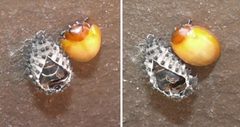
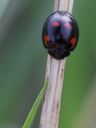
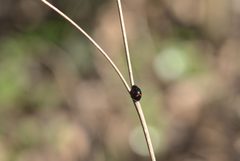
1- Brumus quadripustulatus(Cream-spot ladybird)
Brumus is a of lady beetles ( Coccinellidae) established by Mulsant in 1850. The genus contains approximately 10 described distributed across Europe, Asia, and Africa. Species in this genus are generally small to medium-sized coccinellids with somewhat elongated body forms compared to the more rounded typical lady beetles.
Pronunciation
How to pronounce Brumus: /ˈbruː.mʊs/
These audio files are automatically generated. While they are not always 100% accurate, they are a good starting point.
Identification
Distinguished from other Coccinellidae by the more elongated, less convex body form. Differs from Coccinella by the less rounded outline and often more subdued coloration. Separation from Hippodamia requires examination of tarsal structure and male genitalia. Specific identification relies on elytral pattern details and examination of genitalia.
Images
Habitat
Found in various terrestrial including forests, shrublands, and grasslands. Associated with coniferous and deciduous vegetation. Some occur in montane and subalpine zones.
Distribution
Palearctic distribution with recorded from Europe (including the British Isles), North Africa, the Middle East, Central Asia, Siberia, Mongolia, China, and the Indian subcontinent (Sri Lanka).
Seasonality
activity period varies by and latitude; generally active from spring through autumn in temperate regions. habits not well documented for most species.
Behavior
Presumed to be active as , consistent with characteristics, though specific behavioral observations are limited in published literature.
Ecological Role
Likely functions as a of small arthropods in vegetation, contributing to natural of potential pest .
Human Relevance
No documented direct economic importance. Potential incidental value in , though not commercially utilized.
Similar Taxa
- CoccinellaMore rounded, strongly convex body form; typically brighter coloration with distinct spot patterns
- HippodamiaSimilar elongated form but differs in tarsal structure and genitalia; often associated with different
- AdaliaSmaller size, more rounded body, different elytral punctation
More Details
Taxonomic History
The was established by Étienne Mulsant in 1850. Some were previously placed in other genera, reflected in the heterogeneity of original descriptions (authors including Linnaeus, 1758; Gebler, 1830; Weidenbach, 1859). The genus has undergone taxonomic revision but remains relatively small with stable species composition.
Species Diversity
The includes notable such as Brumus quadripustulatus (Linnaeus, 1758), one of the older described species in the , and Brumus octosignatus (Gebler, 1830) with broader Asian distribution.