
Coccinellinae
Latreille, 1807
Common Lady Beetles
Genus Guides
22- Adalia(ladybugs)
- Anatis(Giant Lady Beetles)
- Anisosticta
- Aphidecta(larch ladybird)
- Calvia
- Ceratomegilla
- Coccinella(ladybird)
- Coelophora
- Coleomegilla
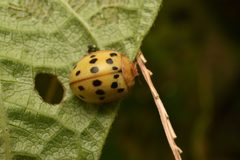
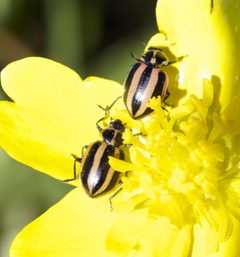
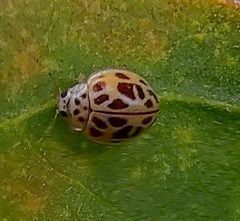
Coccinellinae is a of lady beetles in the Coccinellidae, established by Latreille in 1807. The subfamily comprises at least 20 and 90 described , organized into numerous tribes including Coccinellini, Stethorini, Epilachnini, Chilocorini, and others. Members exhibit diverse feeding strategies: most are aphidophagous , some are specialized mite predators (particularly Stethorini), and others are phytophagous (notably Epilachnini). The tribe Coccinellini, the most species-rich group, originated approximately 83.8 million years ago in the Late Cretaceous and shows strong phylogenetic conservatism in .
Pronunciation
How to pronounce Coccinellinae: /kɒksɪˈnɛlɪniː/
These audio files are automatically generated. While they are not always 100% accurate, they are a good starting point.
Identification
Distinguishing Coccinellinae from other Coccinellidae requires examination of morphological characters detailed in taxonomic keys; the Australian revision provides keys to subfamilies and . Within Coccinellinae, tribes are distinguished by combinations of characters: Stethorini are small with black bodies and yellow or brown appendages; Coccinellini typically show the classic rounded, convex lady beetle form with spotted or patterned ; Epilachnini are generally larger and more elongate with phytophagous habits. -level identification often requires examination of genitalia and other fine morphological details.
Images
Habitat
are highly variable across the and correlate with feeding . Aphidophagous occupy agricultural fields, gardens, and natural vegetation where occur. Stethorini specialize in habitats supporting phytophagous mite populations. Phytophagous Epilachnini are associated with their specific plants, including crop systems. The Coeliaria has been recorded from the Caatinga biome in Brazil. Australian species occupy diverse terrestrial across the continent.
Distribution
Worldwide distribution with records from all major biogeographic regions. Documented occurrences include: Australia (14 , 32 ), South America (including Brazil's Caatinga and Northeast Region, Argentina, Peru, Bolivia, Ecuador), India (multiple states including Manipur, West Bengal, Karnataka, Kerala, Himachal Pradesh, Uttarakhand), and the Kashmir Himalayas. The tribe Coccinellini shows global distribution. Specific distributions vary by tribe and genus; many genera have restricted geographic ranges.
Diet
Feeding habits are diverse and phylogenetically structured. Most are predatory: aphidophagous (Coccinellini, Aspidimerini, Oenopia species feeding on Aphididae), or specialized mite (Stethorini feeding on Tetranychidae and other phytophagous mites). Some lineages are phytophagous, notably Epilachnini including Epilachna and Toxotoma species. The ancestral state for Coccinellini is , with some derived lineages shifting to non-aphid prey.
Behavior
Predatory actively search for prey ; aphidophagous ladybirds have been observed feeding on multiple species across diverse plant . Stethorini species associate with distinct mite species on specific plants. Some species show segregation patterns, as documented in Propylea species in northern Japan. Dinocampus coccinellae utilizes both Coccinellini and Chilocorini as hosts.
Ecological Role
Major of agricultural and horticultural pests, particularly aphids and mites. Oenopia in India have been documented in 133+ tri-trophic associations involving 72 species on 109 plant species. Aspidimerini species participate in 133 tri-trophic associations with 35 aphid species on 70 plant species. These predators contribute to natural of aphid . Phytophagous Epilachnini function as herbivores and occasional crop pests.
Human Relevance
Significant importance in programs. Multiple have been introduced globally for and mite management in agricultural systems. The history of Australian Coccinellidae in biological control has been specifically reviewed. Some phytophagous members (Epilachnini) are crop pests, feeding on solanaceous and cucurbitaceous crops. Checklists of tri-trophic associations are used by researchers, conservationists, and policymakers to guide biological control strategies.
Similar Taxa
- EpilachninaeFormerly treated as a but now included within Coccinellinae as tribe Epilachnini; distinguished by phytophagous diet versus predominantly predatory habits of other Coccinellinae tribes
- ScymninaeOften treated as a separate ; distinguished by morphological characters and typically smaller body size with different antennal structure
More Details
Taxonomic composition
The includes approximately 27 tribes: Stethorini, Coccinellini, Chnoodini, Ortaliini, Epilachnini, Noviini, Scymnini, Cryptognathini, Cephaloscymnini, Platynaspidini, Aspidimerini, Hyperaspidini, Brachiacanthini, Diomini, Poriini, Pentiliini, Azyini, Argentipilosini, Chilocorini, Plotinini, Sumniini, Sticholotidini, Cranophorini, Coccidulini, Shirozuellini, and Scymnillini. The tribe Coccinellini alone contains over 90 and is the second most -rich tribe in Coccinellidae.
Phylogenetic research
Molecular phylogenetic studies using five nuclear and three mitochondrial gene fragments from 150 support monophyly of Coccinellini, with four major clades and 30 of 34 sampled recovered as monophyletic. Divergence dating estimates Coccinellidae origin at approximately 140 million years ago (Early Cretaceous) and Coccinellini origin at approximately 83.8 million years ago (Late Cretaceous), with diversification paralleling that of Aphididae.
Sources and further reading
- BugGuide
- Wikipedia
- iNaturalist taxon
- NCBI Taxonomy
- Catalogue of Life
- ID Challenge #16 | Beetles In The Bush
- A revision of the Australian Coccinellidae (Coleoptera). Part 1. Subfamily Coccinellinae
- New records of epilachnine lady-beetles (Coleoptera, Coccinellidae, Coccinellinae) of Peru
- A new species of Coeliaria Mulsant, 1850 (Coleoptera: Coccinellidae: Coccinellinae: Chnoodini) from northeastern Brazil
- Tri-Trophic Associations of Aphidophagous Ladybirds of the Tribe Aspidimerini (Coccinellinae: Coccinellidae: Coleoptera) in India
- Stethorini (Coleoptera: Coccinellidae: Coccinellinae) of South India: their associated mite species and barcode gap analysis
- Introgression and Habitat Segregation in a Pair of Ladybird Beetle Species in the Genus Propylea (Coccinellidae, Coccinellinae) in Northern Japan
- A catalogue of tri-trophic associations of Aphidophagous species of the ladybird beetle Oenopia Mulsant, 1850 (Coccinellinae: Coccinellidae: Coleoptera) in different states and union territories of India
- Dinocampus coccinellae (Hymenoptera: Braconidae) utilizes both Coccinellini and Chilocorini (Coleoptera: Coccinellidae: Coccinellinae) as hosts in Kashmir Himalayas
- Phylogeny and divergence dating of the ladybird beetle tribe Coccinellini Latreille (Coleoptera: Coccinellidae: Coccinellinae)
- Phylogeny of Epilachna, Henosepilachna, and Some Minor Genera of Phytophagous Ladybird Beetles (Coleoptera: Coccinellidae: Coccinellinae: Epilachnini), with an Analysis of Ancestral Biogeography and Host-Plant Utilization