
Buenoa platycnemis
(Fieber, 1851)
Buenoa platycnemis is a of backswimmer in the Notonectidae. It is a predatory aquatic insect found in freshwater across the Americas. The Buenoa is distinguished by males producing audible stridulatory sounds, a rare trait among aquatic Heteroptera. This species has been recorded from North, Central, and South America, including multiple states in Brazil.
Pronunciation
How to pronounce Buenoa platycnemis: /bweˈno.a plætɪkˈneɪmɪs/
These audio files are automatically generated. While they are not always 100% accurate, they are a good starting point.
Identification
Distinguished from other Notonectidae by the combination of: broad, flattened hind tibiae (wider than in ); male stridulatory apparatus on fore and pronotum; and specific genitalic structures visible under magnification. Separation from other Buenoa requires examination of male genitalia and stridulatory file . The broad hind legs separate it from Anisops and other notonectid with narrower swimming legs.
Images
Appearance
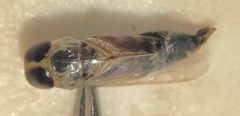
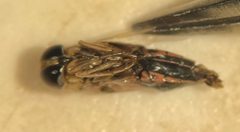
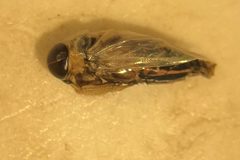
As a member of Notonectidae, this has an elongated, streamlined body adapted for swimming. The hind legs are modified into flattened, oar-like structures with dense fringes of setae for propulsion. The surface is typically dark with lighter markings. Males possess specialized stridulatory apparatus on the forelegs and pronotum for sound production. The species name "platycnemis" (Greek: "broad leg") likely refers to the expanded hind tibiae characteristic of this .
Habitat
Freshwater aquatic environments including ponds, lakes, slow-moving streams, and vegetated wetlands. Inhabits the water column rather than benthic zones. Associated with submerged vegetation that provides hunting substrate and .
Distribution
Widespread in the Western Hemisphere: recorded from Caribbean, Middle America, North America, and South America. In Brazil, documented from Amazonas (BR-AM), Goiás (BR-GO), Maranhão (BR-MA), Mato Grosso (BR-MT), Pará (BR-PA), Pernambuco (BR-PE), Rio de Janeiro (BR-RJ), Sergipe (BR-SE), and Tocantins (BR-TO).
Behavior
Males produce audible stridulatory sounds by rubbing specialized structures on the forelegs against the pronotum. This acoustic signaling is used in courtship and possibly male-male interactions. Like other backswimmers, swims -side-up using synchronous strokes of the hind legs. Active that hunts prey in the water column.
Ecological Role
in freshwater , consuming small aquatic . Serves as prey for larger aquatic and terrestrial predators including fish, amphibians, and birds.
Human Relevance
No documented direct economic importance. Like other notonectids, may contribute to of mosquito larvae in some , though this has not been specifically documented for this .
Similar Taxa
- Buenoa confusaOverlapping distribution in South America; distinguished by narrower hind tibiae and differences in male genitalia.
- Anisops spp.Similar and habitus; Anisops lacks stridulatory apparatus and has narrower, more cylindrical hind legs.
- Notonecta spp.Larger northern backswimmers with different body proportions and without the broad hind tibiae characteristic of Buenoa.
More Details
Acoustic biology
The Buenoa is one of few aquatic insect groups with documented . The stridulatory mechanism involves a file on the fore and a scraper on the pronotum, producing signals audible to human ears underwater.