
Calleida
Latreille, 1824
Species Guides
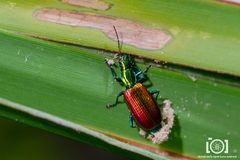
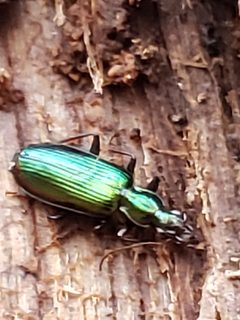
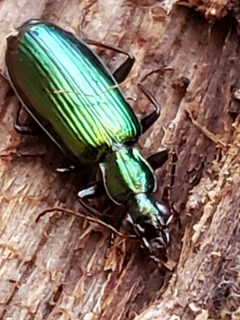
10Calleida is a large of ground beetles in the Carabidae, tribe Lebiini, comprising more than 300 . The genus is distributed across multiple continents with significant diversity in the Oriental Region. Oriental species have been organized into nine species groups based on external and genitalia characters. At least one North American species, C. viridipennis, has been documented as a of lepidopteran pests.
Pronunciation
How to pronounce Calleida: //kælˈlaɪdə//
These audio files are automatically generated. While they are not always 100% accurate, they are a good starting point.
Identification
Oriental of Calleida are distinguished from related through nine defined species groups based on external features and male and female genitalia . A diagnostic key to these species groups exists for Asiatic species. Species-level identification requires examination of genitalia characters and habitus features.
Images
Distribution
Widespread across multiple continents. Oriental Region including Borneo (Sabah, Kinabalu), China (Hubei, Zigui), India (Coimbatore), Vietnam (Vung Tau). Also present in North America (Louisiana documented for C. viridipennis).
Seasonality
Calleida viridipennis in Louisiana overwinters as , emerges from in late February or early March, with distributed from mid- or late-March to late-September and larvae occurring from late-March to early or mid-October.
Diet
Calleida viridipennis preys on the fruittree leafroller (Archips argyrospila). Both C. viridipennis and C. splendidula have been reported as of lepidopteran pests (coconut leaf eating caterpillar for the latter).
Host Associations
- Archips argyrospila - fruittree leafroller, documented for C. viridipennis in Louisiana
- Hyphantria cunea - associatedfall webworm, association documented for C. viridipennis after fruittree leafroller larvae complete development
Life Cycle
Calleida viridipennis overwinters as under bark. Adults survive approximately one year. Spring breeder with larval development from late-March to early or mid-October.
Behavior
of C. viridipennis overwinter under bark of baldcypress (Taxodium distichum, DBH > 30 cm) and black willow (Salix nigra, DBH > 15 cm) at heights more than 40 cm above water level in forested wetlands.
Ecological Role
of lepidopteran larvae, including agricultural and forest pests. Documented as predator of fruittree leafroller in Louisiana wetlands.
Human Relevance
Potential agent for lepidopteran pests. Calleida viridipennis has been studied as a of fruittree leafroller, an orchard pest.
Similar Taxa
- Plochionus timidusco-occurring ground beetle of fruittree leafroller in Louisiana, distinguished by separate identity within same
More Details
Taxonomic history
Oriental were previously treated as or subgenus Callidiola Jeannel, 1949. Recent revisions have reorganized these into Calleida sensu lato with nine defined species groups.
Species diversity
The contains more than 300 globally, with ongoing taxonomic work describing new species from Borneo, China, India, and Vietnam.
Sources and further reading
- BugGuide
- Wikipedia
- iNaturalist taxon
- NCBI Taxonomy
- Catalogue of Life
- Seasonal Occurrence of Calleida viridipennis (Say) and Plochionus timidus Haldeman (Coleoptera: Carabidae), Predators of the Fruittree Leafroller, Archips argyrospila (Walker), in Louisiana
- Revision of the Oriental species of Calleida Latreille (sensu lato). Part 1: Introduction, groups of species, and species of six species groups (Coleoptera: Carabidae: Lebiini)