
Plochionus timidus
Haldeman, 1843
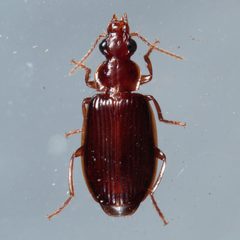
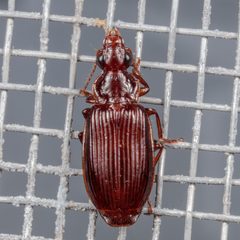
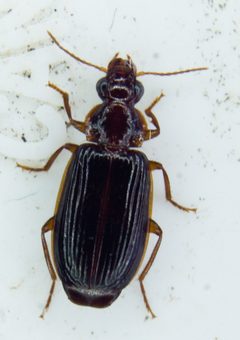
Plochionus timidus is a ground beetle in the Carabidae, distributed across North America from Canada to the United States. It is a documented of lepidopteran larvae, particularly the fruittree leafroller (Archips argyrospila), and has been observed in association with the fall webworm (Hyphantria cunea). overwinter under bark and emerge in late winter to early spring to coincide with caterpillar activity. The is a spring breeder with adults surviving approximately one year.
Pronunciation
How to pronounce Plochionus timidus: //plɔˈkiːoʊnəs ˈtɪmɪdəs//
These audio files are automatically generated. While they are not always 100% accurate, they are a good starting point.
Images
Habitat
Forested wetlands. overwinter under the bark of baldcypress (Taxodium distichum, DBH >30 cm) and black willow (Salix nigra, DBH >15 cm) at heights more than 40 cm above water level.
Distribution
North America: Canada and United States. Documented in Louisiana forested wetlands; broader North American range confirmed by GBIF records.
Seasonality
emerge from in late February or early March. distributed from mid- or late-March to late-September. Larvae present from late-March to early or mid-October.
Diet
of lepidopteran larvae. Documented prey includes the fruittree leafroller (Archips argyrospila) and association with fall webworm (Hyphantria cunea).
Host Associations
- Archips argyrospila - preyFruittree leafroller caterpillars; primary documented prey in Louisiana study
- Hyphantria cunea - preyFall webworm; association observed after fruittree leafroller larvae complete development
- Taxodium distichum - siteBaldcypress bark; microhabitat
- Salix nigra - siteBlack willow bark; microhabitat
Life Cycle
Spring breeder. survive approximately one year. laid among foliage and webs. Larval development occurs through late spring to mid-autumn.
Behavior
overwinter under bark of wetland trees. timed to coincide with activity of caterpillar prey. distributed among foliage and webs rather than in soil.
Ecological Role
of defoliating lepidopteran larvae in forested wetland . Contributes to of fruittree leafroller and fall webworm .
Human Relevance
Potential agent for orchard and forest pests, particularly the fruittree leafroller which affects fruit trees.
Similar Taxa
- Calleida viridipennisSympatric carabid with similar seasonal occurrence, use, and prey associations in Louisiana forested wetlands. Both overwinter under bark and prey on Archips argyrospila.
More Details
Overwintering Microhabitat Specificity
sites are specific to larger trees: baldcypress >30 cm DBH and black willow >15 cm DBH, positioned >40 cm above water level, suggesting flood avoidance requirements.
Prey Switching
Observed to associate with fall webworm after fruittree leafroller larvae complete development, indicating flexible foraging across lepidopteran prey.