
Archips argyrospila
(Walker, 1863)
Fruit-tree Leafroller Moth, Fruittree Leafroller
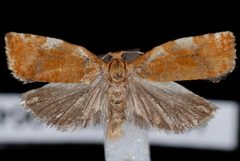
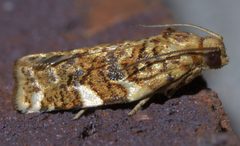
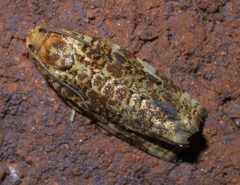
Archips argyrospila, the fruit-tree leafroller , is a tortricid moth native to North America. are active from mid-May to July with a single per year. The larvae are leaf-rollers that construct silk-bound shelters within rolled or folded leaves. The is a documented pest of commercial apple and pear orchards, with larvae feeding on foliage of numerous woody plants. Viral including and have been observed infecting field at rates up to 25% during conditions.
Pronunciation
How to pronounce Archips argyrospila: //ˈɑːrkɪps ˌɑːrɡɪˈrɒspɪlə//
These audio files are automatically generated. While they are not always 100% accurate, they are a good starting point.
Identification
Distinguished from similar Archips by genitalia (not detailed in sources). Forewing size ranges overlap with ; specific diagnostic external features not provided. As a member of Archipini, exhibits typical leaf-rolling larval . Confirmation likely requires dissection and examination of genital structures.
Images
Habitat
Forested wetlands with baldcypress (Taxodium distichum), orchards with apple and pear, and mixed hardwood-conifer forests. Larvae occur on foliage of trees; found in association with host vegetation.
Distribution
Most of the United States and southern Canada. Specific records from Alberta, Manitoba, and Saskatchewan in Canada; Louisiana and Massachusetts in the United States. Western Massachusetts associated with suburban-rural interface .
Seasonality
active mid-May to July. : one per year. Larvae active spring through early summer; stage not explicitly stated but likely or pupal given univoltine cycle.
Diet
Larvae feed on foliage of: Malus (apple), Pyrus (pear), Prunus (cherry), Taxodium distichum (baldcypress), Quercus (oak), Vaccinium, Betula, Acer negundo, Aesculus, Ceanothus, Cercocarpus, Citrus, Eriodictyon, Vitis (grape), Crataegus, Carya, Gleditsia triacanthos, Humulus (hops), Syringa, Avena, Allium, Maclura pomifera (osage orange), Rheum, Sassafras, and Juglans (walnut). do not feed; larval diet phytophagous, on woody dicots and some monocots.
Host Associations
- Malus - larval food plant, pest primary commercial
- Pyrus - larval food plant, pest primary commercial
- Prunus - larval food plantincludes cherry
- Taxodium distichum - larval food plantforested wetland ; open foliage preferred
- Quercus - larval food plantincludes Shumard oak
- Vaccinium - larval food plant
- Betula - larval food plant
- Acer negundo - larval food plant
- Aesculus - larval food plant
- Ceanothus - larval food plant
- Cercocarpus - larval food plant
- Citrus - larval food plantsweet citrus does not support development per
- Eriodictyon - larval food plant
- Vitis - larval food plant
- Crataegus - larval food plant
- Carya - larval food plant
- Gleditsia triacanthos - larval food plant
- Humulus - larval food plant
- Syringa - larval food plant
- Avena - larval food plant
- Allium - larval food plant
- Maclura pomifera - larval food plant
- Rheum - larval food plant
- Sassafras - larval food plant
- Juglans - larval food plant
Life Cycle
: one per year. stage present; larval development through multiple instars (early and late instars distinguished in performance studies); pupal stage; mid-May to July. Specific stage not explicitly documented. Larval shelters constructed from silk and leaf material provide protection from and .
Behavior
Larvae exhibit leaf-rolling , constructing silk-bound shelters within rolled or folded leaves. When threatened, larvae may eject from shelters using silk lines for escape, a behavior exploited by predatory . Larval performance metrics including survival, development time, and utilization vary significantly with host plant foliage type and .
Ecological Role
Herbivore in forested wetland and orchard . Documented pest of commercial apple and pear production. for multiple and prey for including carabid beetles (Calleida viridipennis, Plochionus timidus) and solitary (Ancistrocerus unifasciatus). Viral (NPV, GV) exhibit -dependent patterns, potentially contributing to at high densities.
Human Relevance
Agricultural pest of apple and pear orchards requiring management intervention. Subject of research including conservation. Viral studied for potential biocontrol applications. Misidentification risks in faunistic surveys may lead to erroneous pest management decisions.
Similar Taxa
- Archips purpuranaSimilar leaf-rolling larval and ; both in Archipini. Distinguished by association patterns and genitalia; A. purpurana associated with goldenrod (Solidago) and other hosts.
- Archips crataegana with similar ; distinguished by distribution (more northern) and preferences.
- Archips podana; northern distribution does not overlap with A. argyrospila in northernmost regions per faunistic studies.
- Hyphantria cunea (fall webworm)Shared (Calleida viridipennis, Plochionus timidus) in Louisiana; distinguished by social web-building versus solitary leaf-rolling.
More Details
Host Plant Quality Effects
Larval performance varies significantly with foliage . Open morphology baldcypress foliage supports superior first-instar survival compared to appressed morphology or pondcypress. Pondcypress foliage triggers early termination of larval development, reducing suitability. Shumard oak and sweet citrus do not support development, precluding risk in Gulf States areas with these hosts.
Viral Pathogen Dynamics
(NPV) and (GV) occur in field with 0–24.4%, positively correlated with defoliation and . Leaf shelters protect larvae from at low-moderate densities; development favored by high populations and warm temperatures. Double infections observed in <5% of larvae (maximum 10.2%).
Predator Ecology
Carabid Calleida viridipennis and Plochionus timidus overwinter as under bark of baldcypress (>30 cm DBH) and black willow (>15 cm DBH) >40 cm above water level in forested wetlands. Adult synchronized with A. argyrospila larval activity in late February–early March. Predators switch to fall webworm (Hyphantria cunea) after A. argyrospila larvae complete development.
Sources and further reading
- BugGuide
- Wikipedia
- GBIF taxonomy match
- iNaturalist taxon
- NCBI Taxonomy
- Catalogue of Life
- Bug Eric: How to Catch a Leafroller Caterpillar (Video)
- Pensoft Editorial Team | Blog - Part 69
- Abundance of Parasitoids of Archips argyrospila (Lepidoptera: Tortricidae) in Louisiana
- Fruittree Leafroller, Archips argyrospila (Walker) (Lepidoptera: Tortricidae), Performance as Influenced by Host Foliage Type
- Prevalence of Viral Diseases of the Fruittree Leafroller, Archips argyrospila (Walker) (Lepidoptera: Tortricidae), in Louisiana
- Morphological variations in the cytopathology associated with granulosis virus in the fruit-tree leaf roller, Archips argyrospila
- Host Quality of Baldcypress and Its Influence on Fruittree Leafroller, Archips Argyrospila (Walker) (Lepidoptera: Tortricidae), Performance in Forested Wetlands of Louisiana.
- Seasonal Occurrence of Calleida viridipennis (Say) and Plochionus timidus Haldeman (Coleoptera: Carabidae), Predators of the Fruittree Leafroller, Archips argyrospila (Walker), in Louisiana