
Archips purpurana
(Clemens, 1865)
omnivorous leafroller moth
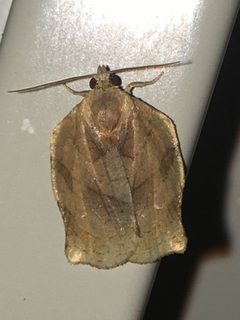
Archips purpurana, commonly known as the omnivorous leafroller moth, is a tortricid described by Clemens in 1865. The species is notable for its leafrolling larval , where caterpillars bind leaves together with silk to form shelters. It has been recorded as a for the mason wasp Ancistrocerus unifasciatus, which exploits the caterpillar's escape response to capture it. The species occurs widely across eastern North America.
Pronunciation
How to pronounce Archips purpurana: //ˈɑːrkɪps ˌpɜːrpjʊˈræ.nə//
These audio files are automatically generated. While they are not always 100% accurate, they are a good starting point.
Identification
Larvae are distinguished by their leafrolling , binding leaves together with silk to form protective shelters. The specific epithet 'purpurana' suggests purple coloration in some life stage, though this is not explicitly documented in available sources.
Images
Habitat
Found in mixed hardwood and conifer forest ; larvae associated with goldenrod (Solidago spp.) and other plants. Occurs in suburban and rural settings with suitable host vegetation.
Distribution
Eastern North America, with records from Alberta, Manitoba, and Saskatchewan in Canada; Vermont in the United States. The ranges throughout most of eastern North America.
Diet
Larvae feed on goldenrod and other plants; specific range is broad (reflected in 'omnivorous leafroller').
Host Associations
- Solidago - larval food plantgoldenrod
Life Cycle
Complete with , larval, pupal, and stages. Larvae are leafrollers that construct silk-bound shelters in leaves.
Behavior
Larvae exhibit a distinctive escape response when threatened: they eject from their leaf rolls and trail a silken line, which they use to climb back once danger has passed. This is exploited by predatory .
Ecological Role
Serves as prey for solitary , including the mason wasp Ancistrocerus unifasciatus, which provisions nests with paralyzed caterpillars. Acts as a folivore in its larval stage.
Human Relevance
Potential minor pest due to leafrolling damage on vegetation; more significant as a research subject for understanding -prey interactions and .
Similar Taxa
- Archips crataeganaCongeneric leafroller with similar ; distinguished by associations and geographic distribution patterns
- Archips podanaCongeneric leafroller ; requires careful examination of genitalia or larval preferences for definitive identification
More Details
Predator Exploitation of Escape Behavior
The mason wasp Ancistrocerus unifasciatus has been observed exploiting the caterpillar's escape response: the runs back and forth along the leaf roll, vibrating its to stimulate the caterpillar to eject, then captures it mid-air. This is one of the few documented cases of a actively manipulating prey escape for capture.