
Calosoma angulatum
Chevrolat, 1834
angulate caterpillar hunter
Calosoma angulatum, commonly known as the angulate caterpillar hunter, is a large ground beetle in the Carabidae. First described by Chevrolat in 1834, this ranges from the southwestern United States through Central America into northern South America. It inhabits premontane moist forests and oak-savannah . are known to prey on Spodoptera frugiperda (fall armyworm), indicating a role as a of agricultural pest caterpillars.
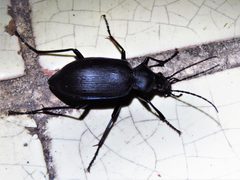
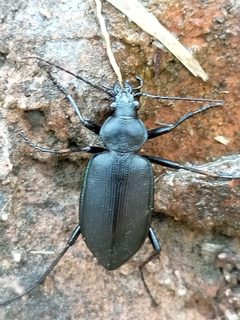
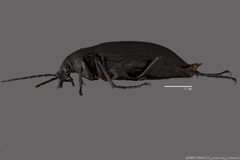
Pronunciation
How to pronounce Calosoma angulatum: /ˌkæloʊˈsoʊmə æŋˈɡjuːlətəm/
These audio files are automatically generated. While they are not always 100% accurate, they are a good starting point.
Images
Habitat
Premontane moist forests and oak-savannah .
Distribution
Native to the southwestern United States (Arizona, California, New Mexico, Texas), Mexico, Guatemala, Honduras, Nicaragua, Rica, Colombia, and Venezuela.
Diet
have been recorded preying on Spodoptera frugiperda (fall armyworm).
Ecological Role
of caterpillars, including agricultural pest .
Human Relevance
Potential agent for fall armyworm, a significant agricultural pest.
Similar Taxa
- Calosoma sayiBoth are large, black 'caterpillar hunter' ground beetles in the same , but C. sayi is found primarily in eastern and central North America rather than the southwestern U.S. and Central America.
- Calosoma scrutatorAnother large, colorful caterpillar hunter with metallic green or purple coloration; C. scrutator is larger (typically 25+ mm) and has more intense pronotal coloration compared to C. angulatum.
Sources and further reading
- BugGuide
- Wikipedia
- GBIF taxonomy match
- iNaturalist taxon
- NCBI Taxonomy
- Catalogue of Life
- Ground beetles up in the air: Calosoma wilcoxi and Calosoma scrutator — Bug of the Week
- Feasting on the bounty | Beetles In The Bush
- May | 2011 | Beetles In The Bush | Page 2
- Best of BitB 2012 | Beetles In The Bush
- Bug Eric: ID Tip: Ground Beetle or Darkling Beetle?
- November | 2012 | Beetles In The Bush | Page 2