
Calosoma scrutator
(Fabricius, 1775)
Fiery Searcher, Caterpillar Hunter
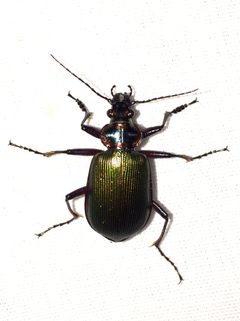
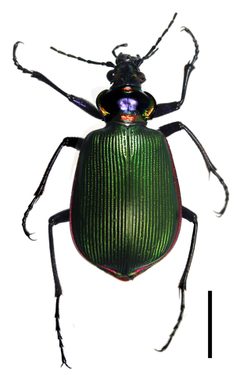
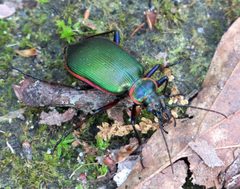
Calosoma scrutator is a large, predatory ground beetle native to North America, commonly known as the Fiery Searcher or Caterpillar Hunter. reach 25–35 mm in length and display striking metallic coloration. The is primarily and climbs vegetation to hunt caterpillars, earning its . When disturbed, it excretes a foul-smelling defensive oil from pygidial glands. It serves as an important agent for defoliating insect pests.
Pronunciation
How to pronounce Calosoma scrutator: //kæˈloʊsəmə ˈskruːtətɔr//
These audio files are automatically generated. While they are not always 100% accurate, they are a good starting point.
Identification
Distinguished from similar Calosoma by its larger size (25–35 mm, exceeding 25 mm), more elongated and , and more intense purple coloration on the central pronotum. The are metallic green to purple with orange-red marginal bands on the pronotum. Similar species C. wilcoxi is approximately one-third smaller, with less elongated mandibles and less vivid pronotal coloration.
Images
Habitat
Open including fields, gardens, agricultural areas, and deciduous forest edges. Often found under stones, logs, leaf litter, and bark during daytime. Capable of climbing trees and vegetation to hunt prey.
Distribution
Eastern North America, from southern Canada through the eastern United States to Florida, westward to Texas and South Dakota. Also recorded in Mexico, Guatemala, and Venezuela. Most common along the Atlantic coastal plain but widespread across the continent.
Seasonality
are most active during spring, particularly May–June when mating occurs. laid May–July. Larval development spans approximately one week per instar. Pupal stage lasts 10–15 days. Adults may live up to 4 years. occurs as adults concealed in leaf litter and under bark.
Diet
Caterpillars and other soft-bodied insects. Documented prey includes forest (Malacosoma disstria), spring and fall cankerworms, gypsy moth larvae, and spongy moth larvae. Both and larvae are predatory.
Life Cycle
Complete with four stages: , larva, pupa, and . Females deposit eggs in soil May–July. Eggs hatch in approximately one week. Larvae pass through multiple instars over roughly 9 days to one week, then burrow into soil to pupate. Pupae initially white, gradually gaining coloration; adult follows 10–15 days. Entire cycle can complete within one year. Adults may survive 2–4 years.
Behavior
Primarily hunter. Climbs trees and vegetation to search for caterpillars, though spends most time on ground. When captured or handled, excretes defensive oil from pygidial glands; oil described as smelling similar to rotten milk or rancid olive oil. Rapid runner when disturbed. Hides under debris and in leaf litter during daytime; seeks shelter under bark during winter.
Ecological Role
Significant of caterpillars and other soft-bodied insects; functions as agent for agricultural and forest pests. abundance often increases during caterpillar . Presence associated with decline of cankerworm populations in natural forest settings.
Human Relevance
Beneficial insect in agriculture and forestry due to on pest caterpillars. Occasionally encountered by gardeners and naturalists; defensive secretion can be unpleasant but not harmful. Subject of entomological interest due to size, coloration, and predatory .
Similar Taxa
- Calosoma wilcoxiSimilar appearance but smaller (approximately one-third the size), less elongated and , less intense purple pronotal coloration, and differences in temporal occurrence.
Sources and further reading
- BugGuide
- Wikipedia
- GBIF taxonomy match
- iNaturalist taxon
- NCBI Taxonomy
- Ground beetles up in the air: Calosoma wilcoxi and Calosoma scrutator — Bug of the Week
- Feasting on the bounty | Beetles In The Bush
- Anthribidae | Beetles In The Bush
- Tettigoniidae | Beetles In The Bush | Page 2
- May | 2011 | Beetles In The Bush | Page 2
- Friday flower | Beetles In The Bush
- Fiery Searcher, Caterpillar Hunter Calosoma scrutator (Fabricius 1775) (Insecta: Coleoptera: Carabidae)