
Carabinae
Linnaeus, 1802
ground beetles
Tribe Guides
2Carabinae is a of ground beetles in the Carabidae, comprising approximately 1,400 described across ten . The subfamily is divided into two tribes: Cychrini and Carabini, with the latter further subdivided into subtribes Carabina and Ceroglossina. Notable genera include Carabus, Calosoma, and Ceroglossus. The group has been extensively studied phylogenetically, with molecular data covering over 90% of carabid genera.
Pronunciation
How to pronounce Carabinae: //kæˈræbɪˌni//
These audio files are automatically generated. While they are not always 100% accurate, they are a good starting point.
Identification
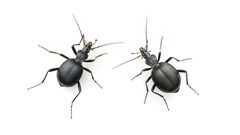
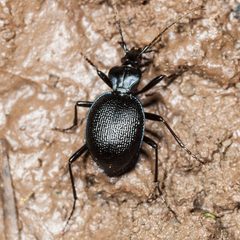
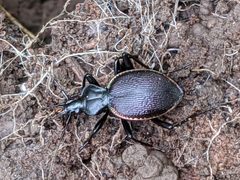
Members of Carabinae can be distinguished from other Carabidae by their robust body form and elytral structure. Tribe Cychrini ( Cychrus, Scaphinotus, Sphaeroderus, Cychropsis, Pamborus, Maoripamborus) typically exhibits elongated, cylindrical bodies adapted for on snails. Tribe Carabini includes larger, often metallic : subtribe Carabina contains Carabus and Calosoma, while Ceroglossina contains the single genus Ceroglossus with distinctive mandibular and antennal characteristics.
Images
Habitat
vary by tribe and . Cychrini are often associated with moist forest environments where their mollusk prey occur. Carabini species occupy diverse terrestrial habitats including forests, grasslands, and mountain meadows. In Bulgaria, species occur in mountain ranges (Stara Planina, Vitosha, Rila, Pirin) and valleys. Ukrainian records indicate presence in meadow-steppe habitats and oak forests of the Podolian Upland, though these habitats are declining due to agricultural intensification and afforestation.
Distribution
Global distribution spanning the Holarctic and beyond. Cychrini are primarily distributed in the Northern Hemisphere with disjunct . Carabini show broader distribution with notable radiations in Eurasia and the Americas. Specific regional records include: Bulgaria (28 Carabini , 1 Cychrini species); Ukraine (24 species in Pivnichne Podillia National Nature Park); and extensive sampling across 35 countries for phylogenetic studies.
Diet
Predominantly predatory. Cychrini are specialized molluscivores, feeding on snails and slugs using elongated and mandibular structures to extract prey from shells. Carabini are of including insects, earthworms, and other soil fauna. Calosoma are known to prey on caterpillars and have been introduced for .
Life Cycle
Complete with , larva, pupa, and stages. Larvae are typically terrestrial, active with well-developed legs and . occurs in soil . Specific developmental durations vary by and environmental conditions.
Behavior
or activity patterns predominate. are fast-moving, ground-dwelling . Many exhibit defensive including chemical secretion from pygidial glands. Some Carabus species are known to climb vegetation to hunt.
Ecological Role
Human Relevance
Calosoma sycophanta and related have been utilized for of forest pests, particularly gypsy moth (Lymantria dispar) and tent caterpillars. Some species are collected for scientific study due to their value in phylogenetic and biogeographic research. degradation in meadow-steppe regions has led to declines and reduced diversity in parts of Eastern Europe.
Similar Taxa
- CicindelinaeAlso within Carabidae but distinguished by activity, large , and (running) hunting on open ground; Carabinae are primarily with different eye structure and use.
- NebriinaeAnother Carabidae with ground-dwelling , but Nebriinae typically exhibit different body proportions, preferences (often riparian), and lack the specialized molluscivorous adaptations of Cychrini.
More Details
Taxonomic Structure
Carabinae contains two tribes: Cychrini (6 : Cychropsis, Cychrus, Scaphinotus, Sphaeroderus, Maoripamborus, Pamborus) and Carabini (4 genera: Aplothorax, Calosoma, Carabus, Ceroglossus). Carabini is further divided into subtribes Carabina (Aplothorax, Calosoma, Carabus) and Ceroglossina (Ceroglossus).
Phylogenetic Significance
Molecular studies using ITS sequences have sampled over 500 locations across 35 countries, representing more than 90% of carabid . Carabinae serves as a critical group for understanding Carabidae evolution and biogeographic history.
Conservation Concerns
In Pivnichne Podillia National Nature Park, Ukraine, meadow-steppe fragmentation and agricultural intensification have caused measurable declines in Carabinae diversity, with 17 of 24 recorded now known only from adjacent areas rather than the park itself.
Sources and further reading
- BugGuide
- Wikipedia
- iNaturalist taxon
- NCBI Taxonomy
- Catalogue of Life
- ID Challenge #1 | Beetles In The Bush
- Phylogeny and Distribution of the Subfamily Carabinae
- Ground beetles (Coleoptera, Carabidae) of the Pivnichne Podillia National Nature Park (Ukraine). Part I: Cicindelinae, Omophroninae, Nebriinae, Elaphrinae, and Carabinae
- New data about Bulgarian ground beetles from subfamilies Nebriinae, Carabinae and Cicindelinae (Coleoptera: Carabidae)