
Sphaeroderus
Dejean, 1826
Small Snail-eating Beetles
Species Guides
6- Sphaeroderus bicarinatus(Two-ridged False Snail-eating Beetle)
- Sphaeroderus canadensis(Canada Snail-eating Beetle)
- Sphaeroderus indianae(Indiana False Snail-eating Beetle)
- Sphaeroderus nitidicollis(Polished Snail-eating Beetle)
- Sphaeroderus schaumii(Schaum's ground beetle)
- Sphaeroderus stenostomus(Small Snail-eating Ground Beetle)
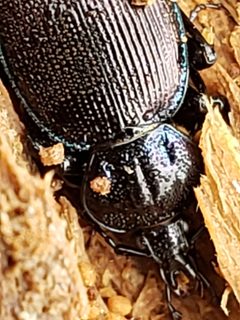
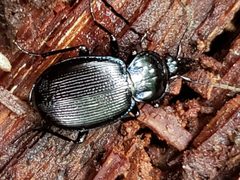
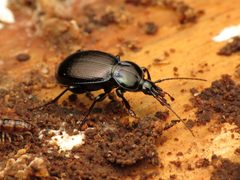
Sphaeroderus is a of ground beetles (Carabidae) native to North America. The genus comprises six recognized , including the notable Schaum's (S. schaumii). Members are commonly known as Small Snail-eating Beetles, reflecting their specialized feeding habits. The genus was established by Dejean in 1826 and is classified within the tribe Cychrini.
Pronunciation
How to pronounce Sphaeroderus: /sfɛəroʊˈdɛrəs/
These audio files are automatically generated. While they are not always 100% accurate, they are a good starting point.
Identification
Sphaeroderus can be distinguished from other Carabidae by their association with the tribe Cychrini, which includes snail-eating . The genus is characterized by a compact, rounded body form typical of Cychrini. Specific species-level identification requires examination of elytral sculpturing and male genitalia; S. schaumii is one of the more frequently referenced species in identification literature.
Images
Habitat
Found in forested environments across North America. Specific microhabitat preferences vary by but generally include moist woodland conditions where gastropod prey are abundant.
Distribution
Native to North America. Documented from the United States (including Vermont) and Canada.
Diet
Specialized of gastropods (snails and slugs), as indicated by the "Small Snail-eating Beetles" and tribal placement within Cychrini.
Behavior
Ecological Role
Acts as a regulating gastropod in forest . Contributes to nutrient cycling through on mollusks.
Human Relevance
Minimal direct interaction with humans. Occasionally encountered by entomologists and naturalists in woodland . Not considered an agricultural pest or beneficial in economic contexts.
Similar Taxa
- ScaphinotusAnother North American in tribe Cychrini with similar snail-eating and preferences. Scaphinotus often have more elongated body forms and distinct elytral patterns.
- CychrusType of tribe Cychrini; shares the specialized gastropod-feeding mandibular structure but differs in body proportions and geographic distribution (more widespread in Eurasia).
More Details
Taxonomic History
The was established by Pierre François Marie Auguste Dejean in 1826. The six currently recognized were described between 1801 (S. stenostomus) and 1910 (S. indianae).
Observation Data
Over 2,000 observations documented on iNaturalist, indicating moderate detection frequency by citizen scientists, though specific identification to level may be challenging from photographs alone.