
Cychrini
Perty, 1830
snail-eating ground beetles
Genus Guides
3- Cychrus
- Scaphinotus(Snail-eating Beetles)
- Sphaeroderus(Small Snail-eating Beetles)
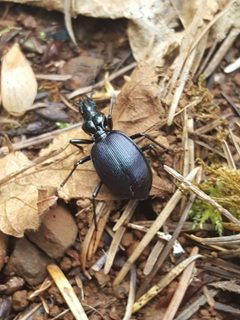
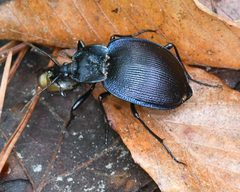
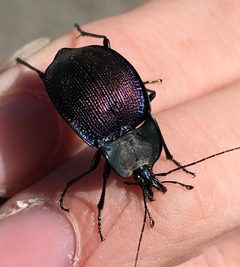
Cychrini is a tribe of ground beetles (Carabidae) comprising approximately 6 and over 300 described . Members are specialized snail (malacophagous), with morphological adaptations including enlarged, sculptured for crushing shells. The tribe exhibits a disjunct global distribution, with genera occurring in the Holarctic region, Australia, New Zealand, and parts of Asia. Cychrini are among the largest carabid beetles, with many species exceeding 15 mm in length.
Pronunciation
How to pronounce Cychrini: //sɪˈkraɪnaɪ//
These audio files are automatically generated. While they are not always 100% accurate, they are a good starting point.
Identification
Cychrini can be distinguished from other Carabidae by a combination of large body size (typically 15–25 mm), prominent sculptured adapted for crushing snail shells, and elongated body form with slender and pronota. The tribe is placed within Carabinae. are geographically segregated: Scaphinotus and Sphaeroderus in North America, Cychrus in the Holarctic, Pamborus in Australia, Maoripamborus in New Zealand, and Cychropsis in China and the Indian subcontinent.
Images
Distribution
The tribe has a disjunct distribution spanning multiple continents. Cychrus occurs across the Holarctic region. Scaphinotus and Sphaeroderus are restricted to North America. Pamborus is to Australia. Maoripamborus is endemic to New Zealand. Cychropsis occurs in China and the Indian subcontinent.
Diet
Snails (malacophagy). Museum specimen records document Cychrini beetles feeding on at least 22 of snails from 12 . Prey breadth varies by species, with some feeding on 1–9 snail species. Female beetles have been observed consuming larger snails than males.
Behavior
activity has been documented in at least some ; individuals have been collected at street lamps. Movement patterns in response to forest disturbance have been studied using mark-recapture techniques, though specific behavioral details for the tribe as a whole remain limited.
Ecological Role
of terrestrial gastropods. As specialized snail predators, Cychrini function as regulators of snail in forest and other . Their presence indicates functional diversity within ground beetle .
Human Relevance
Used as study organisms in ecological research on -prey relationships and assembly in disturbed . Museum specimens have been instrumental in documenting cryptic feeding relationships that are difficult to observe directly in nature.
Similar Taxa
- Cicindelini (tiger beetles)Also large, fast-running carabids with prominent ; however, tiger beetles are , visually oriented of small arthropods, not snails, and possess large and different body proportions.
- Other Carabinae (e.g., Calosoma, caterpillar hunters)Share large size and placement, but differ in prey type (caterpillars and other insects) and adapted for grasping rather than crushing shells.
More Details
Morphological adaptation to prey
Body form in Cychrini correlates with prey availability: larger beetles consume snails with larger aperture openings, while more slender beetles (with longer, thinner , , and pronota) consume snails with smaller aperture openings.
Research utility
Museum collections have proven valuable for studying Cychrini , as direct observation of feeding is difficult. Historical specimens collected with prey in their provide otherwise unattainable data on -prey relationships.
Sources and further reading
- BugGuide
- Wikipedia
- iNaturalist taxon
- NCBI Taxonomy
- Catalogue of Life
- From Forests to Cities: One Entomologist's Journey to Understand What's Disturbing Insects
- Black is beautiful! | Beetles In The Bush
- Using museum collections to explore predator–prey relationships in snail‐eating beetles (Carabidae: Cychrini)