
Sphaeroderus indianae
(Blatchley, 1910)
Indiana False Snail-eating Beetle
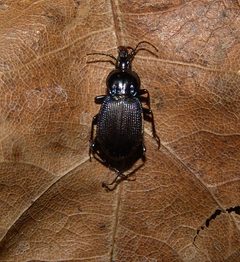
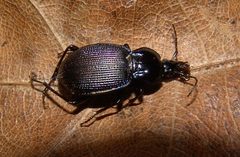
Sphaeroderus indianae is a flightless ground beetle in the tribe Cychrini, known from deciduous forests of the eastern United States. possess reduced wings (brachypterous), restricting and contributing to its patchy distribution. The is one of several North American Sphaeroderus with limited range and specific requirements.
Pronunciation
How to pronounce Sphaeroderus indianae: /sfɛəˈrɒdərəs ɪnˈdiːənaɪ/
These audio files are automatically generated. While they are not always 100% accurate, they are a good starting point.
Identification
distinguished from congeneric by combination of reduced wings (brachyptery), body proportions, and distribution limited to the Ohio River valley and Appalachian regions. Sphaeroderus species generally share compact, convex body form with short ; precise diagnostic characters for S. indianae require examination of male genitalia and elytral microsculpture.
Images
Habitat
Deciduous forests, particularly in mesic conditions with leaf litter and coarse woody debris.
Distribution
United States: Indiana, Kentucky, Ohio, Tennessee, Virginia, and West Virginia.
Behavior
are brachypterous (reduced wings), limiting capability and contributing to localized .
Ecological Role
Member of forest floor carabid ; likely predatory based on characteristics, though specific prey unconfirmed for this .
Similar Taxa
- Sphaeroderus stenostomusOverlapping range in eastern North America; distinguished by distribution and subtle morphological differences in elytral structure.
- Sphaeroderus canadensisNorthern with more extensive range; S. indianae restricted to south of the Great Lakes region.
More Details
Conservation implications
Brachyptery and restricted forest make vulnerable to habitat fragmentation and forest disturbance.