
Nebriinae
Laporte, 1834
Tribe Guides
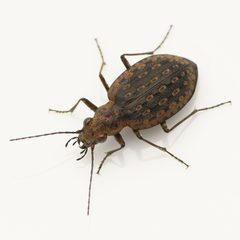
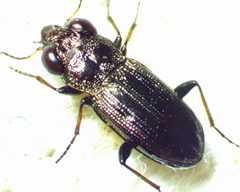
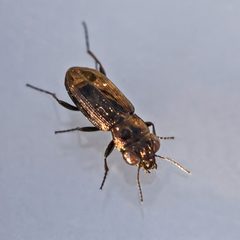
4Nebriinae is a of ground beetles (Carabidae) established by Laporte in 1834, containing approximately 12 and more than 840 described . The group is distributed across the Palaearctic region, with significant diversity in mountainous areas of Europe including the Carpathians, Balkans, and other ranges. Species are often associated with montane and submontane , though some occur in lowland meadow-steppe environments. The genus Nebria is the most species-rich and well-studied within the subfamily.
Pronunciation
How to pronounce Nebriinae: /nɛˈbri.ae.nai/
These audio files are automatically generated. While they are not always 100% accurate, they are a good starting point.
Identification
Identification relies heavily on morphological characters including body size, elytral reflection, appendage and leg coloration, shape of the first antennary segment and its chaetotaxy (bristle arrangement), submentum chaetotaxy, and alae (wing) shape and size, and bristle position on ventrites 4-5-6. The first antennary segment shape and its chaetotaxy are particularly discriminating characters, though identification is complicated by the fragility of these bristles. Some pairs require careful comparison of wing shape—for example, triangular aileron versus S-shaped aileron in certain Nebria species.
Images
Habitat
Montane and submontane regions, including mountain ranges such as the Romanian Carpathians (Maramureș, Rodnei, Parâng, Rarău, Făgăraș, Cozia, Bucegi, Retezat, Muntele Mic, Semenic), Bulgarian mountains (Stara Planina, Vitosha, Plana, Lyulin, Rila, Pirin, Kraishte), and other European highlands. Some occur in meadow-steppe at lower elevations, including the Podolian Upland of Ukraine.
Distribution
Palaearctic region, with primary diversity in Europe. Documented from the Romanian Carpathians, Bulgaria (25 zoogeographical regions), Ukraine (Pivnichne Podillia National Nature Park and adjacent areas in the north-west Podolian Upland), and other parts of western and central Europe. Some show infraspecific variability related to geographic and altitudinal origin.
Similar Taxa
- CarabinaeBoth are of Carabidae; Carabinae generally lacks the specialized first antennary segment chaetotaxy used for Nebriinae identification and typically shows different elytral structure.
- CicindelinaeBoth are Carabidae with ground-dwelling habits; Cicindelinae (tiger beetles) are distinguished by large , long legs adapted for rapid running, and typically more open- preferences, whereas Nebriinae are generally slower-moving montane beetles with different antennal structure.
Sources and further reading
- BugGuide
- Wikipedia
- iNaturalist taxon
- NCBI Taxonomy
- Catalogue of Life
- Nebria Species (Subfamily Nebriinae, Family: Carabidae) from the Romanian Carpathians. Morphological and Molecular Data
- New data about Bulgarian ground beetles from subfamilies Nebriinae, Carabinae and Cicindelinae (Coleoptera: Carabidae)
- Ground beetles (Coleoptera, Carabidae) of the Pivnichne Podillia National Nature Park (Ukraine). Part I: Cicindelinae, Omophroninae, Nebriinae, Elaphrinae, and Carabinae