
Notiophilini
Motschulsky, 1850
Genus Guides
1Notiophilini is a tribe of ground beetles within the Nebriinae, established by Motschulsky in 1850. The tribe includes the Notiophilus and related , characterized by their small to medium size and distinctive adapted for visual hunting. Members are active found primarily in forested across the Northern Hemisphere.
Pronunciation
How to pronounce Notiophilini: /ˌnoʊtiˈɒfɪlɪnaɪ/
These audio files are automatically generated. While they are not always 100% accurate, they are a good starting point.
Identification
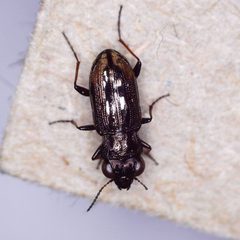
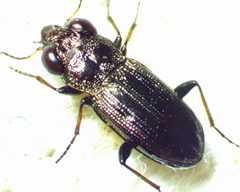
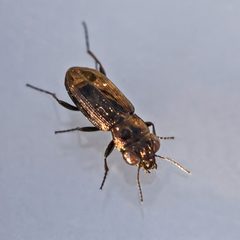
Distinguished from other carabid tribes by the combination of: (1) exceptionally large, convex that protrude laterally from the ; (2) short exposing part of the ; and (3) the presence of a distinct scutellary . Differs from tribe Nebriini (the other main tribe in Nebriinae) by smaller body size, more prominent eyes, and reduced elytral coverage. The Notiophilus, which comprises most or all of the tribe, is the primary representative.
Images
Appearance
Beetles in this tribe are small to medium-sized ground beetles, generally 5–10 mm in length. They possess notably large, bulging that occupy much of the , an for acute vision. The body form is compact and somewhat flattened, with relatively short that may leave one or two abdominal tergites exposed. are and moderately long. Coloration is typically dark with metallic or brassy reflections, often with distinct microsculpture on the elytra.
Habitat
Primarily associated with forested environments, especially coniferous and mixed woodlands. Found in leaf litter, moss, and humus layers, often in moist but well-drained soils. Some occur in alpine or subalpine meadows. Generally requires with stable ground cover and adequate humidity.
Distribution
Holarctic distribution, with primary diversity in the Palearctic region (Europe, northern Asia). Present across North America, particularly in and montane forests. Absent from tropical regions and the Southern Hemisphere.
Seasonality
are active primarily in spring and early summer, with some showing bimodal activity patterns in autumn. Activity is strongly temperature-dependent, with reduced movement during hot midday periods. occurs as adults in leaf litter or soil crevices.
Life Cycle
Development includes , larva, pupa, and stages. Larvae are ground-dwelling, predatory, and pass through three instars before in soil . time is typically one year, though some high-altitude or northern may require two years. Adults are relatively long-lived compared to many carabids, often surviving 2–3 years.
Behavior
Visual hunters that rely on their enlarged to detect and pursue small prey. Characterized by rapid, darting movements when foraging. are with peak activity in morning and evening. capability varies: some are fully winged and capable of flight, while others have reduced wings and are brachypterous. When disturbed, individuals may quickly burrow into substrate or remain motionless.
Ecological Role
Functions as a in forest floor , controlling of small arthropods including springtails, mites, and small insect larvae. Contributes to nutrient cycling through in the . Serves as prey for larger and small vertebrates.
Human Relevance
Occasionally used as bioindicators of forest quality and environmental change due to specific habitat requirements and sensitivity to disturbance. No significant economic importance; neither pestiferous nor beneficial in agricultural contexts. Some are familiar to entomologists and naturalists in northern forests.
Similar Taxa
- NebriiniShares Nebriinae but differs in larger body size, less prominent , and complete elytral coverage of ; also tends toward more open .
- ElaphriniAnother tribe of small carabids with large , but distinguished by different elytral , presence of a pair of setae on the third elytral interval, and preference for riparian or wetland .
More Details
Systematic notes
The tribal classification of Notiophilini has been historically unstable, with some treatments placing its constituent within Nebriini. Molecular and morphological evidence supports its recognition as a distinct tribe within Nebriinae. The genus Notiophilus contains approximately 30–40 described , though species boundaries remain problematic in some groups.
Eye morphology
The visual system of Notiophilus has been studied as an example of with vertebrate vision; the contain a high of and exhibit regional specialization for motion detection, unusual among ground beetles.