
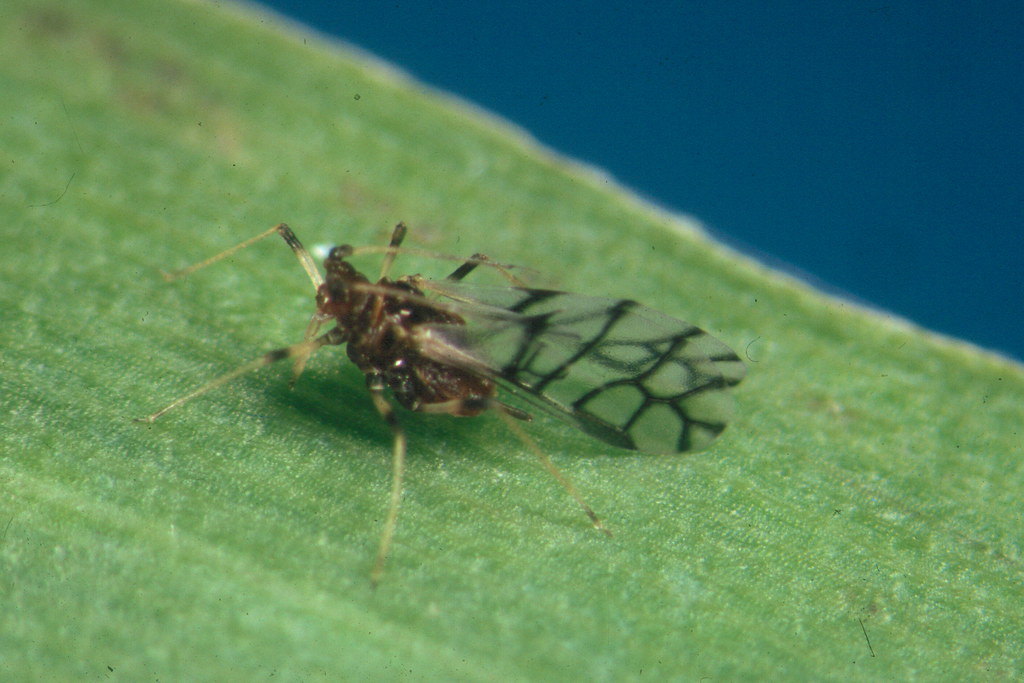
People usually talk about aphids like they are already explained. Tiny green bugs. Bad for the roses. Spray them, squish them, move on. That is not wrong. It is just a very small version of the story.
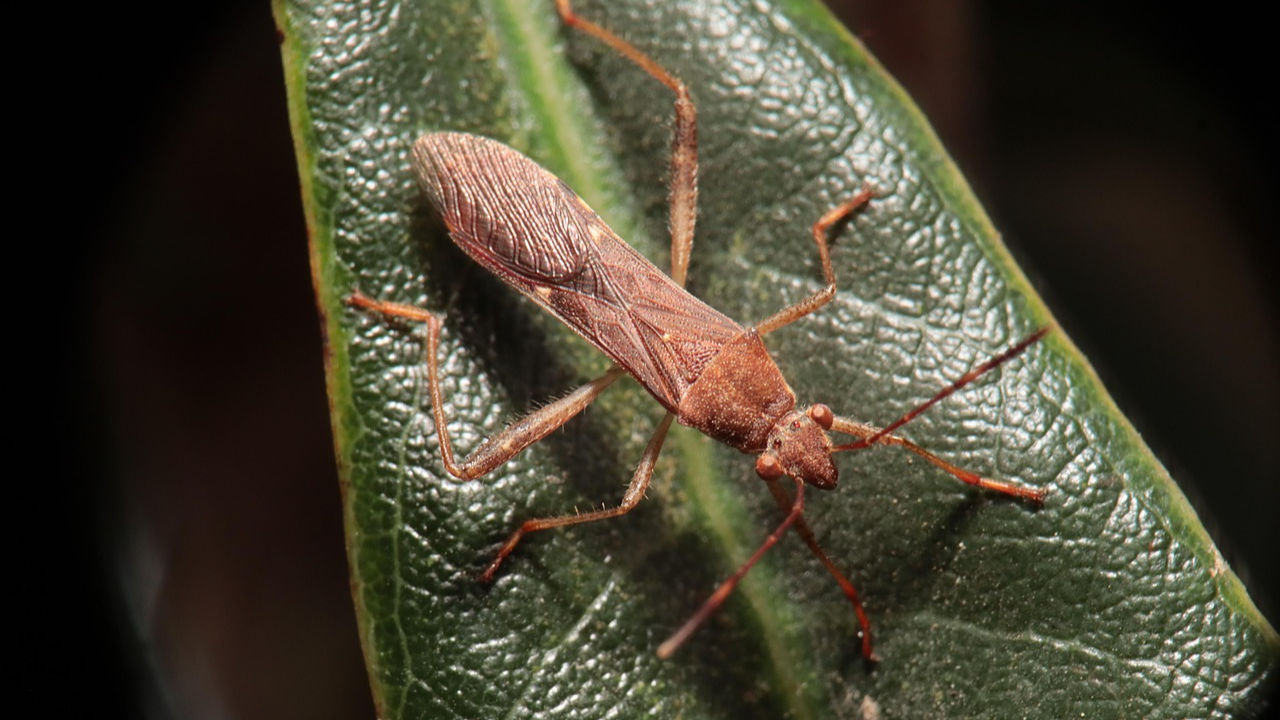
Laccocera zonata is a species of planthopper in the family Delphacidae, described by Van Duzee in 1897. It belongs to the infraorder Fulgoromorpha, a group of sap-feeding insects commonly known as planthoppers. Distribution records indicate this species occurs in western North America, with documented presence in Alberta, Arizona, California, Colorado, and Montana. As a member of Delphacidae, it is likely associated with grassland and wetland habitats where its host plants grow, though specific ecological details remain poorly documented.
Laevicephalus bison is a species of leafhopper in the family Cicadellidae, subfamily Deltocephalinae, described by Hamilton in 1972. The specific epithet 'bison' suggests a possible ecological association with bison or bison-influenced habitats, though this relationship has not been explicitly documented in the available sources. As a member of the tribe Paralimnini, this species belongs to a group of leafhoppers often associated with grasses and sedges in open habitats. Distribution records indicate occurrence in Manitoba, Canada.
Laevicephalus sylvestris is a species of leafhopper in the family Cicadellidae, first described by Osborn & Ball in 1897. It belongs to the subfamily Deltocephalinae and tribe Paralimnini. The species has been documented in scattered records across the eastern and central United States. As with other leafhoppers in this genus, it is presumed to feed on plant sap using piercing-sucking mouthparts, though specific ecological studies are limited.
Lampethusa is a genus of plant bugs in the family Miridae, established by Distant in 1884. The genus contains eight described species distributed primarily in the Neotropical region. These true bugs belong to the diverse mirid fauna, with members ranging from the Caribbean to South America.
Lampracanthia is a monotypic genus of shore bugs in the family Saldidae, containing a single described species, L. crassicornis. It was established by Reuter in 1912. Shore bugs in this family are generally associated with moist habitats near water. Very little specific information is documented about this genus beyond its taxonomic placement.
Largidea davisi is a species of plant bug in the family Miridae, first described by Knight in 1917. The genus Largidea belongs to the large and diverse family of true bugs commonly known as plant bugs or leaf bugs. This species is documented from the northeastern United States, with confirmed records from New York. As with many mirid species, detailed biological information remains limited in available literature.
bordered plant bugs
Largus is a genus of true bugs in the family Largidae, commonly known as bordered plant bugs. Adults are relatively large (13–17 mm), predominantly black with orange marginal markings. Nymphs are strikingly colored metallic blue-black with a central red spot. The genus occurs across much of North America with greatest diversity in the southwestern United States. These insects are generalist herbivores that occasionally feed on carrion and fecal material.
California bordered plant bug
Largus californicus, commonly known as the California bordered plant bug, is a true bug in the family Largidae. Adults are black with orange marginal markings on the thorax and abdomen, measuring approximately 25 mm in length. Nymphs are metallic blue with a distinctive red spot at the base of the abdomen, often forming large aggregations of 100 or more individuals. The species occurs in western North America and parts of Central America, with two generations annually in coastal southern California.
bordered plant bug
Largus cinctus is a bordered plant bug in the family Largidae, distributed across Central, North, and South America. Adults are recognized by the characteristic orange border on the shield behind the head and outlining the abdomen. Nymphs are metallic blue with a central red spot. The species is a generalist feeder on plant juices and is sometimes confused with stink bugs or leaf-footed bugs.
bordered plant bug
Largus davisi is a species of bordered plant bug in the family Largidae, described by Barber in 1914. It is native to North America and belongs to a genus characterized by striking coloration: adults are typically black with orange or red marginal markings, while nymphs display metallic blue bodies with a central red spot. Like other Largus species, it is a generalist feeder on plant material.
Mexican Bordered Plant Bug
Largus maculatus is a bordered plant bug in the family Largidae, commonly known as the Mexican Bordered Plant Bug. It is found in Central America and North America. The species belongs to a genus whose members are often mistaken for stink bugs (Pentatomidae) or leaf-footed bugs (Coreidae) due to similar body shapes and color patterns. Nymphs of related Largus species display distinctive metallic blue coloration with a red dorsal spot, while adults typically show black bodies with orange or red marginal markings.
bordered plant bug
Largus maculiventris is a species of bordered plant bug in the family Largidae. Like other members of the genus Largus, adults are typically black with orange or red marginal markings and variable orange speckling. The nymphs are metallic blue with a central red spot on the dorsum. The species was described by Schmidt in 1931. As with congeners, it is a generalist feeder on plant material and has been observed in aggregations.
bordered plant bug
Largus sculptilis is a true bug in the family Largidae, commonly known as a bordered plant bug. Like other members of the genus Largus, adults are black with orange or red trim along the margins of the body. Nymphs display striking aposematic coloration: metallic blue-black with a prominent scarlet dot on the dorsal midline. The species occurs in western North America and Middle America. Adults are flightless and can be confused with stink bugs (Pentatomidae), leaf-footed bugs (Coreidae), or cotton strainers (Pyrrhocoridae).
Lasiochilid Pirate Bugs
Lasiochilidae is a family of minute predatory true bugs in the order Hemiptera, commonly referred to as lasiochilid pirate bugs. These insects are closely related to Anthocoridae (flower bugs) and share similar ecological roles as predators of small arthropods and pests. The family has been documented across the Oriental and Palaearctic regions, with recent taxonomic work in India identifying multiple species and new regional records.
damsel bug
Lasiomerus annulatus is a species of damsel bug in the family Nabidae, native to North America. The last-instar nymph was first described in 1993, providing important taxonomic clarification for this poorly known species. It ranges across southern Canada and the northern United States, with its northern limit established at 45°37′N latitude in Quebec. The species has been collected from 1979 to 1985 in Quebec, indicating a stable population in that region. As a nabid, it is presumed to be predatory, though specific prey records remain limited.
Leioscyta pallidipennis is a treehopper species (Family Membracidae) described by Stål in 1869. The genus Leioscyta belongs to the tribe Membracini within the subfamily Membracinae. Distribution records indicate occurrence in Arizona (USA) and the Mexican states of Morelos and Puebla. As a member of Membracidae, this species possesses the characteristic enlarged pronotum that extends over the body, though specific morphological details for this species are not well documented in available sources.
thread-legged bugs
Leistarchini is a tribe of thread-legged bugs within the subfamily Emesinae (family Reduviidae). Members of this group are characterized by their elongated, slender bodies and extremely long, thin legs—adaptations for living in narrow spaces such as spider webs and crevices. The tribe was established by Carl Stål in 1862. These predatory true bugs are part of the diverse assassin bug fauna, though specific biological details for many constituent genera remain poorly documented.
Grass Lacebug
Leptodictya plana is a grass-feeding lace bug (Hemiptera: Tingidae) first described in 1913. It has been documented as an emerging pest on ornamental grasses in the southern United States, with Pennisetum species showing particular susceptibility to feeding damage and serving as oviposition hosts. The species remains seldom collected despite its economic relevance to horticulture.
Leptodictya simulans is a species of lace bug in the family Tingidae, first described by Heidemann in 1913. It is native to North America, with documented occurrences in Alabama, Florida, Mississippi, North Carolina, and South Carolina. As a member of Tingidae, it belongs to a group of small, flattened true bugs known for their distinctive reticulated wing covers.
leaf-footed bugs
Leptoglossus is a genus of true bugs in the leaf-footed bug family Coreidae, tribe Anisoscelini. Species are characterized by leaflike dilations of the hind tibia, a diagnostic trait of the genus. The genus is distributed throughout the Americas, with some introduced populations in Europe and Asia. Several species are economically significant agricultural pests, notably L. occidentalis, which has become invasive in multiple continents.
Leptoglossus ashmeadi is a leaf-footed bug in the family Coreidae, native to the southeastern United States. The species is recorded from Alabama, Florida, and Mississippi. Like other members of the genus Leptoglossus, it possesses expanded, leaf-like hind tibiae that serve as a distinctive morphological feature. Information specific to this species is limited compared to better-studied congeners such as L. occidentalis.
western leaf-footed bug
Leptoglossus clypealis, commonly known as the western leaf-footed bug, is a phytophagous true bug native to western North America. Adults measure 18–19 mm in length and are characterized by brown coloration with leaf-like expansions on the hind tibiae and a pale band across the wings. The species has been documented as a pest of agricultural crops, particularly almonds and pistachios, causing kernel damage and fruit drop. Its range has expanded eastward in recent decades, with genetic studies confirming populations in Texas represent native range extensions rather than recent introductions.
Leaf-footed Pine Seed Bug
Leptoglossus corculus is a North American leaf-footed bug in the family Coreidae. As a member of the genus Leptoglossus, it shares the characteristic expanded, leaf-like hind tibiae that give the group its common name. The species is associated with pine and other conifer hosts, feeding on seeds and developing cones. It is one of several Leptoglossus species found in eastern and central North America, distinct from the more widely publicized western conifer seed bug (L. occidentalis).
Leptoglossus jacquelinae is a species of leaf-footed bug in the family Coreidae, described by Brailovsky in 1976. It belongs to a genus characterized by expanded, leaf-like hind tibiae. The species is known from Mexico and Middle America. Like other members of its genus, it is presumed to be a plant-feeding true bug with piercing-sucking mouthparts, though specific details of its biology remain poorly documented.
Western Conifer Seed Bug, WCSB
Leptoglossus occidentalis, commonly known as the Western Conifer Seed Bug, is a leaf-footed bug native to western North America that has undergone dramatic range expansion. Originally confined to the Pacific coast region from California to British Columbia, it began spreading eastward in the 1950s, reaching the Atlantic coast by the 1990s. The species has also become invasive in Europe (first detected in Italy in 1999), Asia, South America, and elsewhere. Adults are notable for their loud, droning flight and tendency to seek shelter indoors during autumn, where they become nuisance pests. They feed on conifer seeds and developing cones, particularly of pines, and can cause significant damage in seed orchards.
Leptopharsa clitoriae is a species of lace bug in the family Tingidae, first described by Heidemann in 1911. It belongs to a genus of small, plant-feeding true bugs characterized by their distinctive reticulated, lace-like forewings. The species name references its association with Clitoria, a genus of leguminous plants. It is one of numerous North American tingids, though detailed biological studies remain limited.
Leptopharsa oblonga is a species of lace bug in the family Tingidae. It is distributed across North America, with records from Canada and the United States. Like other lace bugs, it is a small, sap-feeding true bug with distinctive reticulated wing covers. The species was described by Thomas Say in 1825.
shore bugs, spiny shore bugs
Leptopodomorpha is an infraorder of true bugs (Hemiptera: Heteroptera) comprising over 380 species across four families. The group is commonly known as shore bugs or spiny shore bugs due to their association with riparian and intertidal habitats. The family Saldidae dominates the infraorder with approximately 350 species and is notable for jumping ability. The remaining families—Leptopodidae, Omaniidae, and Aepophilidae—are considerably smaller, with Leptopodidae containing about 30 species and the latter two families being highly reduced.
Leptoypha costata is a species of lace bug in the family Tingidae, first described by Parshley in 1917. It is characterized by the reticulated, lace-like wing covers typical of the family. The species has five nymphal instars, with documented morphological descriptions of eggs and immature stages.
Leptoypha drakei is a species of lace bug in the family Tingidae, first described by Mc Atee in 1919. Like other tingids, it possesses a distinctive reticulated, lace-like pronotum and hemelytra. The species is known from the southwestern United States and adjacent Mexico.
European spittlebug
Lepyronia coleoptrata is a spittlebug species in the family Aphrophoridae, native to Europe and Asia and introduced to northeast North America. Adults measure 5.1–7.8 mm and are pale brown with dark wing membranes. The species has one generation per year, with eggs hibernating under bark and larvae emerging in late April to early May. Nymphs produce characteristic foam masses while feeding on plant sap, primarily on lavender and other crops.
giant water bugs, toe biters, electric light bugs
Lethocerus is a genus of large predatory aquatic true bugs in the family Belostomatidae. Members are among the largest true bugs, with some species exceeding 12 cm in length. The genus is distinguished from related genera by specific morphological features of the fore femur and parasternites. Unlike other giant water bugs, females do not deposit eggs on males' backs; instead, eggs are laid on emergent vegetation above the waterline and guarded by males. The genus shows greatest diversity in the Americas, with limited representation in Europe, Africa, Australia, and Asia.
Leucophoropterini is a tribe of plant bugs within the family Miridae, subfamily Phylinae. The tribe contains over 100 species across more than 20 genera, with the majority distributed in eastern Asia and Australia. A single genus, Tuxedo, occurs in North America. Members are generally small, soft-bodied true bugs with phytophagous habits typical of the subfamily.
Leuronota maculata is a psyllid species in the family Triozidae, first described by Crawford in 1910. It belongs to the order Hemiptera, the true bugs. As a member of the psyllid superfamily Psylloidea, it shares characteristics with other jumping plant lice, though specific biological details for this species remain limited in published literature.
Leuronota maritima is a psyllid species in the family Triozidae, originally described as Trioza maritima by Tuthill in 1944 and later transferred to the genus Leuronota. It belongs to the Hemiptera order, a group of true bugs characterized by piercing-sucking mouthparts. The species has 28 documented observations on iNaturalist and 79 distribution records in GBIF, though specific ecological details remain limited in the available literature.
Leutiola ajo is a species of plant bug in the family Miridae, first described by Knight in 1968. It belongs to a genus of mirids found in arid regions of western North America. The species is documented from scattered localities across the southwestern United States and northern Mexico. Very little is known of its biology due to limited collection records.
jumping tree bug
Lidopus heidemanni is a species of plant bug in the family Miridae, commonly referred to as a jumping tree bug. It was described by E. Gibson in 1917. The species occurs in parts of North America and Central America, with documented records from the United States and Mexico.
dirt-colored seed bug
Ligyrocoris latimarginatus is a dirt-colored seed bug in the family Rhyparochromidae, described by Barber in 1921. It belongs to the tribe Myodochini within the subfamily Rhyparochrominae. The species has been documented in the United States and is considered part of the North American fauna.
dirt-colored seed bug
Ligyrocoris sylvestris is a dirt-colored seed bug in the family Rhyparochromidae, widespread across multiple continents including North America, Europe, Africa, and Asia. The species name 'sylvestris' (meaning 'of the forest') reflects its association with wooded habitats. It belongs to a genus of closely related species that exhibit marked differences in habitat preferences and life cycles, with some species adapted to relatively dry fields while others occupy wetter marginal habitats.
water strider
Limnoporus canaliculatus is a species of water strider in the family Gerridae, distributed across North America. It inhabits freshwater environments where it uses surface tension to skate on water. The species was originally described as Gerris canaliculatus by Thomas Say in 1832 and later transferred to the genus Limnoporus. Like other gerrids, it is predatory, capturing small arthropods that fall onto the water surface.
scentless plant bugs
Liorhyssus is a genus of scentless plant bugs in the family Rhopalidae, subfamily Rhopalinae. The genus contains at least 12 described species distributed across multiple continents. The most widely studied species, Liorhyssus hyalinus, has emerged as an agricultural pest of quinoa when the crop is cultivated outside its native Andean region, particularly in coastal Peru. Members of this genus feed on developing seeds and grains using piercing-sucking mouthparts.
Hyaline Grass Bug
Liorhyssus hyalinus is a small scentless plant bug in the family Rhopalidae, widely distributed across multiple continents. Adults measure 6.5–7.5 mm and are active year-round in suitable climates. The species is a documented pest of quinoa cultivation in South America, particularly at lower elevations outside the crop's Andean origin, and has been recorded feeding on developing grains of maize and sorghum. Laboratory studies indicate optimal development and reproduction occur at 30°C, with five nymphal instars and thermal requirements of 68.6 degree-days for egg development and 114.8 degree-days for nymphal development.
Liosomaphis is a genus of aphids in the family Aphididae. The genus was established by Walker in 1868 and is currently recognized as valid, though some sources list it as a synonym of Elatobium. Species are recorded from Europe and North America, with distribution records from Denmark, Norway, and Sweden. The genus contains at least two described species: Liosomaphis atra and Liosomaphis berberidis.
velvet water bug
Lipogomphus brevis is a species of velvet water bug in the family Hebridae. It belongs to the infraorder Dipsocoromorpha, a group of small predatory true bugs often associated with moist or aquatic habitats. The species was described by Champion in 1898 and is known from Central America and North America. Like other members of Hebridae, it is presumed to inhabit the surface film of quiet waters.
Litomiris debilis is a small mirid bug species characterized by yellowish-orange coloration and black antennae. It belongs to the plant bug family Miridae, one of the largest families of true bugs. The species was originally described as Diaphnidia debilis by Uhler in 1872 before being transferred to the genus Litomiris.
Livia is a genus of plant lice (psyllids) in the family Liviidae, distributed across the Palaearctic and Nearctic realms. The genus serves as the type genus for its family. Nymphs are known to form galls in the developing shoots of rushes and sedges.
sedge psyllid
Livia caricis is a psyllid species in the family Liviidae, first described by Crawford in 1914. It belongs to the genus Livia, which comprises psyllids associated with sedges (Carex spp.). The species is found in western North America, with distribution records from British Columbia, California, Colorado, and Idaho. Like other psyllids, it is a small sap-feeding insect with host-specific relationships to its plant hosts.
Livia vernaliforma is a species of jumping plant louse (psyllid) in the family Liviidae, described by Caldwell in 1940. It belongs to a genus whose members are associated with hackberry trees (Celtis species). The species has been recorded from several western and north-central U.S. states. Like other psyllids, it is a small, sap-feeding insect with host-specific relationships to its plant hosts.
plant lice, psyllids, jumping plant-lice
Liviidae is a family of plant-parasitic hemipterans commonly known as plant lice or jumping plant-lice. The family comprises more than 20 genera and approximately 370 described species worldwide. Members are characterized by their ability to jump and their association with vascular plants as phloem-feeders. The family includes significant agricultural pests, most notably Diaphorina citri (Asian citrus psyllid), the primary vector of citrus greening disease (Huanglongbing). Liviidae was formerly treated as Triozidae, and recent taxonomic revisions recognize three monophyletic subfamilies: Euphyllurinae, Liviinae, and the monotypic Neophyllurinae.
Longicaudus is a genus of aphids (family Aphididae) established by van der Goot in 1913. The genus belongs to the tribe Macrosiphini and contains at least two described species: Longicaudus cornutus and Longicaudus dunlopi. Species are recorded from Europe and North America.