
Leptoypha costata
Parshley, 1917
Pronunciation
How to pronounce Leptoypha costata: /lɛpˈtɔɪfə kɒˈsteɪtə/
These audio files are automatically generated. While they are not always 100% accurate, they are a good starting point.
Identification
Images
Distribution
North America. GBIF records indicate presence across much of the United States including Alabama, Arizona, Arkansas, California, Colorado, Delaware, Florida, Georgia, Idaho, Illinois, Indiana, Iowa, Kansas, Kentucky, Louisiana, Maine, Massachusetts, Michigan, Minnesota, Montana, Mississippi, North Carolina, North Dakota, Nebraska, Nevada, New Hampshire, New Jersey, New Mexico, New York, Ohio, Oklahoma, Oregon, Pennsylvania, Rhode Island, South Carolina, South Dakota, Tennessee, and Texas.
Life Cycle
Five nymphal instars; and nymphal stages have been described morphologically. Detailed developmental timing and strategy not documented.
More Details
Taxonomic note
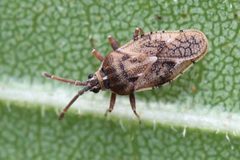
The was described by Parshley in 1917. The Leptoypha belongs to the lace bug Tingidae, which is characterized by the reticulated, lace-like appearance of the pronotum and forewings.
Research history
A 1977 study in the Annals of the Entomological Society of America provided the first detailed description of the stages and of this , documenting the five nymphal instars and describing and nymphal .
Sources and further reading
- BugGuide
- Wikipedia
- GBIF taxonomy match
- iNaturalist taxon
- Catalogue of Life
- Fran Keller: Entomologist, Teacher, Artist, Author | Bug Squad
- Bug Eric: New Mexico Dragonfly Blitz - Day 3
- Fascinating Invertebrates ~ Bring on the leeches! - Buglife Blog - Buglife
- Bizarre, beautiful extremes | Beetles In The Bush
- Immature Stages and Biology of Atheas austroriparius and Leptoypha costata (Hemiptera: Tingidae)1