
Lasiomerus annulatus
(Reuter, 1872)
damsel bug
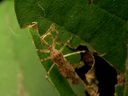
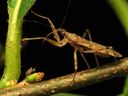
Lasiomerus annulatus is a of damsel bug in the Nabidae, native to North America. The last-instar nymph was first described in 1993, providing important taxonomic clarification for this poorly known species. It ranges across southern Canada and the northern United States, with its northern limit established at 45°37′N latitude in Quebec. The species has been collected from 1979 to 1985 in Quebec, indicating a stable in that region. As a nabid, it is presumed to be predatory, though specific prey records remain limited.

Pronunciation
How to pronounce Lasiomerus annulatus: //ˌlæsiˈoʊmɪrəs ˌænjuˈleɪtəs//
These audio files are automatically generated. While they are not always 100% accurate, they are a good starting point.
Identification
can be diagnosed by features detailed in the 1993 description by Lattin and Stanton. The last-instar nymph is characterized by specific morphological traits now formally described, distinguishing it from other Lasiomerus and nabid . The species may be confused with other small nabids in the genus Lasiomerus; accurate identification requires examination of genitalic structures and wing venation patterns.
Images
Habitat
preferences are discussed in the ecological literature but specific details were not provided in the available abstract. Collections in Quebec suggest occurrence in temperate regions of southern Canada.
Distribution
North America; southern Canada including Quebec; northern limit at 45°37′N latitude. Present across the United States and southern Canada according to GBIF records.
Seasonality
Collections in Quebec span from 1979 to 1985, with phenological data recorded. Specific seasonal activity patterns were documented in the original research but detailed timing is not available from the abstract.
Life Cycle
The last-instar nymph has been formally described, indicating a typical hemimetabolous development with , nymphal (including at least five instars), and stages. No further details on oviposition sites or nymphal are available.
Ecological Role
As a member of Nabidae, presumed to function as a of small arthropods in terrestrial . Specific ecosystem contributions have not been documented.
Similar Taxa
- Other Lasiomerus species-level morphological similarity requires careful examination of diagnostic characters for -level identification.
- Nabis and other Nabidae generaSmall size and general habitus similar to other damsel bugs; genitalic structures and wing venation needed for definitive separation.
Sources and further reading
- BugGuide
- Wikipedia
- GBIF taxonomy match
- iNaturalist taxon
- NCBI Taxonomy
- Encyrtid Holdings | Entomology Research Museum
- Managing External Parasites of Texas Cattle - AgriLife Extension Entomology
- Bug Eric: Wasp Wednesday: Euodynerus annulatus
- Organic Dust Takes a Bite Out of Ticks
- Bug Eric: August 2012
- New species and a review of the genus Tragidion | Beetles In The Bush
- LASIOMERUS ANNULATUS (REUTER) (HEMIPTERA: NABIDAE) IN SOUTHERN CANADA: ECOLOGY AND PHENOLOGY, WITH A DESCRIPTION OF THE LAST-INSTAR NYMPH