
Nabinae
damsel bugs
Tribe Guides
2- Carthasini
- Nabini(Damsel bugs)
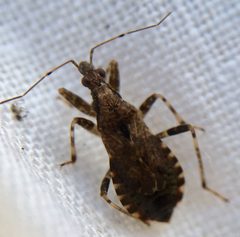
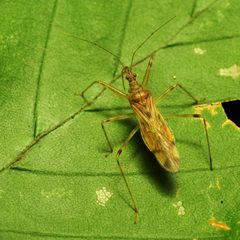
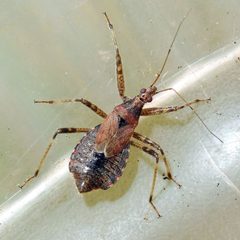
Nabinae is a of damsel bugs (Nabidae) within the true bugs (Hemiptera). Members are predatory insects characterized by forelegs adapted for capturing prey. The subfamily includes both extant and fossil records from the Cretaceous, including specimens preserved in Burmese amber. Extant species are found across diverse terrestrial .
Pronunciation
How to pronounce Nabinae: //ˈnæ.bɪˌnaɪ//
These audio files are automatically generated. While they are not always 100% accurate, they are a good starting point.
Identification
Nabinae can be distinguished from the other nabid , Prostemmatinae, by features including the structure of the and male genitalia. The fossil Mecocollaris is distinguished by labial segment III being longer than the combined length of segments I, II, and IV, and by the hind tibia lacking a clear row of setae corresponding to the stiff setae associated with Ekblom's organ. Extant identification relies on detailed examination of wing venation, genitalia, and leg setation.
Images
Habitat
Extant Nabinae occupy diverse terrestrial including grasslands, agricultural fields, meadows, and forest edges. They are ground-dwelling or vegetation-associated . Fossil specimens from mid-Cretaceous Burmese amber indicate ancient presence in forest with resin-producing trees.
Distribution
Worldwide distribution in temperate and tropical regions. Fossil records from mid-Cretaceous Burmese (Myanmar) amber demonstrate presence in ancient Gondwanan approximately 99 million years ago.
Diet
Predatory, feeding on other small arthropods including aphids, caterpillars, and other soft-bodied insects. Specific prey preferences vary by .
Life Cycle
Hemimetabolous development with , nymph, and stages. Multiple per year in temperate regions. Specific details of developmental duration and stage vary among .
Behavior
Ambush that seize prey with forelegs. Some exhibit . and nymphs are active hunters on vegetation and ground surface.
Ecological Role
contributing to of agricultural and garden pests. Serve as prey for larger arthropods, birds, and other .
Human Relevance
Beneficial insects in agricultural and horticultural contexts due to on pest . Used in programs. No known negative impacts.
Similar Taxa
- ProstemmatinaeThe other of Nabidae; distinguished by differences in labial structure, male genitalia, and preferences (Prostemmatinae are often more associated with moist or riparian environments).
- Reduviidae (assassin bugs)Also predatory true bugs with forelegs; distinguished by the curved, three-segmented rostrum that folds back into a groove between the forelegs, and different structure.
More Details
Fossil Record
The mid-Cretaceous Burmese amber has yielded two fossil records of Nabinae, including Mecocollaris simplipodus (described 2024). These fossils provide evidence for the antiquity of the and allow study of morphological evolution, particularly of the Ekblom's organ—a structure involved in mating.