
Nabini
Damsel bugs
Genus Guides
5- Himacerus(damsel bugs)
- Hoplistoscelis(damsel bugs)
- Lasiomerus
- Metatropiphorus
- Nabis(damsel bugs)
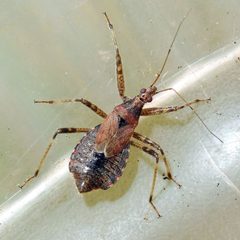
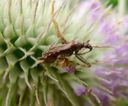
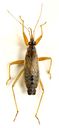
Nabini is a tribe of damsel bugs in the Nabidae, comprising predatory true bugs found across diverse terrestrial . Members are characterized by forelegs adapted for capturing prey, a slender body form, and a prominent curved rostrum. The tribe includes such as Nabis, the most speciose genus in the family. Nabini are active hunters that contribute to of pest insects in agricultural and natural systems.
Pronunciation
How to pronounce Nabini: //ˈneɪ.bɪˌniː//
These audio files are automatically generated. While they are not always 100% accurate, they are a good starting point.
Identification
Look for forelegs with spined used to seize prey—this distinguishes Nabini from most other Hemiptera. The long, curved rostrum visible when feeding, four-segmented , and with both leathery basal and membranous portions are diagnostic. Unlike Reduviidae (assassin bugs), nabines lack a distinct 'neck' behind the and have shorter, less robust raptorial legs. Winged show two pairs of wings with reduced venation in the membranous portion. Nymphs resemble adults but lack fully developed wings and ocelli.
Images
Habitat
Found in diverse terrestrial including grasslands, meadows, agricultural fields, gardens, shrublands, and forest edges. Occupies herbaceous vegetation from ground level to in low plants. Common in crops such as alfalfa, soybeans, cotton, and cereals where prey abundance is high. Also occurs in riparian zones and disturbed habitats. Avoids dense closed-canopy forests.
Distribution
Worldwide distribution with greatest diversity in temperate regions. Present across North America, Europe, Asia, Africa, and Australia. Particularly diverse in the Holarctic region. Some (e.g., Nabis) have broad intercontinental ranges, while others are more restricted.
Seasonality
Activity patterns vary by latitude and . In temperate regions, most species overwinter as in protected sites and become active in spring. Multiple per year common in warmer climates; single generation in colder regions. Peak abundance typically coincides with peak prey availability in mid to late summer.
Diet
feeding on a wide range of soft-bodied arthropods. Prey includes aphids, caterpillars, leafhoppers, spider mites, , small insect , and other small insects. Some larger individuals may capture prey approaching their own size. Both nymphs and are predatory. Nabini have been documented as significant predators of agricultural pests.
Life Cycle
Hemimetabolous development with , nymph, and stages. Females insert eggs into plant tissue using blade-like ovipositor. Nymphs pass through five instars, resembling wingless adults. Development time from egg to adult varies from 3-8 weeks depending on temperature and . stage typically adult, though some species may overwinter as eggs in milder climates. Multiple overlapping possible in favorable conditions.
Behavior
Active, that hunt by moving through vegetation and seizing prey with forelegs. Non-web-building; rely on speed and ambush from close range. When disturbed, may drop from vegetation and play dead (). capable of but often prefer to run. observed, including cleaning of and rostrum. Mating involves male mounting female and prolonged copulation.
Ecological Role
Important in agricultural and natural , contributing to of herbivorous insects. Serve as agents in systems. Prey for larger (spiders, other predatory ) and vertebrates (birds, small mammals). May engage in intraguild , consuming other beneficial predators when prey is scarce.
Human Relevance
Valued as agents in agriculture, particularly for suppression of aphids, caterpillars, and mites in crops such as alfalfa, cotton, and vegetables. Some commercially available or conserved in programs. Bites to humans are rare and medically insignificant; handling may provoke defensive bite. No known transmission.
Similar Taxa
- ProstemmatiniOther nabid tribe with similar body plan; distinguished by different male genitalia structure and generally more robust build with some having modified hind legs.
- Reduviidae (assassin bugs)Also have forelegs but possess distinct 'neck' constriction behind , generally more robust body, and often curved or clubbed ; reduviids typically have more prominent venation in wing .
- Anthocoridae (minute pirate bugs)Small predatory with some tendencies, but much smaller (1-5 mm), oval body shape, and three-segmented versus two-segmented in Nabidae.
More Details
Taxonomic note
The tribe Nabini historically included most damsel bug , but modern phylogenetic studies have led to reclassification of some groups. The genus Nabis, with over 500 , constitutes the majority of Nabini diversity. Identification to species often requires examination of male genitalia.
Agricultural significance
Nabini are among the most common predatory sampled in agricultural field studies. Their feeding habits make them resilient to prey fluctuations, though this can lead to intraguild that may reduce overall efficacy in some systems.