
Nabis
Latreille, 1802
damsel bugs
Species Guides
15- Nabis alternatus(Western Damsel Bug)
- Nabis americoferus(Common Damsel Bug)
- Nabis americolimbatus(damsel bug)
- Nabis capsiformis(Pale Damsel Bug)
- Nabis flavomarginatus(Broad Damsel Bug)
- Nabis inscriptus(damsel bug)
- Nabis kalmii
- Nabis lovettii(Lovett's damsel bug)
- Nabis nigrovittatus(Damsel bug)
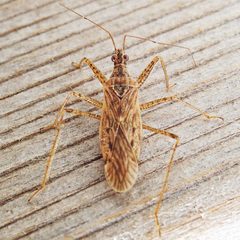
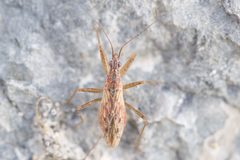
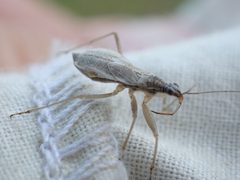
Nabis is a of damsel bugs in the Nabidae, comprising predatory true bugs found worldwide. Members are small, slender insects typically under 12 mm in length, recognized by their front legs adapted for capturing prey. They are primarily that use a combination of ambush and active hunting strategies to subdue insects larger than themselves. The genus is economically significant as a agent in agricultural systems, particularly in cotton and greenhouse crops.
Pronunciation
How to pronounce Nabis: /ˈneɪ.bɪs/
These audio files are automatically generated. While they are not always 100% accurate, they are a good starting point.
Identification
Damsel bugs in the Nabis can be distinguished from similar true bugs by several key features. They lack the —a pronounced wrinkle or notch in the forewing margin near the membranous tip—that characterizes plant bugs in the Miridae. Unlike most assassin bugs (Reduviidae), which are generally larger, Nabis have a short rostrum similar to that of reduviids but are smaller in body size. The of the front leg is typically swollen and muscular, armed with rows of small teeth on the underside for securing prey. Some species are fully winged while others exhibit wing , with reduced or non-functional wing pads in some individuals.
Images
Habitat
Found in diverse terrestrial including agricultural fields, grasslands, meadows, and open woodlands. In North America, they occur from ground level in shortgrass prairie to vegetation in forested areas. Specific habitat associations include cotton fields, where they are abundant , and various crop systems where vegetation provides cover for hunting.
Distribution
Worldwide distribution with records from North America (including USA, Canada, Mexico), Europe (Denmark, Norway, Sweden), and Asia (Turkey, with collections from southeastern Anatolia). Within North America, the spans from the eastern Great Plains to Atlantic and Gulf coasts, and westward including Colorado and other Rocky Mountain states.
Seasonality
have been observed from early spring through late fall in temperate regions. Activity patterns are primarily , with individuals frequently attracted to lights at night. No swarming occurs; individuals are solitary throughout their active period.
Diet
zoophagous feeding on soft-bodied insects, larvae, and . Documented prey includes leafhoppers, aphids, Lygus bugs (including Lygus hesperus), lepidopteran eggs and larvae, , red spiders, and small braconid wasps. In laboratory conditions, Nabis pseudoferus orientarius consumed Ephestia kuehniella eggs. Some consume over 50 Lygus eggs or 10–15 aphids per day.
Life Cycle
Hemimetabolous development with . are laid individually or in small groups in plant parenchyma tissue. Nymphs pass through five instars (L1–L5) before reaching adulthood; nymphs resemble but lack wings. Development times vary by and conditions: Nabis pseudoferus orientarius shows egg hatching at 9.83 days, nymphal stages ranging from 1.83–5.05 days each, and total preadult development of approximately 27 days at 25°C. Adults live approximately 62 days under laboratory conditions. Most species undergo for winter survival.
Behavior
employing sit-and-wait ambush tactics combined with active prey searching. Capture prey using front legs, then subdue with venom delivered through the rostrum. : venom paralyzes prey and initiates external digestion before fluid feeding. Timid toward humans; not prone to biting except in self-defense. Attracted to artificial lights at night, possibly to exploit other insects drawn to illumination. Solitary; no swarming or observed.
Ecological Role
Important in agroecosystems, particularly cotton fields and greenhouse systems. Serve as agents against multiple agricultural pests including Lygus bugs, aphids, , whiteflies (Bemisia tabaci), and western flower thrips (Frankliniella occidentalis). Mass-produced and released in Mediterranean greenhouses for . Abundant among small predators; contributions reduce reliance on chemical .
Human Relevance
Economically valuable as agents in agriculture. Used in programs for cotton, strawberries, tomatoes, beans, and greenhouse crops. Commercial production and release practiced in some regions. Bites may cause minor pain if handled but pose no medical danger; venom is specific to prey paralysis and digestion initiation.
Similar Taxa
- Miridae (plant bugs)Similar body shape and size, but distinguished by presence of on forewing margin and plant-feeding habit versus predatory
- Reduviidae (assassin bugs)Share short rostrum and predatory habit, but reduviids are typically larger and have different leg structure; Nabis are smaller with more slender build
- PagasaAnother nabid with ground-dwelling habits and -like appearance; Pagasa have fossa spongiosa (specialized hair pad) on front tibia tip for climbing slick surfaces and grabbing slippery prey
Sources and further reading
- BugGuide
- Wikipedia
- GBIF taxonomy match
- iNaturalist taxon
- NCBI Taxonomy
- Catalogue of Life
- A Big Cheer for a Crab Spider | Bug Squad
- Bug Eric: Damsels That Cause Distress
- Bug Eric: My Kind of Fourth of July
- Bug Eric: Blacklighting Already?
- Bug Eric: July 2019
- Édouard Vuillard, the Nabis, and the Politics of Domesticity
- Determination of the biological parameters of Nabis pseudoferus orientarius Remane, 1962 (Hemiptera: Nabidae) under laboratory conditions.