
Pagasa
Stål, 1862
damsel bugs
Species Guides
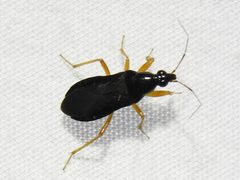
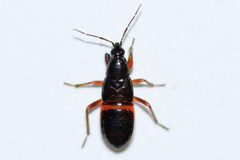
3Pagasa is a of damsel bugs in the Nabidae, Prostemmatinae. The genus contains approximately 11 described distributed in North America and Mexico. Members are small, ground-dwelling predatory true bugs, with some species exhibiting reduced or non-functional wings. The genus is distinguished from other damsel bugs by morphological features including a specialized fossa spongiosa on the front tibia.
Pronunciation
How to pronounce Pagasa: /pəˈɡɑːsə/
These audio files are automatically generated. While they are not always 100% accurate, they are a good starting point.
Identification
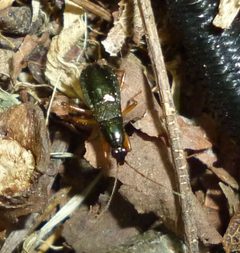
Pagasa are distinguished from other Nabidae by the presence of a fossa spongiosa—a specialized pad of hairs on the tip of the front tibia that aids in climbing slick surfaces and grasping prey. They can be fully winged or have wings reduced to non-functional pads. The of the front leg is muscular and swollen, armed with teeth on the underside for securing prey. Some species appear almost -like in form, leading to potential confusion with ground beetles (Carabidae).
Images
Habitat
Ground-dwelling; found in terrestrial environments including open ground and path edges. One source notes specimens observed running across paths in Colorado.
Distribution
North America north of Mexico; Mexico. Specific records from Colorado, Massachusetts, and south Texas in the United States.
Seasonality
have been observed from early spring through late fall.
Diet
Predatory; feeds on other insects including prey larger than themselves. One observation documents a member of the Nabis (related damsel bug) capturing a braconid .
Behavior
. Solitary, not forming swarms. Some attracted to lights at night, possibly to prey on other insects drawn there. Described as persistent and fearless when stalking prey.
Ecological Role
of other insects; considered economically important for pest control in agricultural systems. Among the most abundant small predators in some .
Human Relevance
Beneficial in agricultural contexts as biological pest control agents.
Similar Taxa
- Nabis (other damsel bugs)Larger in same ; Pagasa distinguished by fossa spongiosa on front tibia and more ground-dwelling, -like appearance
- Reduviidae (assassin bugs)Both have short rostrum compared to plant-feeding , but assassin bugs are generally larger and lack the fossa spongiosa
- Miridae (plant bugs)Similar body form, but mirids possess a —a pronounced notch in the forewing margin where the leathery meets the membranous tip; damsel bugs including Pagasa lack this feature
- Carabidae (ground beetles)Some Pagasa appear -like and run on ground, but beetles have hardened forewings () meeting in a straight line down the back
More Details
Taxonomic subdivisions
The Pagasa is divided into subgenera, including Pagasa (Pagasa) and Pagasa (Lasiomerus)
Species examples
include P. confusa, P. fusca, P. brailovskyi, P. luteiceps, P. pallipes, P. prostemmatoides, and P. henryi in Mexico; P. pallipes noted from Colorado
Sources and further reading
- BugGuide
- Wikipedia
- GBIF taxonomy match
- iNaturalist taxon
- NCBI Taxonomy
- Catalogue of Life
- Bug Eric: Damsels That Cause Distress
- GEOVISUAL ANALYTICS ON THE VERIFICATION OF THE PAGASA OPERATIONAL NUMERICAL WEATHER PREDICTION MODEL RAINFALL FORECAST
- The genus Pagasa (Hemiptera: Heteroptera: Nabidae: Prostemmatinae) in Mexico, new records and key to the known species
- From Climate Data to Actionable Climate Knowledge: DOST-PAGASA Experience Providing Climate Services to Smallholder Farmers in Calapan, Oriental Mindoro
- Emotional Framing in Disaster Communication: An Analysis of PAGASA Bulletins and Media Coverage of Typhoon Tino (Kalmaegi) and Severe Tropical Storm Uwan (Fung-Wong) in 2025