
Liviidae
plant lice, psyllids, jumping plant-lice
Subfamily Guides
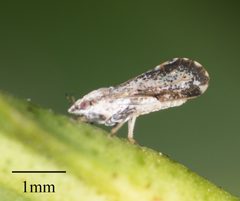
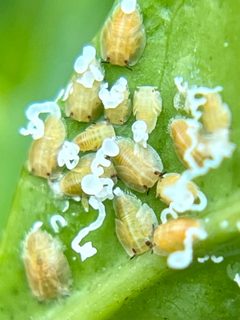
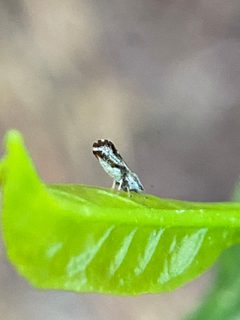
2is a of plant-parasitic hemipterans commonly known as plant lice or jumping plant-. The family comprises more than 20 and approximately 370 described worldwide. Members are characterized by their ability to jump and their association with vascular plants as phloem-feeders. The family includes significant agricultural pests, most notably Diaphorina citri (Asian citrus psyllid), the primary of (Huanglongbing). Liviidae was formerly treated as Triozidae, and recent taxonomic revisions recognize three monophyletic : Euphyllurinae, Liviinae, and the Neophyllurinae.
Pronunciation
How to pronounce Liviidae: //lɪˈviː.i.aɪ//
These audio files are automatically generated. While they are not always 100% accurate, they are a good starting point.
Images
Distribution
Worldwide distribution with recorded across multiple continents including the Americas, Europe, Africa, and Asia. Specific distribution records include Belgium (Livia crefeldensis), Brazil (Paurocephalini tribe), and Panama (Diaphorina citri in citrus production areas).
Ecological Role
Members of function as phloem-feeding herbivores on vascular plants. Several serve as of plant , with Diaphorina citri being the most economically significant as the primary vector of Candidatus Liberibacter asiaticus, the bacterium causing (Huanglongbing). The contributes to plant-insect and serves as prey for various natural enemies including (Tamarixia radiata, Diaphorencyrtus aligarhensis), ladybird beetles, lacewings, and spiders.
Human Relevance
includes major agricultural pests with substantial economic impact. Diaphorina citri (Asian citrus psyllid) is the most serious threat to global citrus production, vectoring a that has caused billions of dollars in losses and the destruction of thousands of hectares of citrus orchards. Management strategies include chemical control, using imported , attract-and-kill devices, trap cropping, and mesh-covered monitoring traps to reduce bycatch. Other such as Euphyllura olivina (olive psyllid) also impact crop production.
Sources and further reading
- BugGuide
- Wikipedia
- GBIF taxonomy match
- iNaturalist taxon
- NCBI Taxonomy
- Catalogue of Life
- Publications | Entomology Research Museum
- Wasps Used to Combat Citrus Greening Disease are Unlikely to Threaten Non-target Insects
- Fatal Attraction: A Novel Solution to the Problem of Asian Citrus Psyllid on Residential Citrus
- Mesh to Reduce Bycatch: A Simple Solution to a Sticky Problem
- Research Examines Potential of Alternate Host Plant as a Trap Crop for Asian Citrus Psyllid
- Open Entomology: Tips and Tools for Better Reproducibility in Your Research
- Disrupting Mating Behavior ofDiaphorina citri(Liviidae)
- Review of reproductive behavior in Diaphorina citri (Kuwayama) (Homoptera: Liviidae)
- Host plant affects morphometric variation of Diaphorina citri (Hemiptera: Liviidae)
- Effect of calcium polysulfide on Diaphorina citri (Hemiptera: Liviidae) and its primary parasitoids
- Distribución de Diaphorina citri Kuwayama (Hemiptera: Liviidae) en zonas de producción citrícola de Panamá Distribution of Diaphorina citri Kuwayama (Hemiptera: Liviidae) in citrus production areas of Panama
- Ladybird beetle trails reduce host acceptance by Diaphorina citri Kuwayama (Hemiptera: Liviidae)
- Attributes of Yellow Traps Affecting Attraction of Diaphorina citri (Hemiptera: Liviidae)
- Bio-efficacy of Certain Chemicals against Diaphorina citri Kuwayama (Hemiptera: Liviidae)
- The situation of the Asian citrus psyllid (Diaphorina citriKuwayama) (Hemiptera: Liviidae), vector of Huanglongbing in Ecuador
- Biología y tabla de vida de Diaphorina citri (Hemitera: Liviidae) en Zona Bananera, Magdalena, Colombia Biology and life table of Diaphorina citri Kuwayama (Hemiptera: Liviidae) in Zona Bananera, Magdalena, Colombia
- Jumping plant-lice of the tribe Paurocephalini (Hemiptera: Psylloidea: Liviidae) in Brazil
- Reduced Parasitism of Diaphorina citri (Hemiptera: Liviidae) by Tamarixia Radiata (Hymenoptera: Eulophidae) at Increasing Parasitoid:Host Ratios
- Rising against the wind: Effects of wind speed and direction on the host selection and field distribution of Asian citrus psyllid (Hemiptera: Liviidae)
- Burckhardtiana gen. nov., the first Neotropical member of the Euphyllurinae (Hemiptera: Psylloidea: Liviidae)
- Note sur la présence de Livia crefeldensis Mink, 1855 en Belgique (Hemiptera : Psylloidea, Liviidae)