
People usually talk about aphids like they are already explained. Tiny green bugs. Bad for the roses. Spray them, squish them, move on. That is not wrong. It is just a very small version of the story.
Rose-Columbine Aphid
Longicaudus trirhodus, commonly known as the Rose-Columbine Aphid, is a species of aphid in the family Aphididae. It belongs to the genus Longicaudus, which is characterized by distinctive long caudal structures. The species has been documented in Europe (Denmark, Norway, Sweden) and the contiguous United States. As a member of the Macrosiphini tribe, it is likely associated with herbaceous host plants, though specific ecological details remain limited in available sources.
Giant Bark Aphid
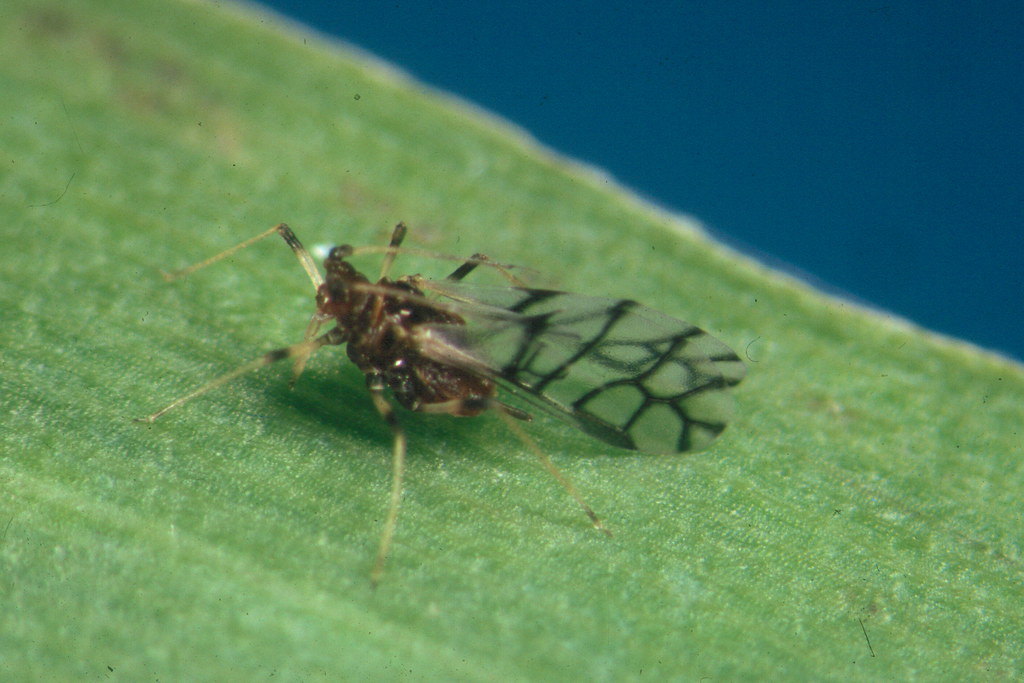
Longistigma caryae, commonly known as the giant bark aphid, is the largest aphid species native to the United States. First described in 1841 from pignut hickory in Massachusetts, this species was later placed in its own genus due to its distinctive extremely long, slender stigma that extends around the end of the wing. It feeds on the bark of hickory trees and has been documented across eastern and central North America.
Lophoscutus uhleri is a species of ambush bug in the family Reduviidae, subfamily Phymatinae. The species was described by Handlirsch in 1897. Phymatine reduviids are predatory true bugs characterized by their raptorial forelegs used to capture prey. Members of the genus Lophoscutus are known from North America.
Scarlet Plant Bugs
Lopidea is a genus of plant bugs in the family Miridae, containing more than 90 described species. The genus belongs to the subfamily Orthotylinae and has been studied as a model for understanding speciation patterns in insects. Species in this genus show evidence of both vicariance and host plant-associated speciation. They are commonly known as scarlet plant bugs, though coloration varies among species.
Lopidea apache is a species of plant bug in the family Miridae, described by Knight in 1918. It belongs to the large and diverse family of true bugs commonly known as plant bugs or leaf bugs. The genus Lopidea contains numerous species distributed primarily in North America. Very little specific information is documented about the biology and ecology of this particular species.
Lopidea caesar is a species of plant bug in the family Miridae, first described by Reuter in 1876. The species is recorded from eastern North America, with documented occurrences in Ontario (Canada), Georgia, and Pennsylvania (USA). As a member of the genus Lopidea, it belongs to a group of mirid bugs commonly associated with woody plants. Specific ecological details and host associations for this species remain poorly documented in available literature.
Lopidea media is a species of plant bug in the family Miridae. It was described by Thomas Say in 1832. The species is native to North America and has been recorded across a broad geographic range including the northeastern United States, the Southeast, and extending westward to Colorado, Wyoming, and Montana. It is a member of a large genus of mirid bugs, many of which are associated with woody plants.
minute bladder bugs
Loricula is a genus of minute bladder bugs in the family Microphysidae (order Hemiptera). The genus contains more than 20 described species. These are small predatory true bugs found primarily in the Northern Hemisphere. They inhabit leaf litter and mossy environments in forested areas.
Loricula bipunctata is a species of minute bladder bug in the family Microphysidae. It is a small predatory true bug found across Europe, Northern Asia (excluding China), and North America. The species was described by Perris in 1857. As a member of the Microphysidae, it belongs to a family of diminutive predatory bugs sometimes referred to as minute bladder bugs.
Loricula elegantula is a minute true bug in the family Microphysidae, a group commonly known as minute pirate bugs or microphysid bugs. The species was originally described as Anthocoris elegantula by Bärensprung in 1858 before being transferred to the genus Loricula. It is known from the Azores archipelago in the North Atlantic, with records from five islands: Faial, Flores, Graciosa, Pico, and São Miguel. As a member of the Microphysidae, it likely shares the family's predatory habits, though specific ecological details for this species remain poorly documented.
Luzulaspis is a genus of soft scale insects (family Coccidae) established by Targioni Tozzetti in 1868. The genus contains at least two described species: Luzulaspis americana, described from North America, and Luzulaspis bisetosa, described from Europe. These scale insects are found in temperate regions of Europe and North America. Very few observations exist in public databases, suggesting either rarity or undercollection.
Debris bug
Lyctocoris campestris is a predatory true bug in the family Lyctocoridae, commonly known as the debris bug. It occurs in stored grain environments and natural habitats across multiple continents. The species is a generalist predator with documented importance in biological control of stored product pests.
Lyctocoris canadensis is a species of minute predatory true bug in the family Lyctocoridae. The species was described by Kelton in 1967 and is known to occur in North America. Members of the genus Lyctocoris are typically associated with stored products and other human-modified environments where they prey on small arthropods.
seed bugs, milkweed bugs, ground bugs
Lygaeidae is a family of true bugs (Hemiptera: Heteroptera) commonly known as seed bugs, milkweed bugs, or ground bugs. The family currently comprises approximately 60 genera in six subfamilies, though it was formerly much larger before numerous subfamilies were elevated to independent family status. Members are distributed worldwide and exhibit diverse feeding habits, with many species feeding on seeds, some on sap or seed pods, others being omnivores, and a few being insectivores. Several genera, including Lygaeus and Oncopeltus, are well-known for their association with milkweeds and their bright aposematic coloration.
Seed Bugs and Allies
Lygaeoidea is a large superfamily of true bugs (Hemiptera: Heteroptera) containing approximately 16 families and over 4,600 described species worldwide. Members are commonly known as seed bugs and allies. The superfamily includes economically important groups such as the big-eyed bugs (Geocoridae), which are predators used in biological control, as well as numerous seed-feeding species. The family-level classification underwent substantial revision in 1997 by Thomas J. Henry, with most families previously treated as subfamilies of Lygaeidae. The systematic position of Piesmatidae (ash-gray leaf bugs) remains somewhat uncertain, having been placed in its own superfamily in some classifications.
Lygaeus analis is a seed bug in the family Lygaeidae, distributed from Mexico through Central America to tropical South America. The species belongs to a genus that includes several milkweed-associated bugs, though specific ecological details for L. analis itself remain poorly documented. It is a true bug with typical lygaeid morphology, but published studies have not examined its biology in detail.
Small Milkweed Bug, Common Milkweed Bug
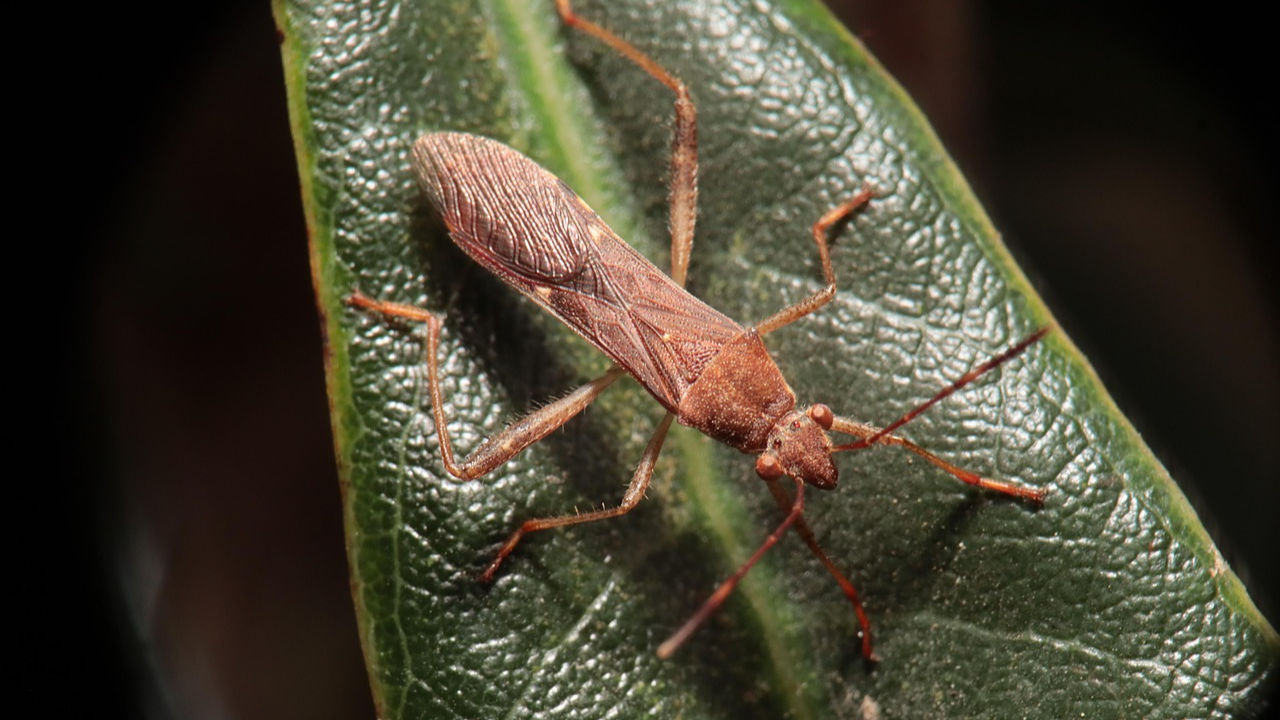
Lygaeus kalmii is a seed bug in the family Lygaeidae known for its bright orange-red and black aposematic coloration. Adults measure 10–12 mm and feed primarily on milkweed seeds and flower nectar, though they exhibit dietary flexibility including scavenging on dead insects and feeding on seeds of other plants such as composites. The species sequesters cardiac glycosides from milkweed, making it unpalatable to predators. Unlike the migratory large milkweed bug (Oncopeltus fasciatus), L. kalmii is non-migratory and overwinters as adults. Two subspecies are recognized: L. k. kalmii in western North America and L. k. angustomarginatus in the east, distinguished by differences in the white markings on the membranous portion of the forewings.
Lygaeus truculentus is a seed bug species in the family Lygaeidae, first described by Stål in 1862. Records indicate a distribution spanning from western North America through Central America to northern South America, with confirmed presence in California, USA. The species belongs to a genus containing several milkweed-associated bugs, though specific ecological relationships for this particular species remain poorly documented.
green capsid bugs
Lygocoris is a genus of plant-feeding true bugs in the family Miridae, commonly known as green capsid bugs. The genus contains approximately 40 described species distributed across Eurasia and North America. Several species are economically significant agricultural pests, particularly Lygocoris pabulinus (common green capsid), which damages apple and other fruit crops. Species in this genus exhibit host-plant alternation between woody and herbaceous plants, and communicate using species-specific vibrational signals for mate location.
Lygus abroniae is a plant bug in the family Miridae, one of 34 Lygus species recognized in North America. It was originally described by Van Duzee in 1918 from western North America and is considered a typical member of the genus Lygus. The species exhibits seasonal colour variations. Like other Lygus species, it is associated with host plants, though specific details are not well documented in available literature.
Lygus atriflavus is a species of plant bug in the family Miridae, first described by Knight in 1917. It is one of 34 recognized Lygus species in North America. Like other members of the genus Lygus, it belongs to a group of economically significant agricultural pests known for feeding on developing reproductive structures of crops.
Lygus bradleyi is a species of plant bug in the family Miridae, described by Knight in 1917. It is one of 34 recognized species of Lygus in North America. The species is part of a genus that contains significant agricultural pests, though specific economic impacts of L. bradleyi are not well documented in available literature.
Lygus convexicollis is a species of plant bug in the family Miridae, native to western North America. It is one of 34 recognized species in the genus Lygus on the continent. The species was described by Reuter in 1876, with two former varieties (coloratus and dolichorhynchus) later synonymized under it. Like other Lygus species, it is a true bug with piercing-sucking mouthparts and is associated with herbaceous vegetation.
Lygus mexicanus is a species of plant bug in the family Miridae, described by Kelton in 1973. It is one of 34 recognized species of Lygus in North America. The genus Lygus comprises economically significant plant-feeding bugs commonly known as lygus bugs or tarnished plant bugs, many of which are agricultural pests. Specific biological and ecological details for L. mexicanus remain poorly documented in accessible literature.
Lygus plagiatus is a plant bug species in the family Miridae, native to North America. It is one of 34 recognized species in the genus Lygus in North America. Like other members of this genus, it belongs to a group commonly referred to as lygus bugs or plant bugs that are associated with herbaceous vegetation. The species was described by Uhler in 1895.
plant bug
Lygus punctatus is a species of plant bug in the family Miridae. It reaches a body length of approximately 6–7 mm. The species has a broad distribution across Europe, Northern Asia (excluding China), North America, and Southern Asia. Adults have been recorded in high abundance on alfalfa (Medicago sativa).
Lygus rubroclarus is a North American plant bug in the family Miridae, first described by Knight in 1917. The species was previously known as Lygus frisoni, which was synonymized with L. rubroclarus in the 1975 revision of the genus. It belongs to a genus containing 34 recognized species in North America, many of which are significant agricultural pests.
Lygus striatus is a species of plant bug in the family Miridae, first described by Knight in 1917. It belongs to the genus Lygus, which contains several economically significant agricultural pests. The species is distributed across western North America, with records from the western United States and western Canada. Like other members of its genus, it is likely associated with herbaceous vegetation, though specific ecological details remain poorly documented compared to better-studied congeners such as Lygus hesperus and Lygus lineolaris.
Lystridea uhleri is a species of leafhopper in the family Cicadellidae, subfamily Errhomeninae. Originally described as Bathysmatophorus uhleri by Baker in 1898, it was later transferred to the genus Lystridea. The species is native to western North America and has been recorded from California, Oregon, and Washington. Members of the genus Lystridea are generally associated with coniferous and deciduous forest habitats.
Macropsis dixiensis is a species of leafhopper in the family Cicadellidae, described by Hamilton in 1983. As a member of the subfamily Macropsinae, it is associated with woody host plants. The species is known from limited collection records in North America.
Macropsis notata is a species of leafhopper in the family Cicadellidae, subfamily Macropsinae. It was described by Prohaska in 1923. The genus Macropsis is characterized by enlarged pronota that extend backward over the thorax. Species in this genus are typically associated with woody plants, particularly willows and poplars (Salicaceae). M. notata has been recorded from Luxembourg and the conterminous United States.
Macropsis ocellata is a species of leafhopper in the family Cicadellidae, described by Provancher in 1872. It belongs to the subfamily Eurymelinae and tribe Macropsini. The species has been recorded from scattered localities including Florida, the District of Columbia, Corsica, and parts of Central Asia (Astrakhan, Ferghana), suggesting a wide but patchy distribution. As with other Macropsis species, it is likely associated with woody host plants, though specific ecological details remain poorly documented.
Macropsis robusta is a species of leafhopper in the family Cicadellidae. The species was described by Breakey in 1932 and is currently recognized as valid. It belongs to a genus of leafhoppers distributed across the Holarctic region.
Macropsis rufescens is a leafhopper species in the family Cicadellidae, described by Hamilton in 1983. It belongs to the subfamily Macropsinae, a group characterized by enlarged heads and often associated with woody host plants. The species has been recorded from multiple localities across central and western North America.
Shining Green Tarragon Aphid
Macrosiphoniella glabra, known as the Shining Green Tarragon Aphid, is a species of aphid in the family Aphididae. The species was described by Gillette and Palmer in 1928. It belongs to the genus Macrosiphoniella, a group of aphids associated with various host plants in the Asteraceae family. The specific epithet "glabra" refers to smooth or hairless characteristics, likely describing some aspect of the aphid's morphology. Very few observations of this species have been recorded, with only 5 documented observations in iNaturalist.
California Willow Aphid
Macrosiphum californicum is a species of aphid in the family Aphididae. Commonly known as the California Willow Aphid, this species belongs to the genus Macrosiphum, which contains many economically significant plant-feeding aphids. The species was described by Clarke in 1903. As with other aphids in this genus, it possesses piercing-sucking mouthparts adapted for feeding on plant phloem.
Macrosiphum clydesmithi is a species of aphid in the family Aphididae, described by Robinson in 1980. It belongs to the genus Macrosiphum, a large group of aphids commonly known as potato aphids or rose aphids. The species is listed as a synonym in some sources but accepted in others, indicating taxonomic uncertainty. No specific biological or ecological information has been documented for this species in the available literature.
Macrosiphum kiowanepus is a species of aphid in the family Aphididae. It belongs to the genus Macrosiphum, a large group of aphids commonly known as potato aphids or rose aphids. The species is known from a single observation record, indicating it is likely rare or poorly documented.
blazingstar aphid
Macrosiphum mentzeliae is an aphid species in the family Aphididae, first described by Wilson in 1915. The species is known by the common name 'blazingstar aphid', likely referencing an association with plants in the genus Mentzelia (blazingstars). It belongs to the large genus Macrosiphum, which contains numerous aphid species that feed on various host plants. Very few observations of this species have been recorded, with only a single observation documented on iNaturalist. The species is currently listed as a synonym in the Catalogue of Life, suggesting taxonomic uncertainty or consolidation with another taxon.
Waxy red-huckleberry aphid
Macrosiphum parvifolii is an aphid species in the family Aphididae, first described by Richards in 1967. The species has been assigned the common name "Waxy red-huckleberry aphid" on iNaturalist, though no observations of this species have been recorded on that platform. As a member of the genus Macrosiphum, it belongs to a group of aphids commonly known as "large aphids" or "macrosiphum aphids," many of which are associated with woody plants. The species name "parvifolii" (from Latin "parvus" small + "folium" leaf) suggests an association with small-leaved host plants.
American Hophornbeam Aphid
Macrosiphum pseudocoryli is an aphid species in the family Aphididae, described by Patch in 1919. It is commonly known as the American Hophornbeam Aphid, indicating a likely association with hophornbeam (Ostrya species) as a host plant. The species belongs to the large genus Macrosiphum, which contains numerous aphid species associated with various woody and herbaceous plants.
Macrosiphum rudbeckiarum is an aphid species in the family Aphididae, originally described by Cockerell in 1903. It belongs to the large genus Macrosiphum, which comprises numerous aphid species associated with diverse host plants. The specific epithet 'rudbeckiarum' indicates an association with Rudbeckia species, suggesting a host relationship with plants in this genus. The species is currently accepted in taxonomic databases, though detailed biological information appears limited in published literature.
Black Sage Aphid
Macrosiphum salviae, commonly known as the Black Sage Aphid, is a species of aphid in the family Aphididae described by Bartholomew in 1932. The species belongs to the genus Macrosiphum, a diverse group of aphids that includes several economically important agricultural pests. The specific epithet 'salviae' suggests an association with plants in the genus Salvia (sage), indicating a likely host relationship with sage species. The species has been documented through 38 observations on iNaturalist.
Macrosiphum violae is a species of aphid in the family Aphididae, described by Jensen in 2000. As a member of the genus Macrosiphum, it belongs to a group of aphids characterized by long siphunculi and typically associated with herbaceous host plants. The specific epithet "violae" suggests a potential association with Viola species (violets), though this host relationship has not been explicitly documented in the provided sources. The species is recognized as valid in GBIF and listed as a synonym in the Catalogue of Life.
Macrosiphum willamettense is an aphid species in the family Aphididae, described by Jensen in 2000. As a member of the genus Macrosiphum, it belongs to a group of aphids commonly known as 'large aphids' or 'macrosiphum aphids,' many of which are significant agricultural pests. The specific epithet 'willamettense' refers to the Willamette region, likely indicating its type locality in the Willamette Valley of Oregon, USA. Like other Macrosiphum species, it possesses the characteristic long siphunculi (cornicles) that distinguish this genus from many other aphid genera.
Resplendent Lupin Aphid
Macrosiphum zionense is an aphid species described by Knowlton in 1935. It belongs to the genus Macrosiphum, a group of aphids commonly associated with leguminous and other host plants. The species is known by the common name Resplendent Lupin Aphid, suggesting an association with lupin plants (Lupinus). Like other members of its genus, it likely possesses the typical aphid characteristics of piercing-sucking mouthparts and complex life cycles involving both sexual and parthenogenetic reproduction.
Macrosteles claridgei is a species of leafhopper in the family Cicadellidae, described by Kwon & Kwon in 2022. It belongs to the genus Macrosteles, a group of small leafhoppers distributed across multiple continents. The species is currently known from Alaska based on distribution records. As a recently described species, detailed biological information remains limited.
Macrosteles divisus is a leafhopper species in the family Cicadellidae, subfamily Deltocephalinae. It is known primarily as a vector of carrot yellows disease (phytoplasma) in agricultural systems. The species overwinters as eggs in plant tissues, with nymphs emerging in spring and multiple generations occurring through the growing season. Population activity peaks in mid to late summer.
Macrosteles elegans is a species of leafhopper in the family Cicadellidae, described by Kwon & Kwon in 2022. The genus Macrosteles is a large and widespread group of leafhoppers, with many species known as vectors of plant pathogens. This particular species was described relatively recently, and specific information about its biology remains limited. Distribution records indicate presence in British Columbia, Canada.
Macrosteles elongatus is a species of leafhopper in the family Cicadellidae, first described by Beirne in 1952. The species belongs to a genus of small, slender leafhoppers known for their association with grasses and herbaceous plants. Distribution records indicate presence in western and central Canada (Alberta, British Columbia, Manitoba) and parts of the northern United States (Minnesota, New Hampshire). As with many Macrosteles species, it is likely associated with meadow and grassland habitats, though specific ecological details remain poorly documented.