
Leucophoropterini
Genus Guides
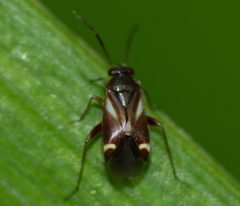
1Leucophoropterini is a tribe of plant bugs within the Miridae, Phylinae. The tribe contains over 100 across more than 20 , with the majority distributed in eastern Asia and Australia. A single genus, Tuxedo, occurs in North America. Members are generally small, soft-bodied true bugs with phytophagous habits typical of the subfamily.
Identification
Leucophoropterini can be distinguished from other Phylinae tribes primarily through male genitalia characteristics and pretarsal structures, though specific diagnostic features vary by . Identification to genus level requires examination of detailed morphological characters including structure, proportions, and male parameres. The tribe is not readily distinguishable from other Phylinae tribes by superficial appearance alone.
Images
Habitat
vary by and . At least some members (e.g., Sejanus species in Japan) inhabit urbanized environments, university campuses, and residential gardens where traditional vegetation is partially preserved. The broader habitat range for the tribe likely includes various vegetated environments given its phytophagous nature, though specific requirements differ among the 26+ genera.
Distribution
Eastern Asia and Australia constitute the primary range, with most occurring in these regions. The Tuxedo represents the only North American occurrence. Specific countries with documented species include Japan.
Similar Taxa
- PhyliniAnother tribe within Phylinae; distinguished from Leucophoropterini by differences in male genitalia structure and pretarsal , requiring microscopic examination for reliable separation.
- HallodapiniRelated Phylinae tribe with overlapping geographic range; morphologically similar but differs in genitalic and pretarsal characters used for tribal-level classification.
More Details
Taxonomic composition
The tribe comprises 26 according to current records. Notable genera include Sejanus (documented from Japan with urban-associated ) and Tuxedo (the sole North American representative).
Conservation context
Some Japanese Sejanus demonstrate persistence in fragmented urban with preserved traditional vegetation, suggesting potential sensitivity to habitat modification and value of managed green spaces for conservation.