
Phylinae
Douglas & Scott, 1865
phyline plant bugs
Tribe Guides
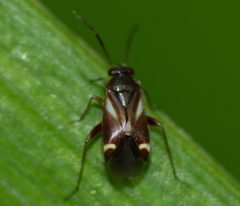
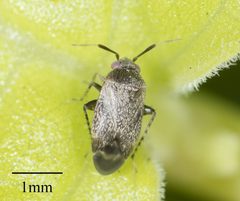
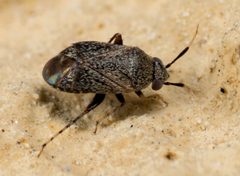
9Phylinae is a large of plant bugs (Miridae) comprising approximately 400 and over 2000 worldwide. The subfamily underwent significant taxonomic revision in 2013, reorganizing tribal classifications and establishing nine currently recognized tribes. Members exhibit diverse plant associations, with many species specialized on particular plant . The subfamily includes economically significant species, some of which are while others are phytophagous.
Pronunciation
How to pronounce Phylinae: /fɪˈlaɪniː/
These audio files are automatically generated. While they are not always 100% accurate, they are a good starting point.
Identification
Identification to tribe or requires examination of male genitalia, particularly the left paramere and vesica structure. The reduced wing venation distinguishes Phylinae from other Miridae such as Orthotylinae and Deraeocorinae. Within Phylinae, tribal assignment relies on combinations of structure, pronotal shape, pretarsal structure, and genitalic . -level identification typically requires detailed examination of male genitalia and often plant association data.
Images
Habitat
Occurs in diverse terrestrial including forests, grasslands, shrublands, and agricultural systems. Many are closely associated with specific plants, including restiids (Restionaceae) in Australia, pelargoniums (Geraniaceae) in South Africa, and various other plant worldwide. Some species inhabit specialized microhabitats such as leaf margin roll galls on Ficus.
Distribution
Worldwide distribution with recorded from all major biogeographic regions. Particularly diverse in the Northern Hemisphere temperate zones, Australia, and the Oriental region. Documented from North America, South America, Europe, Asia, Africa, Australia, and Oceania including New Caledonia.
Diet
Phytophagous, feeding on plant sap from various . Some members of the tribe Pilophorini are predatory, feeding on other small arthropods. Host plant associations are often highly specific, with many species restricted to particular plant or .
Host Associations
- Restionaceae - primary Restiophylus specialized on Australian restiid clade
- Geraniaceae - primary Macrotylus henryi feeds on Pelargonium
- Loranthaceae - primary Hypseloecus associated with Taxillus mistletoes
- Rosaceae - Pilophorus reoi found on Rubus sieboldii
- Ficus benghalensis - some Phylinae inhabit leaf margin roll galls
Life Cycle
Hemimetabolous development with , nymph, and stages. Specific details vary among and are often poorly documented. Multiple per year likely in temperate species.
Behavior
Many exhibit strong plant fidelity, with and nymphs found on the same host species. Some groups show specialized use, such as association with mistletoes or restiid plants. Predatory species in Pilophorini actively hunt prey on vegetation.
Ecological Role
Phytophagous function as herbivores in plant , potentially influencing plant and community composition. Predatory species contribute to . Some species may serve as prey for larger arthropods and vertebrates.
Human Relevance
Some are economically significant as pests of cultivated plants or as beneficial . The includes species used in research. Taxonomic complexity and ongoing revisions present challenges for identification in applied contexts.
Similar Taxa
- OrthotylinaeSimilar body form and size; distinguished by different wing venation patterns and genitalic structure
- DeraeocorinaeOverlapping size range and general appearance; separated by wing venation and pretarsal structure
More Details
Taxonomic History
The was extensively revised by Schuh & Menard in 2013, resulting in major reorganization of tribal classification. The tribes Auricillocorini and Pronotocrepini were synonymized, and new tribes Decomiini, Exocarpocorini, Cremnorrhini, Nasocorini, and Semiini were established or resurrected.
Research Significance
Phylinae has become a model group for studying plant evolution and diversification, with recent phylogenetic studies reconstructing the timing of evolutionary radiations in relation to host plant repertoire.
Sources and further reading
- BugGuide
- Wikipedia
- iNaturalist taxon
- NCBI Taxonomy
- Publications | Entomology Research Museum
- A New Genus of Plant Bug, Plus Four New Species from Australia
- Restiophylus meeboldinae Archives - Entomology Today
- Review of Ethelastia Reuter (Heteroptera: Miridae: Phylinae)
- Chimairacoris flavipes sp. nov., (Hemiptera, Heteroptera, Miridae, Phylinae) from New Caledonia
- Reconstructing Host Plant Repertoire and Timing of Evolution of Phyline Plant Bugs (Hemiptera: Miridae: Phylinae)
- Description of Nasocoris lautereri sp. nov. from the Balkan peninsula, with a review of the genus Nasocoris (Hemiptera: Heteroptera: Miridae: Phylinae)
- Further records and descriptions of the plant bug subfamily Phylinae (Hemiptera: Heteroptera: Miridae) from Thailand
- Additional record of Tuponia Reuter (Heteroptera, Miridae, Phylinae) from Korea, with a new synonym and discussion on distribution
- Solenoxyphus Reuter, 1875 (Hemiptera: Heteroptera: Miridae: Phylinae): revised diagnosis, a new species and new generic synonym
- Macrotylus henryi, a new species of Pelargonium-feeding Cremnorrhinina from South Africa (Hemiptera, Miridae, Phylinae, Cremnorrhinini)
- Supplemental Material for 'Nineteen new genera and 82 new species of Cremnorrhinina from Australia, including analyses of host relationships and distributions (Insecta, Hemiptera, Miridae, Phylinae, Cremnorrhinini). (Bulletin of the American Museum of Natural History, no. 401)'
- Three new species of the plant bug tribe Pilophorini from Japan (Hemiptera: Heteroptera: Miridae: Phylinae)
- Revision of the pilophorine plant bug genus Pherolepis Kulik, 1968 (Hemiptera: Heteroptera: Miridae: Phylinae)