
Macrotylus
Fieber, 1858
Species Guides
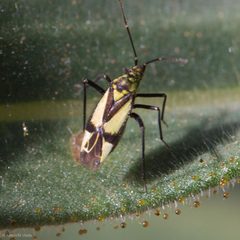
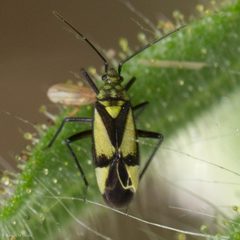
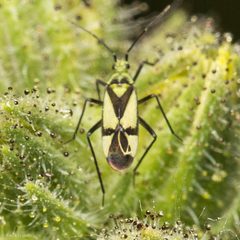
10Macrotylus is a of plant bugs in the Miridae, Phylinae, first described by Fieber in 1858. The genus comprises at least 60 described distributed across multiple continents, with documented occurrences in Europe, Africa, and Asia. Species within this genus exhibit considerable morphological variation, particularly in coloration and male genitalia structure. Some species are -plant with documented associations to specific plant families.
Pronunciation
How to pronounce Macrotylus: /ˌmækroʊˈtaɪləs/
These audio files are automatically generated. While they are not always 100% accurate, they are a good starting point.
Identification
Members of Macrotylus can be distinguished from other Phylinae by the combination of: moderately projecting , relatively narrow , wide pronotum, and long second antennal segment. Male genitalia provide critical diagnostic features, with -specific endosoma structures including sclerotized straps and denticles. Size varies among species, with some reaching relatively large dimensions for the . Coloration ranges from reddish and brownish to yellow-green or combinations thereof, but this trait is substantially variable within species and not reliable for identification alone.
Images
Habitat
preferences vary by and geography. Documented habitats include: sparsely vegetated sandy substrates; dry grass in calcareous areas; and Western Cape vegetation including Namaqualand, the Little Karoo, and fynbos. Some species are associated with flowering plants at elevations from sea level to approximately 650 meters.
Distribution
Documented distribution includes: Hungary and surrounding regions in Central Europe; Western Cape, South Africa (from near Clanwilliam to the south Cape Peninsula and east to near Mossel Bay); Portugal (Algarve); Spain (Andalusia); and records from Denmark, Norway, and Sweden. The has a broad geographic range across the Palearctic and Afrotropical regions.
Diet
Phytophagous. At least one , Macrotylus henryi, feeds on Pelargonium species (Geraniaceae). Diet of other species within the is not documented in available sources.
Host Associations
- Pelargonium cucullatum × betulinum (Geraniaceae) - confirmed for M. henryi
- Pelargonium scabrum (Geraniaceae) - confirmed for M. henryi
- Pelargonium radens (Geraniaceae) - confirmed for M. henryi
- Pelargonium cucullatum subsp. tabulare (Geraniaceae) - confirmed for M. henryi
- Pelargonium sp. (Geraniaceae) - confirmed for M. henryi
Behavior
At least one , Macrotylus henryi, has been observed on plants specifically when in flower. Specimens of this species show substantial color variation within .
Similar Taxa
- Other Phylinae generaMacrotylus is distinguished by the combination of moderately projecting , narrow , wide pronotum, and long second antennal segment; male genitalia structure provides definitive separation.
More Details
Taxonomic notes
The includes a subgenus Alloeonycha, with Macrotylus (Alloeonycha) xantii described in 2018. At least 69 have been described, though the exact number requires verification.
Research gaps
, , and role are not documented for any in available sources. plant associations are known for only a single species.
Sources and further reading
- BugGuide
- Wikipedia
- GBIF taxonomy match
- iNaturalist taxon
- NCBI Taxonomy
- Catalogue of Life
- Macrotylus henryi, a new species of Pelargonium-feeding Cremnorrhinina from South Africa (Hemiptera, Miridae, Phylinae, Cremnorrhinini)
- A review of the plant bug genus Macrotylus distributed in Hungary (Heteroptera: Miridae)
- Macrotylus (Alloeonycha) xantii Günther, 2018, (Hemiptera: Miridae, Phylinae) new to Portugal, with a description of the female